
How to Become a Rope Access Specialist: Required Training & Qualifications
Rope access specialists work where traditional access methods are inefficient or impossible. From wind turbines and industrial structures to offshore platforms, this profession demands technical skill, physical fitness and strict safety discipline. For those considering a career in rope access, understanding the required training path is the first essential step.
This article explains the core certifications needed to become a rope access technician and outlines additional qualifications required for offshore work.
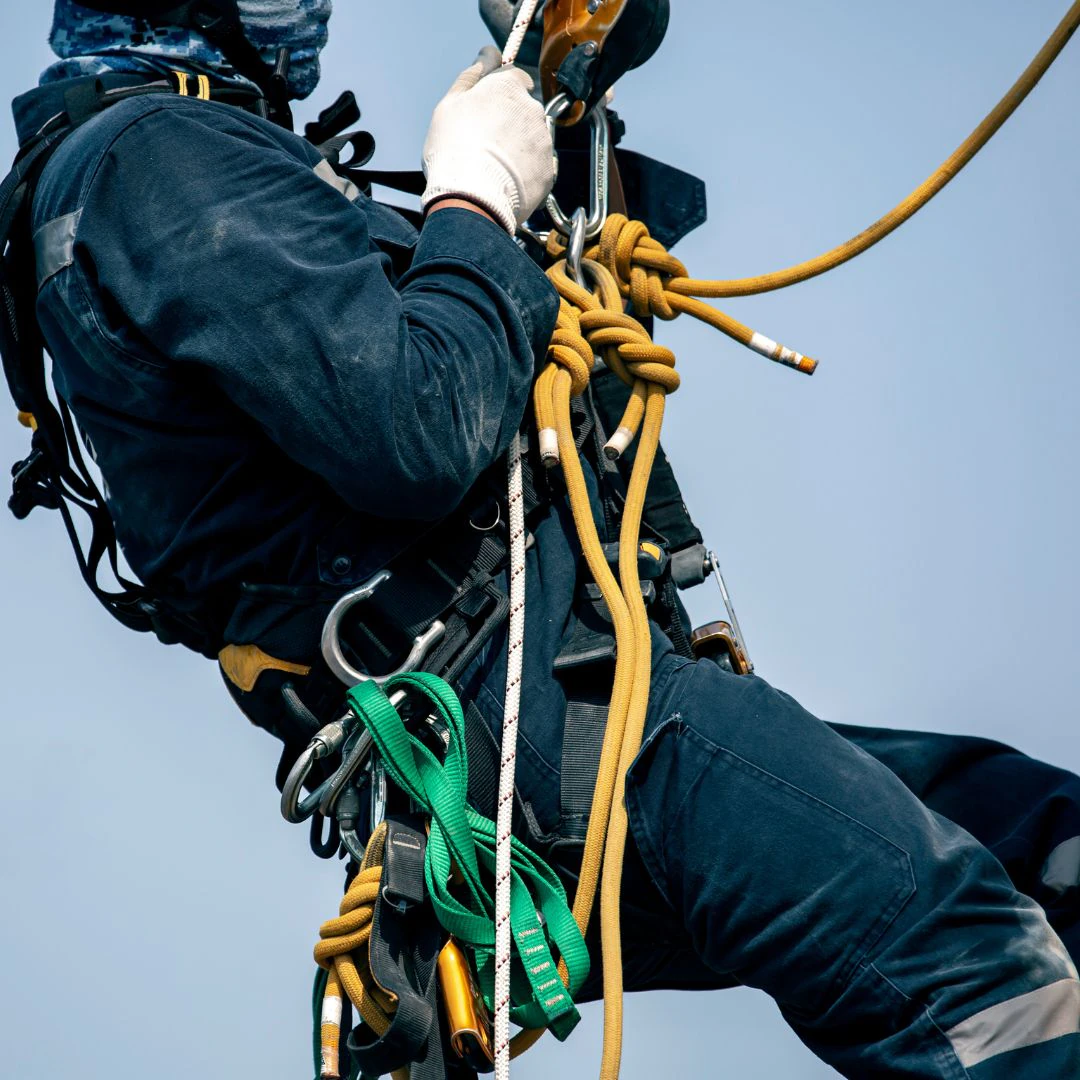
Get Core Rope Access Certification
The foundation of many industrial rope access careers is a recognised rope access qualification. Our IRATA certification guide explains the levels, progression rules and revalidation cycle in more detail. The qualification and level required depend on the employer, task, site and applicable rules, so confirm the entry route before booking training.
One recognised pathway includes IRATA training levels. Entry into the industry typically starts at Level 1, which focuses on safe movement, positioning and basic rescues. With logged working hours and experience, technicians can progress to higher levels that include advanced rigging and supervision responsibilities.
Completing an approved rope access course provides the technical framework needed to work safely at height, but certification alone does not guarantee readiness for every sector.
Additional Training for Industrial Projects
Beyond rope access certification, many industrial projects require complementary safety and technical courses. These courses prepare technicians for defined hazards and tasks on active worksites, inside confined areas or near operating machinery; site controls and supervision still apply.
Common requirements include working at height safety training, first aid certification and manual handling courses. Depending on the project scope, technicians may also need basic fire awareness, confined space entry training or equipment inspection competence.
These requirements vary by country, employer, site and task. Treat them as a checklist to confirm for the role rather than as a universal package that applies to every rope access job.
What Changes When You Want to Work Offshore
Offshore rope access has additional mobilisation and emergency considerations that are not present in the same way on an onshore site. Working at sea can involve marine logistics, medical standards, survival training, transfers and operator controls; the exact requirements depend on the sector and assignment.
Depending on the sector, operator and transport arrangements, an offshore assignment may require additional courses or documents such as:
– Offshore survival and emergency response training, covering sea evacuation and rescue scenarios
– Medical certification approved for offshore environments
– Helicopter underwater escape training for offshore transport
– Offshore wind or oil and gas safety induction, depending on the sector
These requirements address conditions that are specific to the offshore assignment rather than replacing the core rope access qualification. Because requirements vary by sector and assignment, review the separate guide to courses for offshore rope access work before applying for a specific role.
Physical and Personal Readiness
Rope access is physically demanding. Offshore work can add rotations, limited personal space and variable weather conditions. Employers may assess whether candidates can maintain focus, follow procedures precisely and work effectively as part of a team in the conditions of the role.
Employers may assess fitness for the work, comfort with heights and the ability to adapt to changing conditions. Communication skills and a strong safety mindset are also important because offshore projects rely on coordination between team members. Any medical or fitness standard must be confirmed for the specific role.
Career Progression and Long-Term Development
Onshore industrial work can be one route for building logged experience before applying for an offshore assignment, but there is no single career sequence. The role still has to match the technician’s current level, trade competence, site documents and the employer’s requirements.
With experience, technicians may progress to advanced rope access levels, inspection roles, NDT work or supervisory positions. The responsibilities of an IRATA Level 3 supervisor show how the role changes at the leadership stage. The next step depends on demonstrated competence, the relevant qualifications and the requirements of the role rather than on a rope access certificate alone.
Summary
Becoming a rope access specialist starts with a suitable rope access qualification and develops through verified experience, safety training and task-specific competence. Offshore work may add qualifications focused on survival, medical fitness, transport or emergency response. The correct combination depends on the role and worksite.
At Gridinta, we value well-trained professionals and support structured development for those committed to building a career in rope access and offshore projects.
Build Your Career in Rope Access
Gridinta works with trained, safety-focused professionals across industrial and offshore environments. If you’re starting your rope access career or looking to expand into offshore work, review Gridinta’s career opportunities and compare each role’s location, conditions and qualification requirements.