
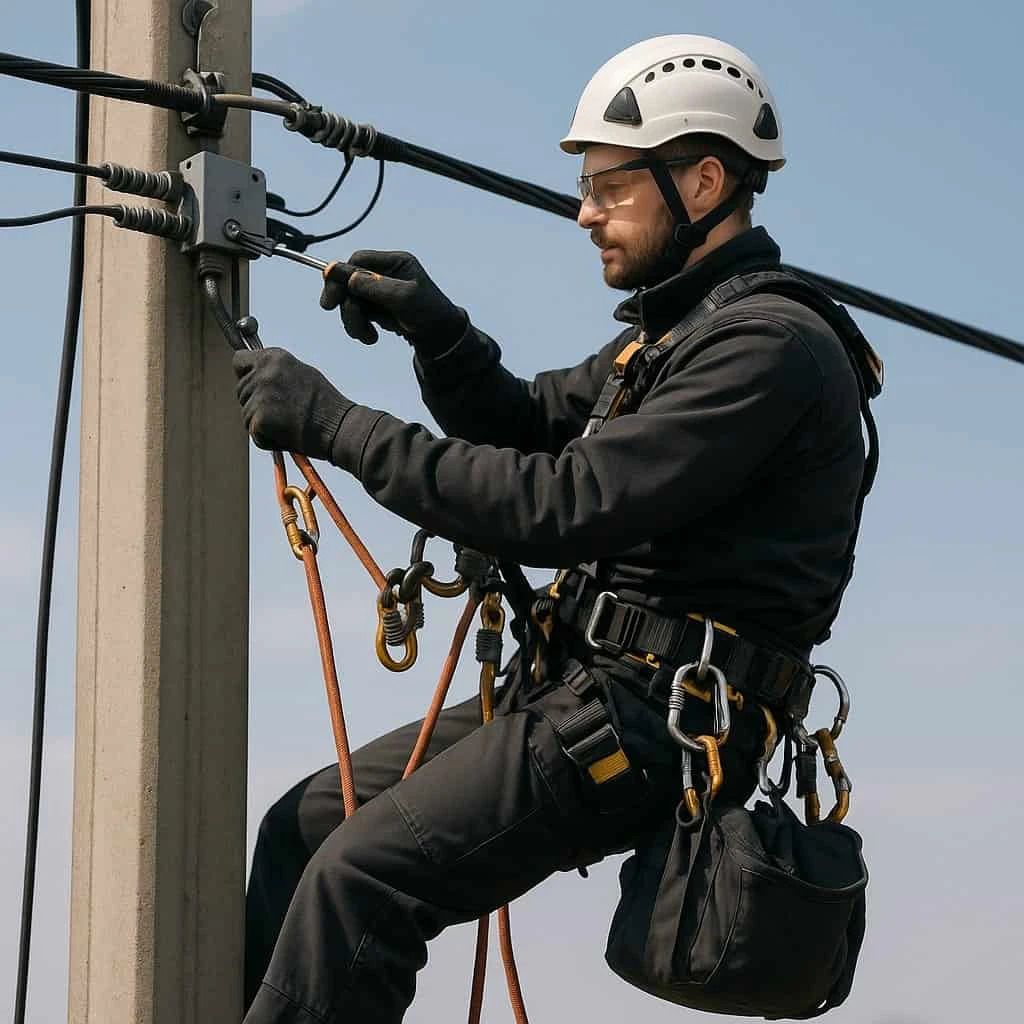
Electrical Services at Height
Safe and efficient electrical work in elevated, hard-to-reach locations—delivered by certified rope access specialists.
Electrical systems in elevated environments demand more than just skill—they require access solutions that are safe, reliable, and fast. Gridinta brings it all together, delivering top-tier electrical services with rope access precision.
Gridinta provides high-quality electrical services at height for energy, industrial, and offshore sectors. Whether it’s installing components on wind turbines, maintaining lighting systems on tall structures, or troubleshooting high-access cabling—we get the job done where others can’t.
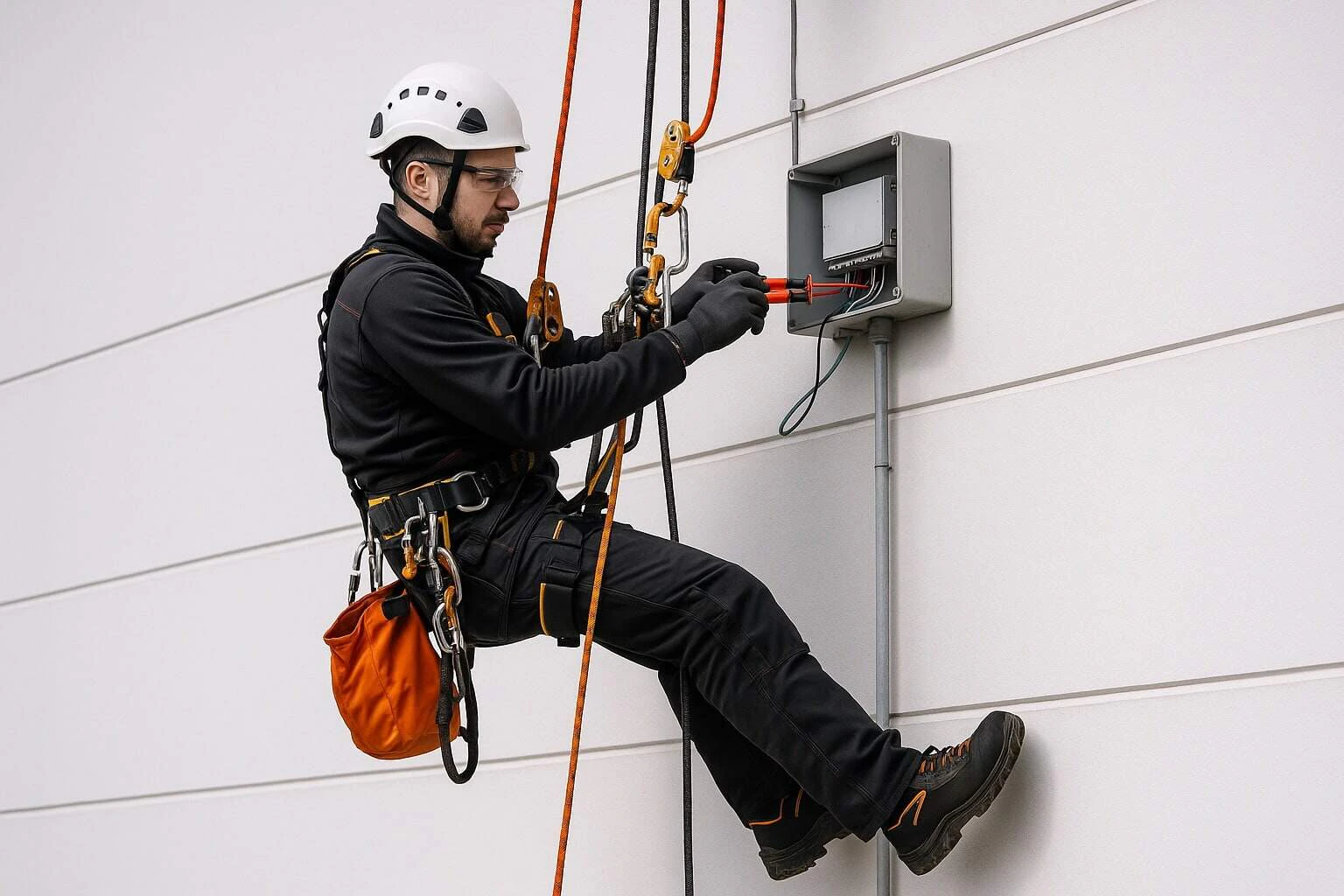
Electrical Work for High-Level Installations
We carry out electrical installation, maintenance and repair at height using rope access where it suits the task and structure. It can reduce scaffolding or machinery requirements, but access, material handling, electrical isolation and any shutdown must be agreed for the actual work.
Our electrical services include:
Electrical cable installation and routing
Junction box and component replacement
Lighting system maintenance and upgrades
Fault detection and troubleshooting at height
Support for onshore and offshore energy sites
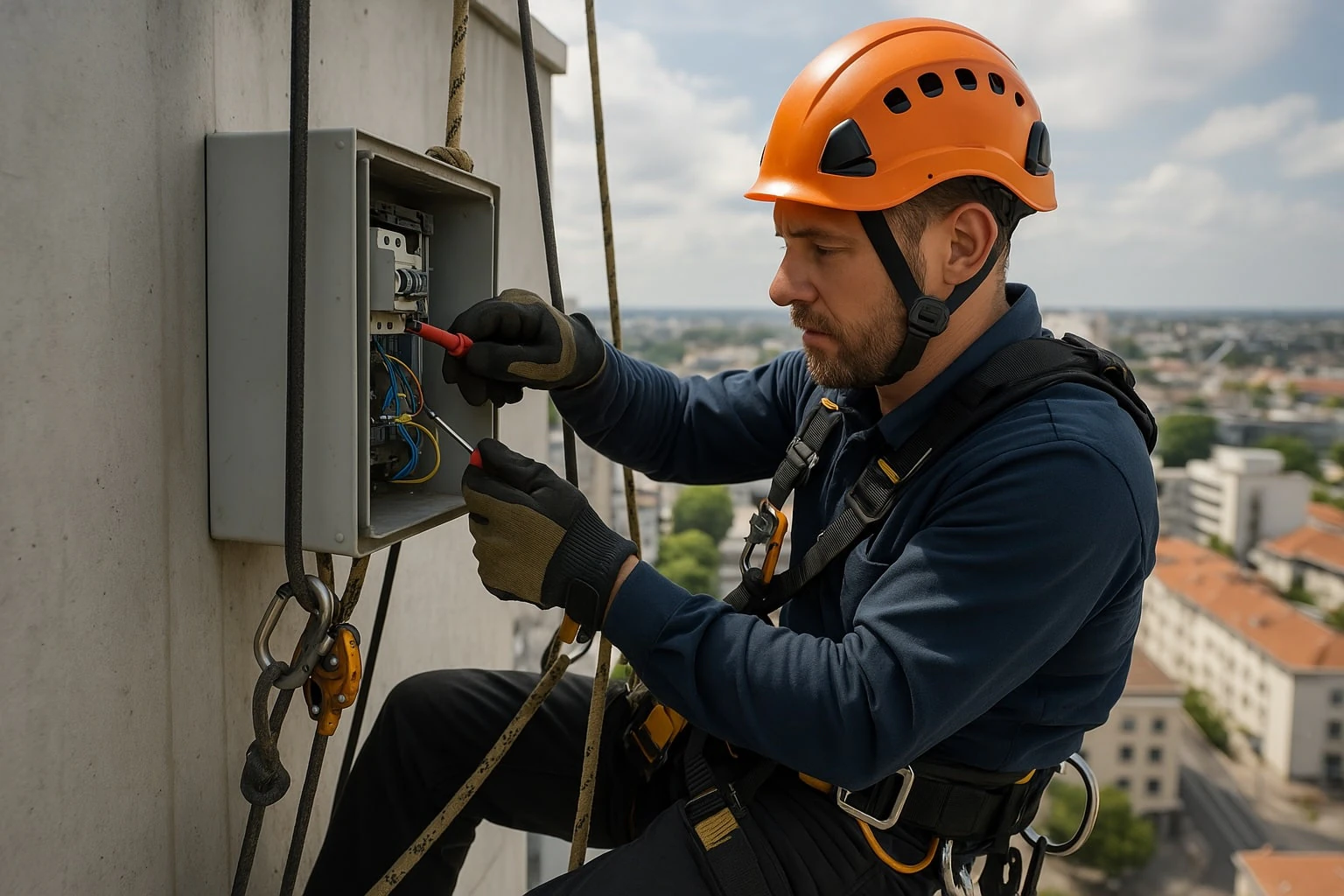
Rope Access for Elevated Electrical Projects
Electrical trade competence and rope access competence are separate requirements. The project plan must match both to the assigned task. Access planning considers:
- Setup and cost compared with scaffolding for the defined scope
- Suitable anchors, rope paths and work positions
- Rescue arrangements, exclusions and coordination with the site
Whether we’re working on a wind turbine nacelle or an offshore platform’s lighting grid, we bring the tools, skills, and discipline to get the job done right the first time.
Need Electrical Work at Height?
Contact us and let our IRATA-certified team handle your high-level electrical challenges—safely, efficiently, and professionally.
Electrical work at height: scope and handover evidence
Elevated electrical work requires both a defined electrical task and a suitable access plan. The scope may include installation, routing, connection, inspection or maintenance of the systems already described on this page. Gridinta selects the work positioning approach according to the structure, work area, tools and materials needed and the site's operating conditions.
Deliverables should be agreed for each project and may include installation or maintenance records, identified cable or equipment locations, photographs, test results where included in the scope and a list of outstanding items. The client should define drawings, labelling, test requirements and acceptance criteria before work starts.
For a quotation, provide the site and asset, electrical drawings or photographs, system and voltage information, required work and quantities, height and access points, preferred dates, isolation arrangements and any shutdown restrictions. Energisation status, permits, weather, fragile surfaces, falling-object controls and coordination with other trades can affect the work plan.
Gridinta can combine this service with rope access inspection services, structural installation work and onshore oil and gas facility work.
Verifiable credentials: Gridinta is listed in the IRATA directory as an IRATA Full Operator member 6036/O and holds ISO 9001:2015 certificate GKLT-0480-QC for construction project implementation service, technical maintenance and consulting, valid from 28 February 2025 to 27 February 2028.
| Installation type | Task | Access constraint / client input | Agreed work record |
|---|---|---|---|
| Elevated cable route | Install or reroute identified cables | Drawings, route IDs, supports, lifting route and isolation boundary | Cable IDs, route changes and marked-up drawing where included |
| Industrial lighting | Replace identified fittings or components | Circuit identification, fitting specification, access points and outage window | Locations and quantities completed; test results if included |
| Wind turbine components | Defined electrical maintenance or inspection support | Asset-specific instructions, authorised task, turbine state and access restrictions | Component IDs, findings, completed work and unresolved items |
The scope must identify who controls isolation, who confirms the equipment state, who performs specified tests and who authorises return to service. HSE’s electrical testing guidance favours work with the system dead wherever possible. Rope access certification alone does not establish electrical authorisation.
For turbine-specific inspection needs, see wind turbine inspection services.