
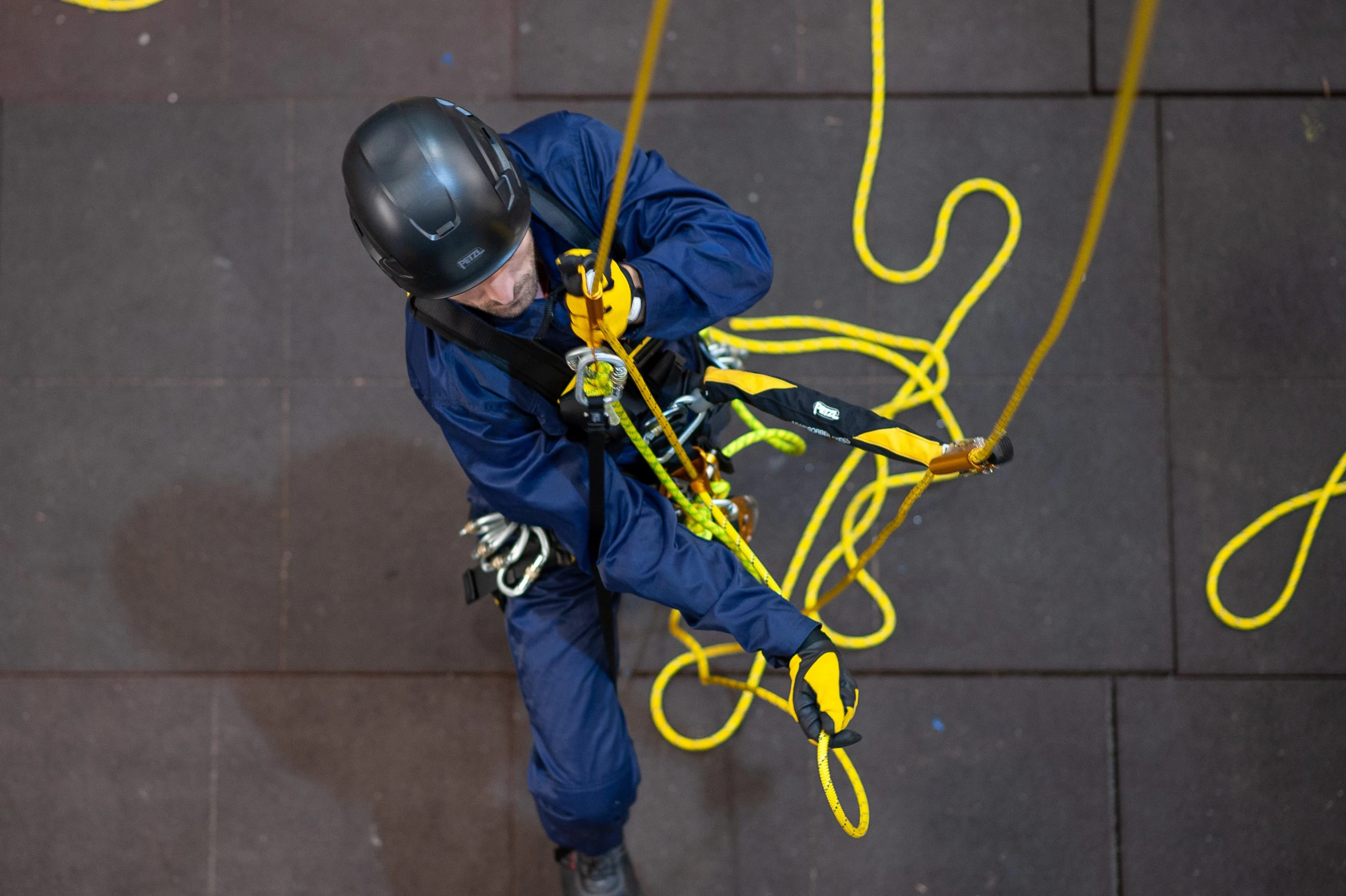
Industrial Rope Access Services for Inspection, Repair and Installation
Inspection, maintenance and repair at height for wind turbines and industrial structures. Share the structure, task and site conditions so we can assess access, rescue planning and the evidence required for your project. Industrial abseiling provides access for the agreed inspection, maintenance or repair task.
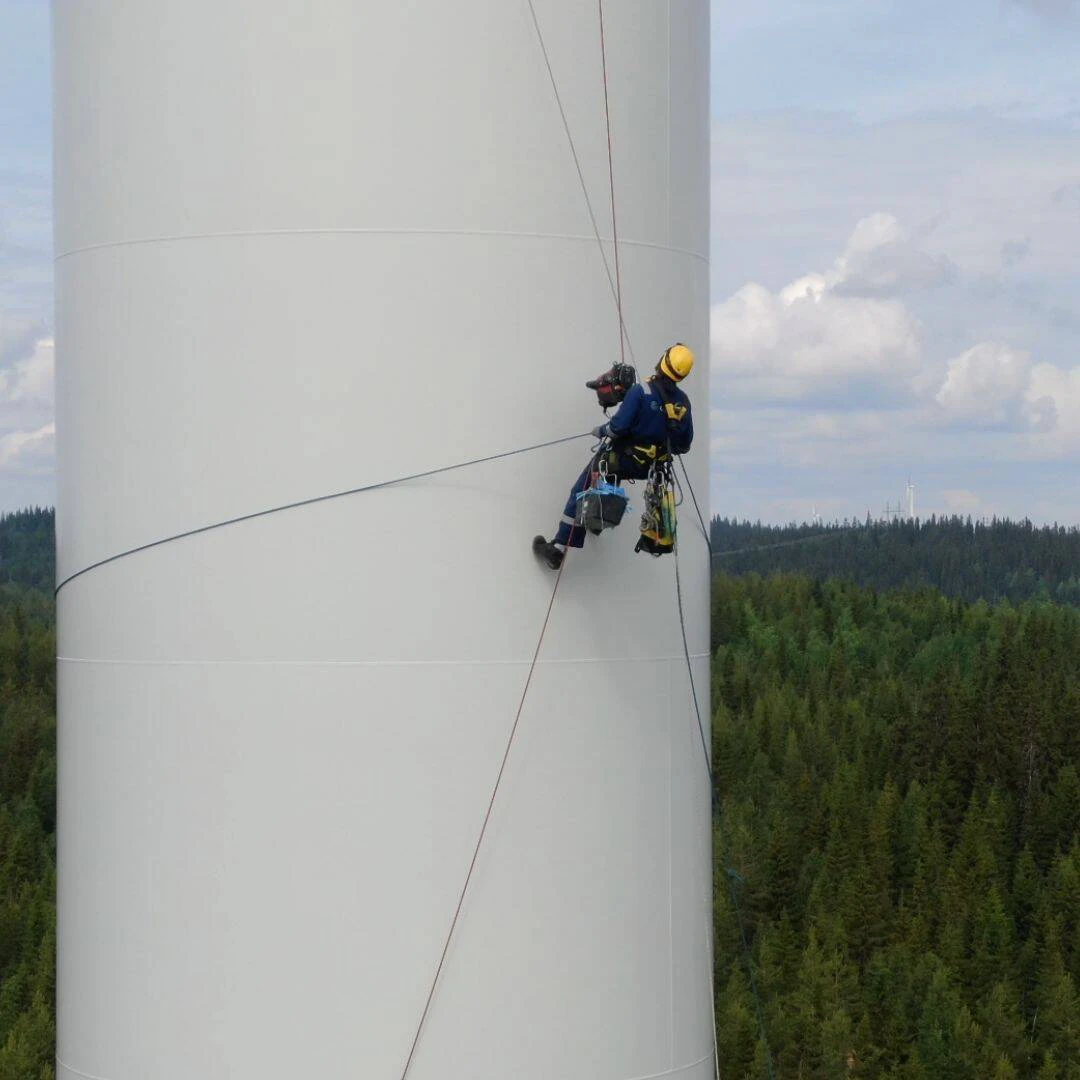
Industrial rope access for a defined scope
Gridinta provides industrial rope access for defined tasks on wind turbines and other industrial structures, onshore and offshore. Access is one part of the scope: the team also needs the right trade competence, isolation, permits and reporting requirements for the work being done.
Gridinta is listed by IRATA as a Full Operator member, 6036/O. Technicians’ access qualifications and any specialist requirements are confirmed for each task.
The task may form part of a wind turbine inspection scope, onshore wind farm maintenance or offshore oil and gas maintenance. Each environment needs its own access, isolation and reporting interfaces agreed.
Rope access services by task and deliverable
Use these examples to define an enquiry. The work package confirms the method, competent personnel, coverage and handover before mobilisation; not every task or structure is suitable for rope access.
| Task / specialist service | Access constraint to resolve | Handover to agree | Specialist requirement |
|---|---|---|---|
| Inspection, NDT and coating inspection | Reach, surface condition, probe or instrument access and inspection coverage. | Asset / location references, findings, photographs, measurements and stated limits. | The relevant method qualification and procedure must be confirmed; IRATA certification is not an NDT qualification. |
| Blade and local repair | Stable positioning, weather window, materials and recovery route. | Defect map, agreed repair scope, process and completion records. | Repair competence and the applicable approved repair / OEM instructions are separate from access competence. |
| Welding and fitting | Heat, sparks, rope protection, lifting / handling and isolation. | Agreed weld or installation records and any specified acceptance inspection. | Welder qualification, welding procedure and inspection requirements must match the contract. |
| Painting and corrosion protection | Surface preparation, overspray, waste containment and application conditions. | Area references, preparation and application records, and specified coating checks. | Coating specification, applicator competence and any inspector requirements are agreed for the system. |
| Electrical work at height | Isolation, cable / tool handling and safe work positions. | Specified installation, test or maintenance records and any unresolved defects. | Appropriately authorised electrical personnel and site isolation arrangements are needed. |
When rope access suits the task
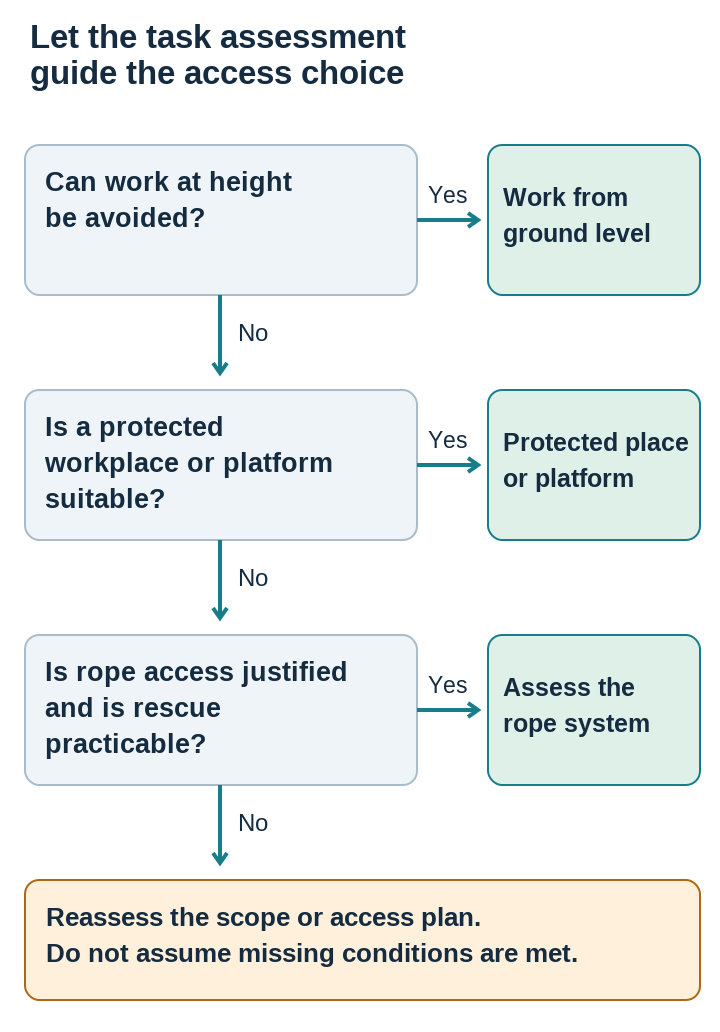
Rope access can suit targeted inspection, local repair or installation where a protected platform is not the appropriate option and a competent assessment supports the method. Its equipment footprint can be small, but exclusion zones, material handling and rescue access still need space. Repeated access, several trades, heavy materials or extensive containment may favour scaffolding, a lift or a combined approach.
Rope access can reduce setup time and disruption, depending on the task, access plan and surrounding operations; shutdown and isolation requirements still apply. Compare the alternatives in our rope access versus scaffolding guide and the assumptions behind rope access quotes. For Great Britain, the Work at Height Regulations 2005 require collective protection to be given priority over personal protection; apply the requirements of the project’s jurisdiction.
How a rope access job runs
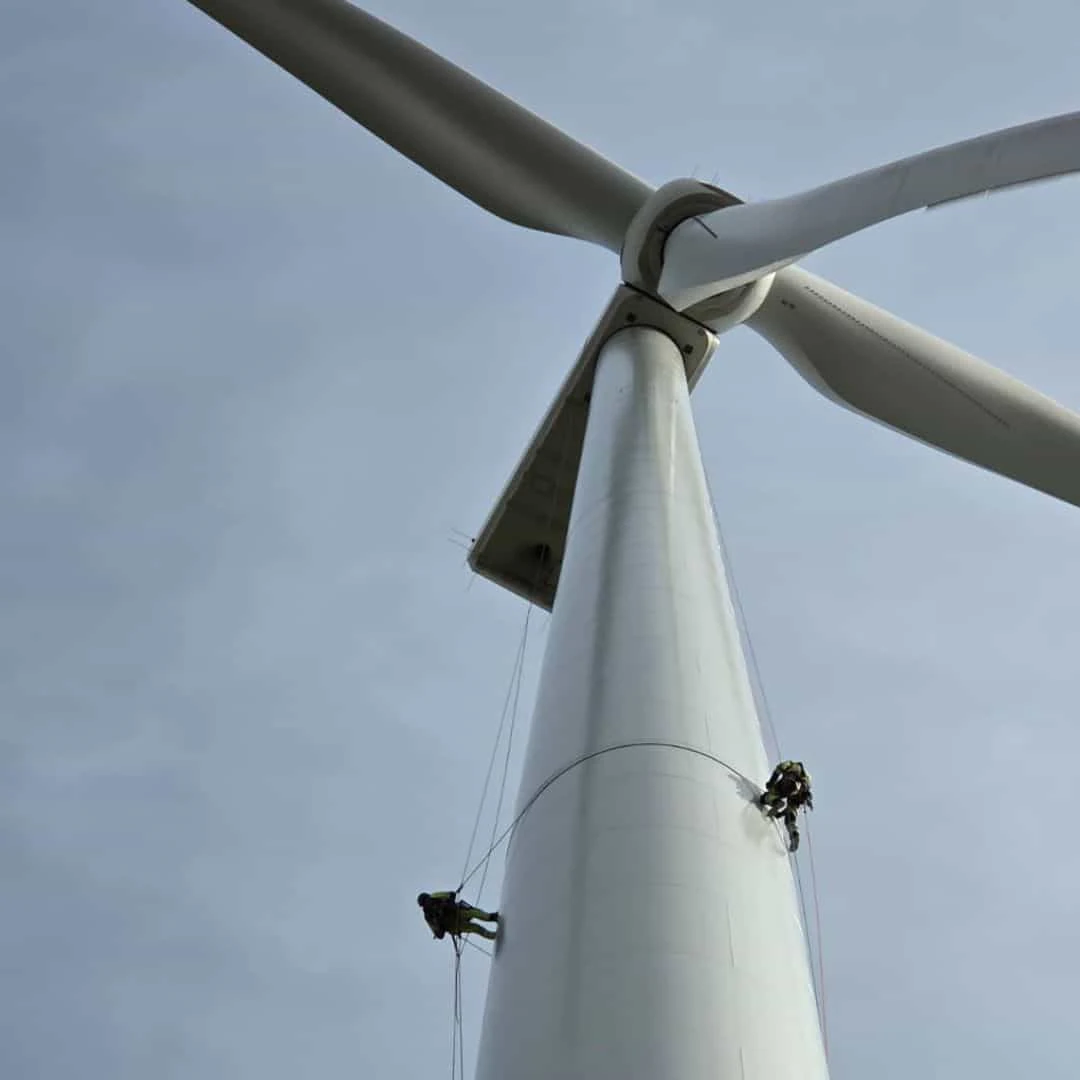
- Define the brief: structure, exact task and locations, drawings or photos, expected coverage and the decision your records need to support.
- Assess the site and interfaces: access alternatives, anchorage feasibility, isolation, permits, weather, containment and other operations.
- Agree the work pack: competent team, supervision, method, equipment, rescue arrangements, acceptance requirements and reporting format.
- Confirm readiness and carry out the agreed work: brief the team and review changes before continuing outside the original assumptions.
- Hand over the agreed evidence: identify what was completed, what could not be covered and any follow-up required.
Access competence and task competence
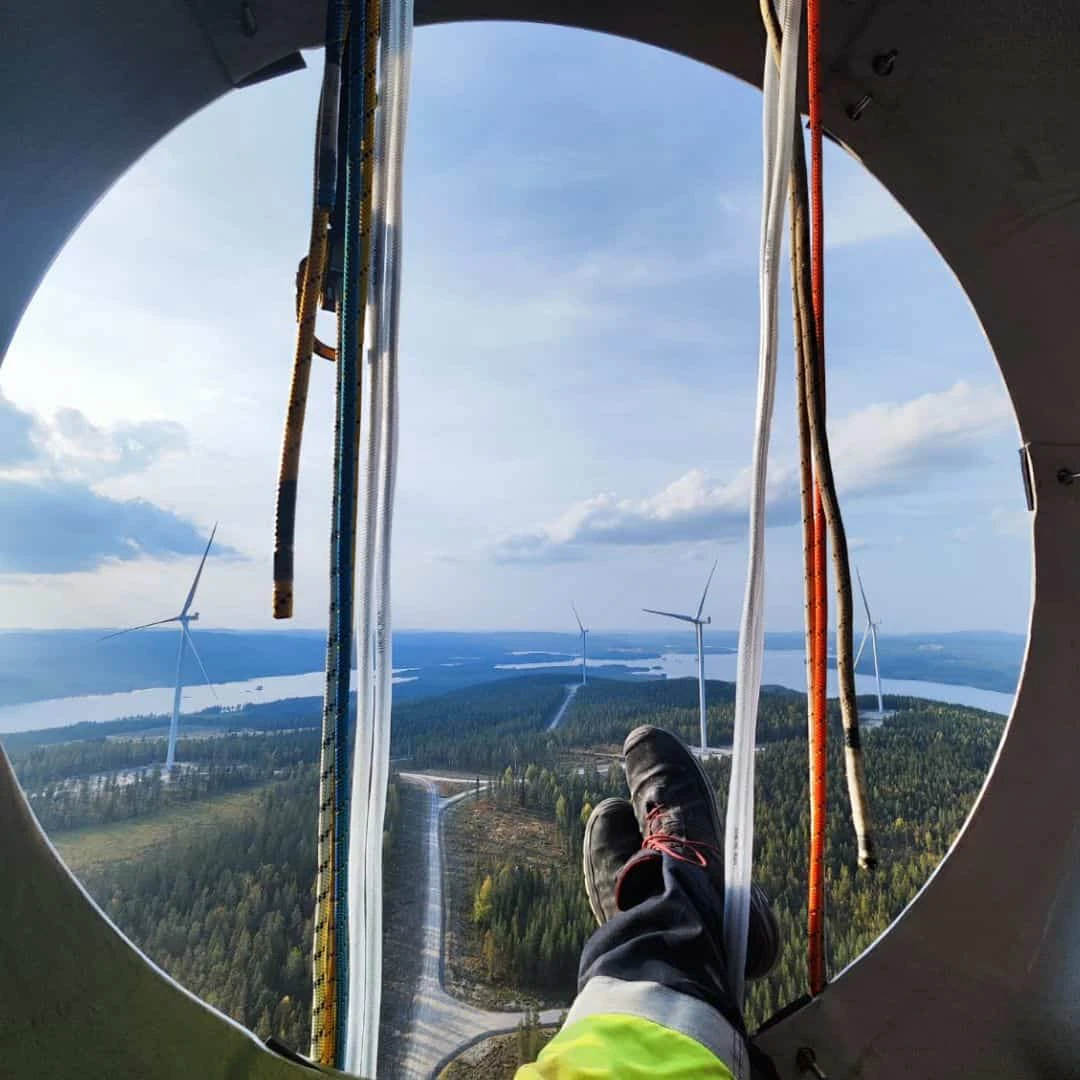
An IRATA qualification covers rope access at the relevant level. It does not by itself qualify someone to weld, perform NDT, approve a coating system or undertake electrical work. Ask for the evidence appropriate to the trade, alongside access supervision and a site-specific rescue plan. Our guides explain what to check in an IRATA team, the limits of rope access safety statistics and what NDT methods can and cannot show.
Quality management: Gridinta holds ISO 9001:2015 certificate GKLT-0480-QC for construction project implementation service, technical maintenance and consulting, valid from 28 February 2025 to 27 February 2028.
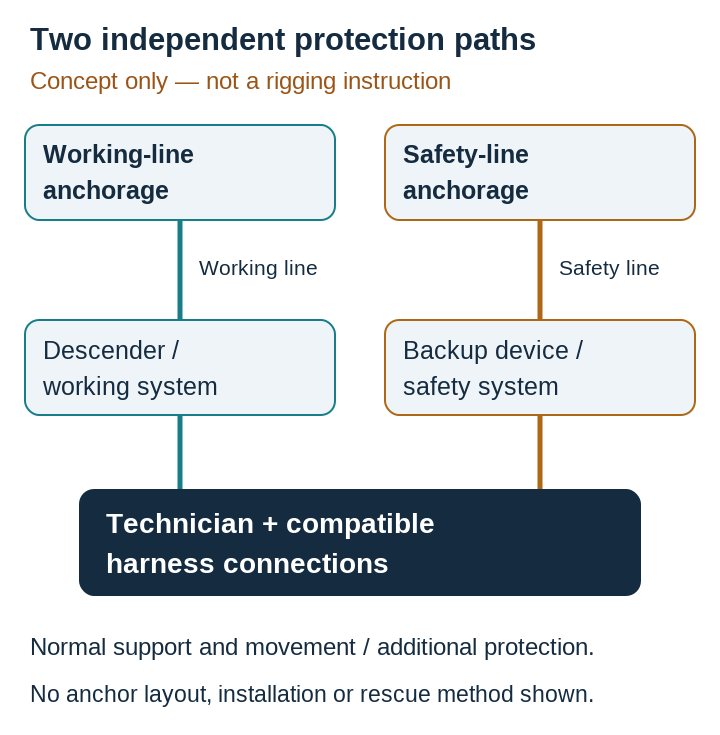
Double protection in the access system
Working and safety systems serve separate roles within the planned access method.
Project experience
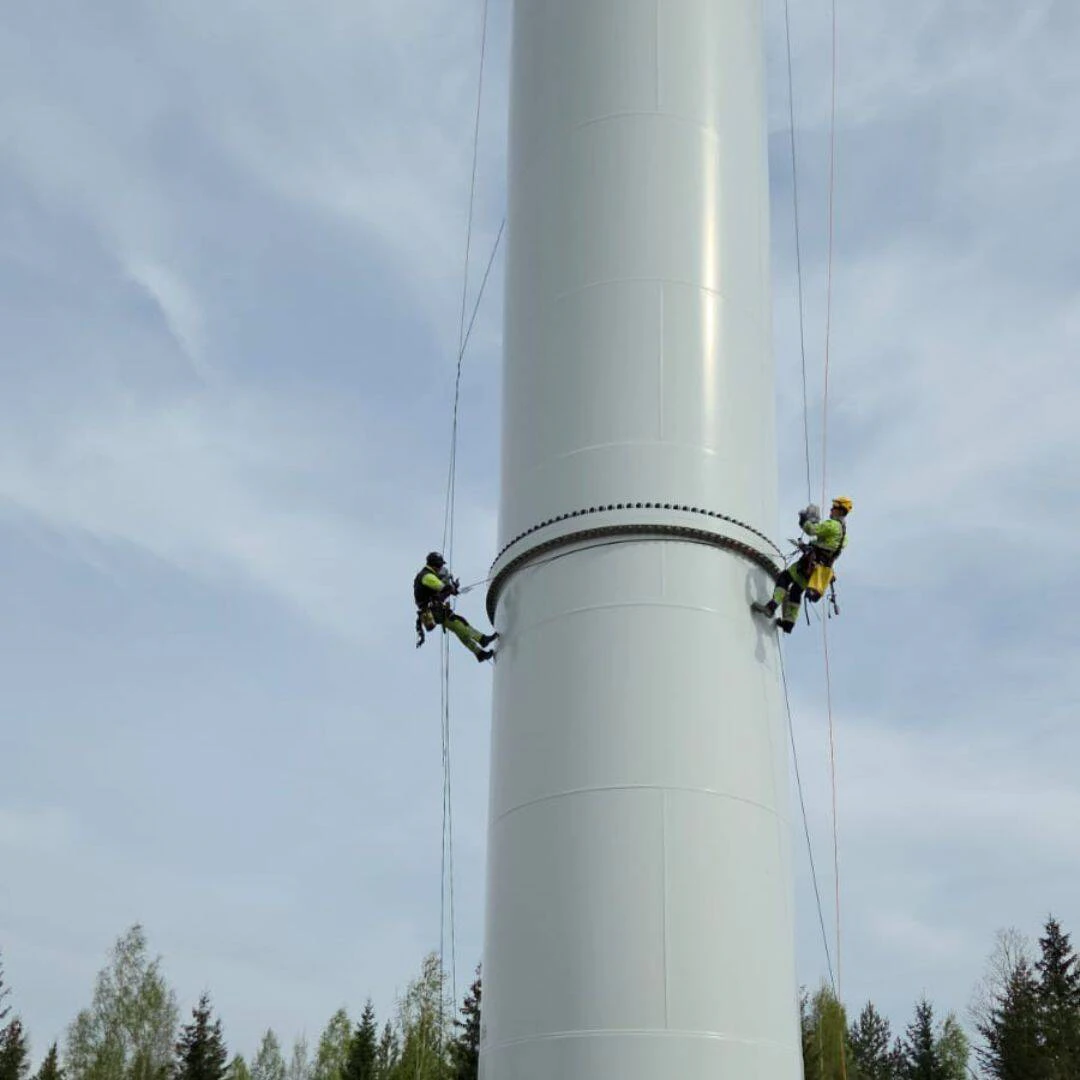
In 2025 Gridinta maintained 705 wind turbine blades, as set out in our 2025 recap. For a comparable scope, ask us for relevant examples and agree the records your project will receive.
For access equipment enquiries, Gridinta also supplies and services Smart Spider powered ascenders.
Request a rope access proposal
Send the site location, structure and work height; the exact task and quantity; photographs or drawings; access and operational restrictions; target dates; and the inspection or completion evidence you need. Include known isolation, permit, containment and lifting requirements so the proposal can make its assumptions and exclusions clear.