
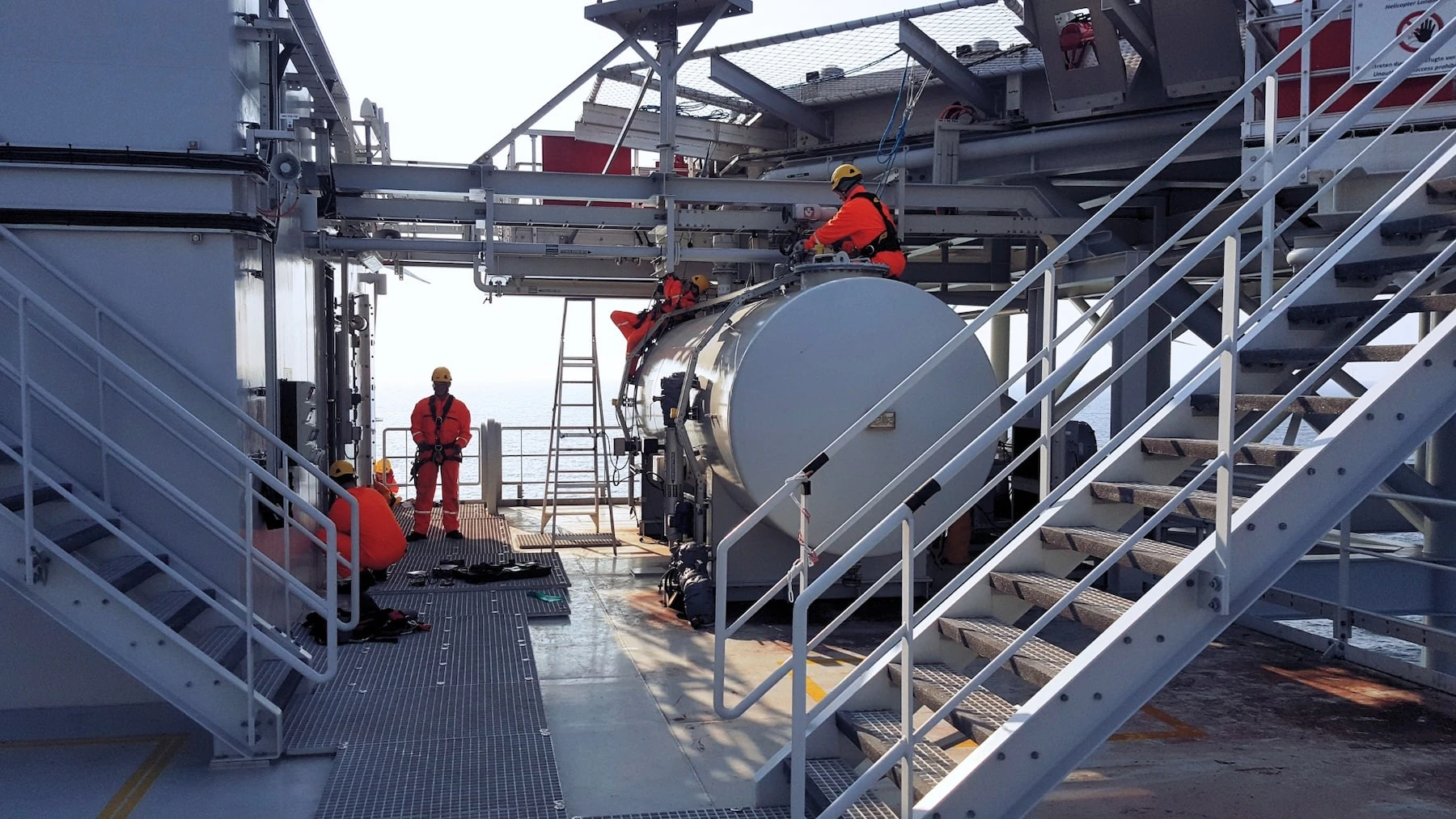
Industrial Storage Tank and Reservoir Construction
Fabrication, welding and on-site assembly of steel storage tanks and industrial reservoirs for liquids, gases and bulk materials, including platforms, stairs and ladders.
Types of Reservoirs We Build
Gridinta supports fabrication, welding and assembly of industrial steel storage tanks under an agreed construction scope. Here, “reservoir” means an industrial storage vessel rather than an open water reservoir. Intended contents, pressure, temperature and site conditions are design inputs that must be resolved for each project.
We construct and assemble various types of reservoirs tailored to the specific needs of each industry:
– Site-Built Modular Reservoirs: Prefabricated components assembled on-site for quick and efficient installation, ideal for large-scale projects.
– Workshop-Fabricated Tanks: Fully completed reservoirs manufactured under the agreed fabrication and supply scope, ensuring precise construction and quality control.
– Ancillary Equipment: Platforms, staircases, access ladders, and other supporting structures designed for safe and easy operation.
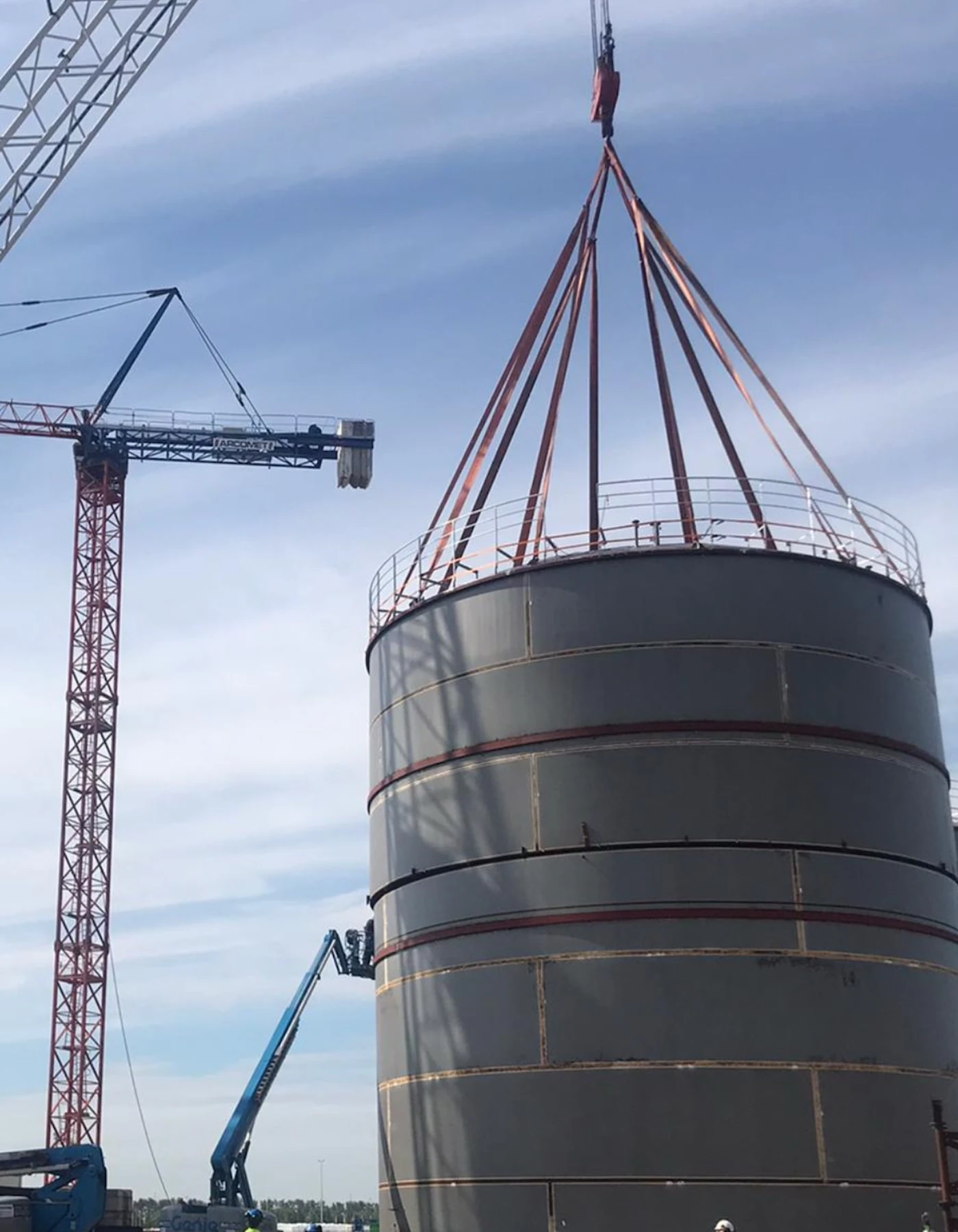
Our storage tank construction process
- Confirm the design basis: client requirements, approved drawings and the party responsible for design.
- Agree material supply and fabrication: material traceability, supply boundaries and fabrication location.
- Weld and assemble: agreed procedures, personnel qualifications and inspection hold points.
- Inspect and test: agreed methods, acceptance criteria, witness responsibilities and control of testing.
- Hand over: specified records and an outstanding-item list.
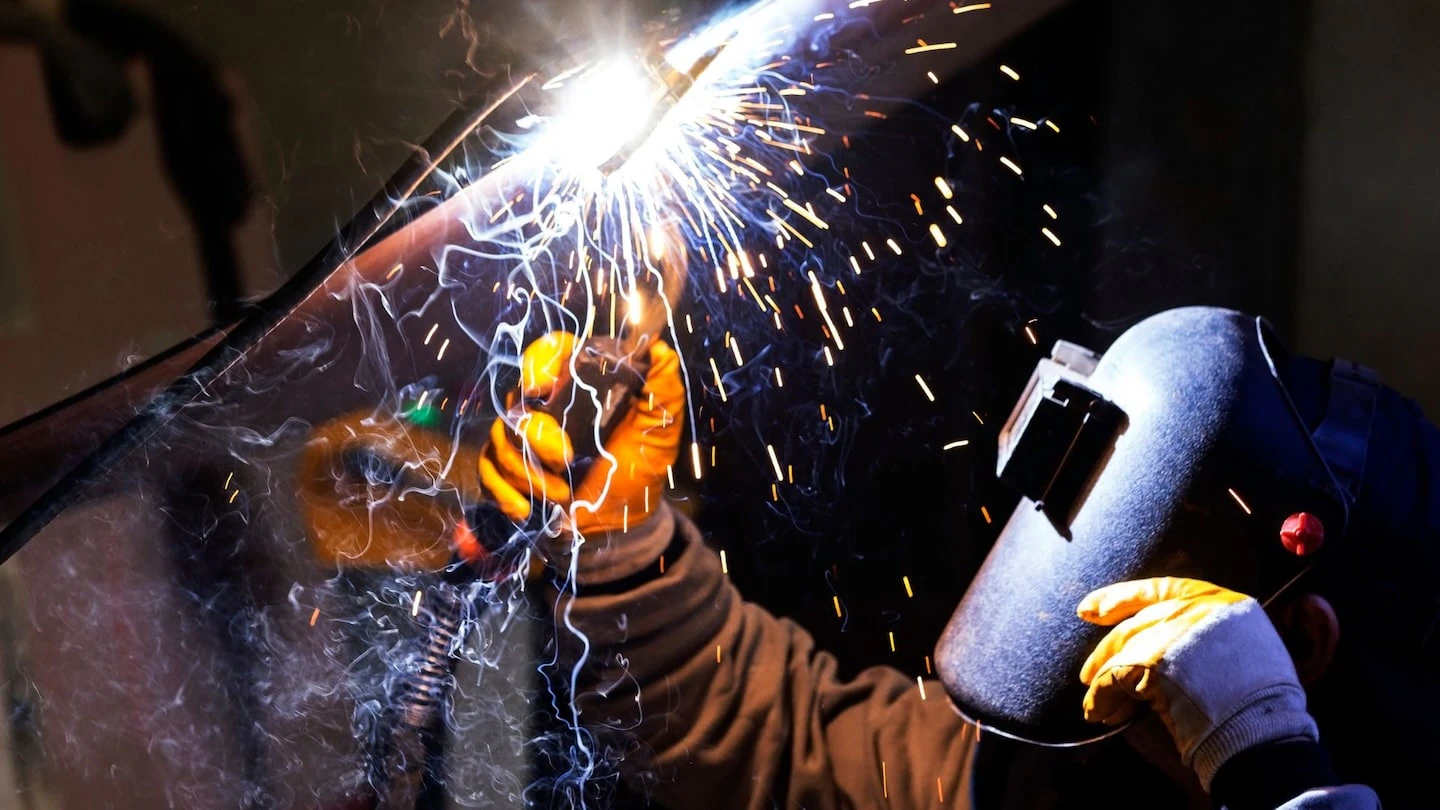
Welding procedures for storage tank construction
The proposed process and qualification range must match the material, thickness, joint and approved construction requirements. Confirm the applicable WPS, supporting qualification records and personnel qualifications before welding starts.
Our guide to WPS, WPQR and welder qualifications explains what each document proves. A general process list does not qualify a particular tank weld.
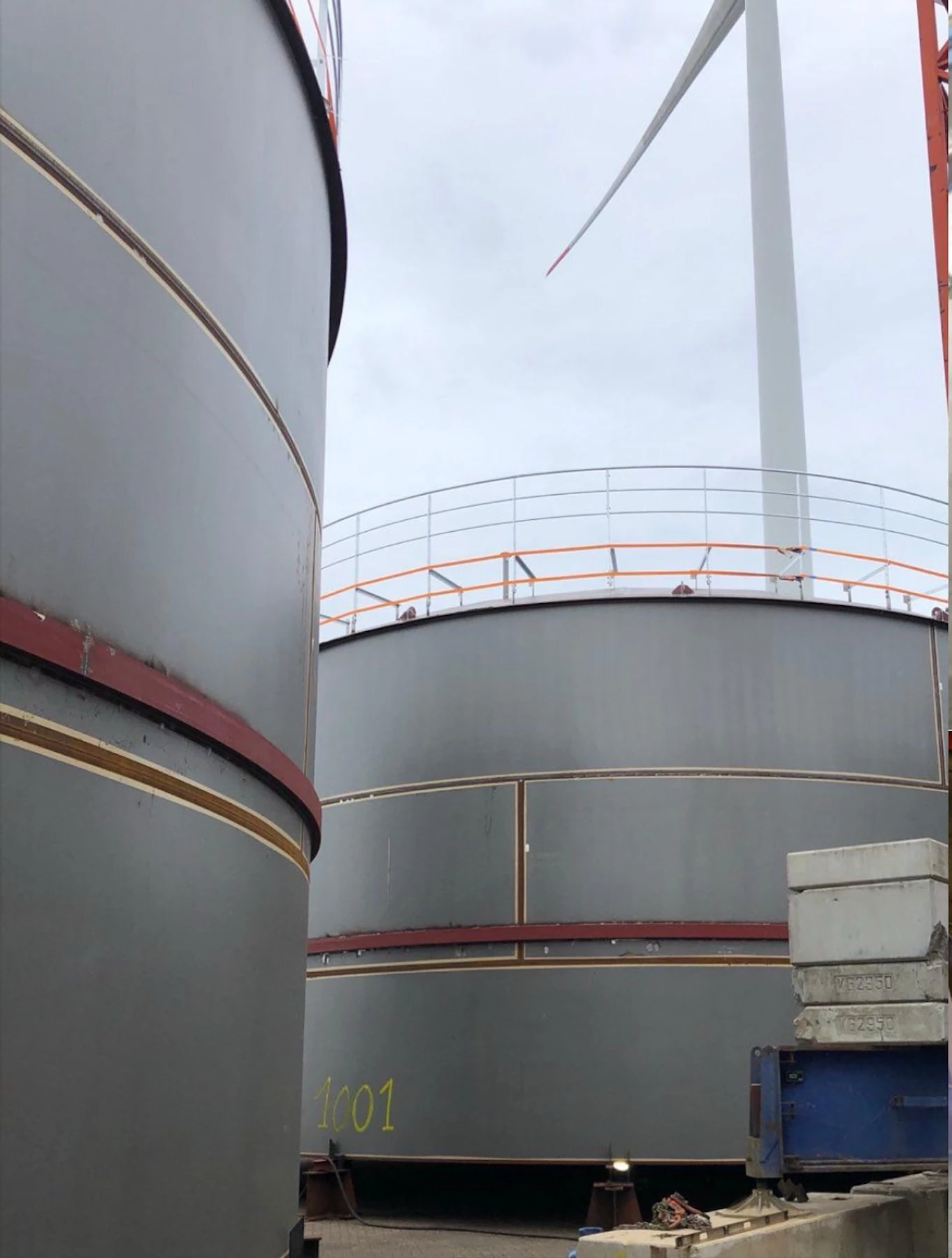
Top-Quality Reservoirs for Your Industry
Our reservoir construction services are trusted by clients across various industries, including:
Oil and Gas: Storage tanks for crude oil, refined products, and natural gas.
Renewable Energy: Reservoirs for biofuels, thermal storage, and water management.
Petrochemical: Storage solutions for chemicals, solvents, and industrial liquids.
Marine: Fuel and ballast tanks for ships, offshore platforms, and marine terminals.
Construction: Water storage tanks and bulk material silos for industrial and civil projects.
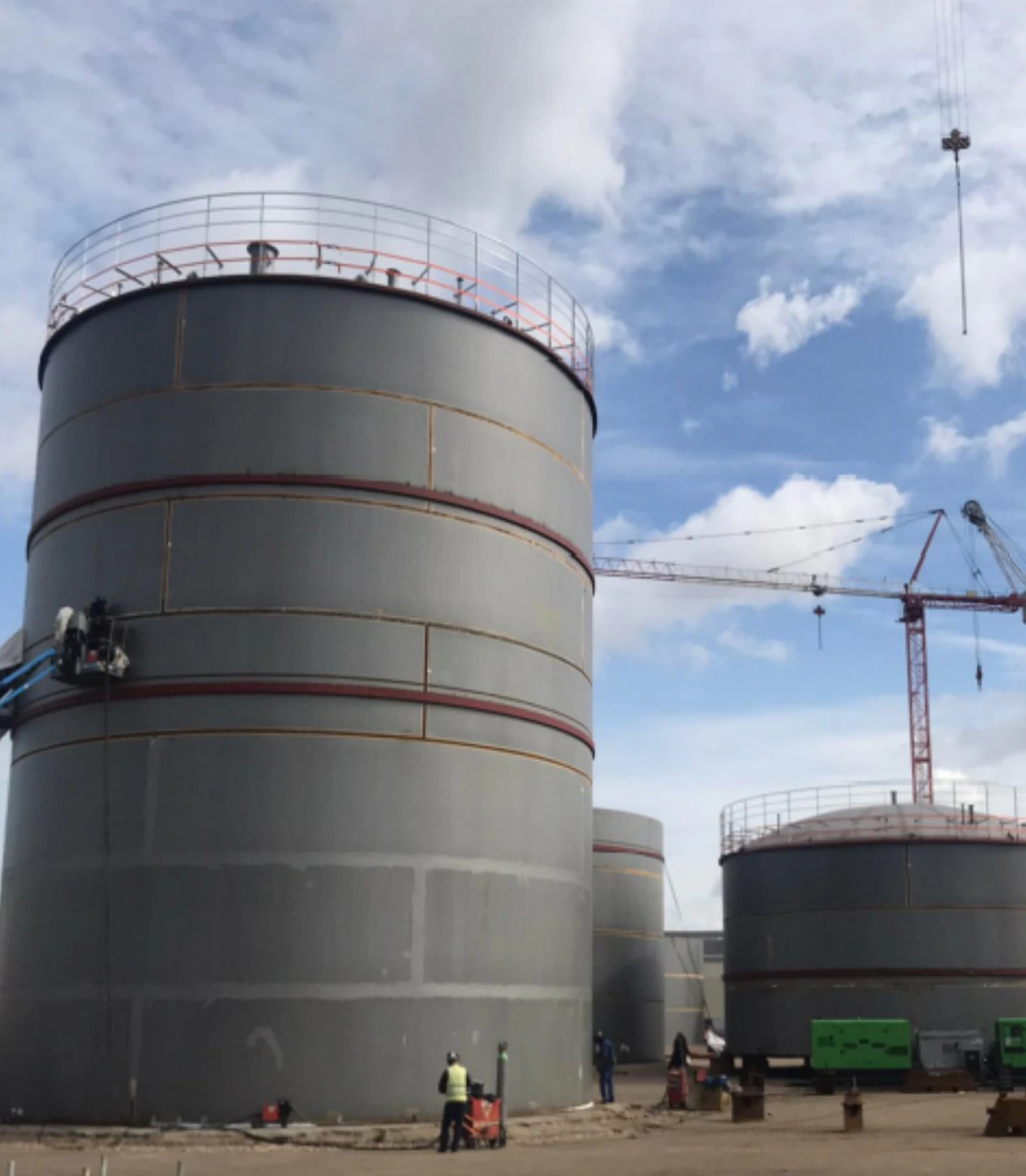
Why Choose Gridinta for Reservoir Construction?
Gridinta is a trusted partner in reservoir construction, recognized for its dedication to quality, safety, and customer satisfaction. Our experienced team of skilled welders, fitters, and construction experts brings extensive industry knowledge to every project.
Personnel qualifications, procedure ranges and site safety requirements are checked against the agreed tank construction scope.
We prioritize strict adherence to health and safety protocols, ensuring a secure working environment. The agreed design requirements and acceptance criteria define the work package.
Contact Us for Reliable Reservoir Solutions
Looking for a trusted partner to build durable, high-performance reservoirs? Gridinta is ready to deliver solutions that meet your needs and exceed your expectations.
Information Needed for a Reservoir Construction Proposal
Reservoir construction begins with the intended service, design basis and site conditions. Gridinta's work package may include fabrication, assembly, welding, installation and agreed inspection support. The final construction method depends on the approved design, material, dimensions, interfaces and site constraints.
Project controls and handover should define responsibilities for design, supplied materials, welding requirements, inspection points, dimensional checks, records and acceptance. Deliverables may include fabrication and installation records, inspection documentation included in the scope, photographs and punch-list status.
For a quotation, provide the reservoir type and intended contents, site location, approved drawings or design status, dimensions and capacity, material specification, connections and foundations, required inspection, target schedule and operating-site restrictions. Ground conditions, lifting access, weather, confined-space controls, hot-work permits and interfaces with existing systems can affect the work plan.
Reservoir projects can draw on Gridinta's welding and fitting, NDT and coating inspection, protective painting and structural installation capabilities.
Verifiable credentials: Gridinta is listed in the IRATA directory as an IRATA Full Operator member 6036/O and holds ISO 9001:2015 certificate GKLT-0480-QC for construction project implementation service, technical maintenance and consulting, valid from 28 February 2025 to 27 February 2028.
Storage tank construction responsibilities and handover pack
The approved design and inspection and test plan define the construction boundary. Name who owns design, foundations, process connections and final acceptance. Confirm the fabrication location and supply chain for the particular order.
| Tank use | Material and design input | Construction scope to agree | Verification responsibility |
|---|---|---|---|
| Liquid storage | Contents, pressure, temperature, material and coating specification | Fabrication, erection, welding and any specified coating work | Appointed designer sets requirements; named inspection parties record results |
| Bulk-material storage | Stored material, loads, discharge and support details | Shell and agreed installation work to approved drawings | Designer and client-appointed receiving party |
| Platforms, stairs and connections | Interface drawings, loads, foundation and piping boundaries | Only the ancillary elements named in the order | Named structural, foundation and process-connection owners |
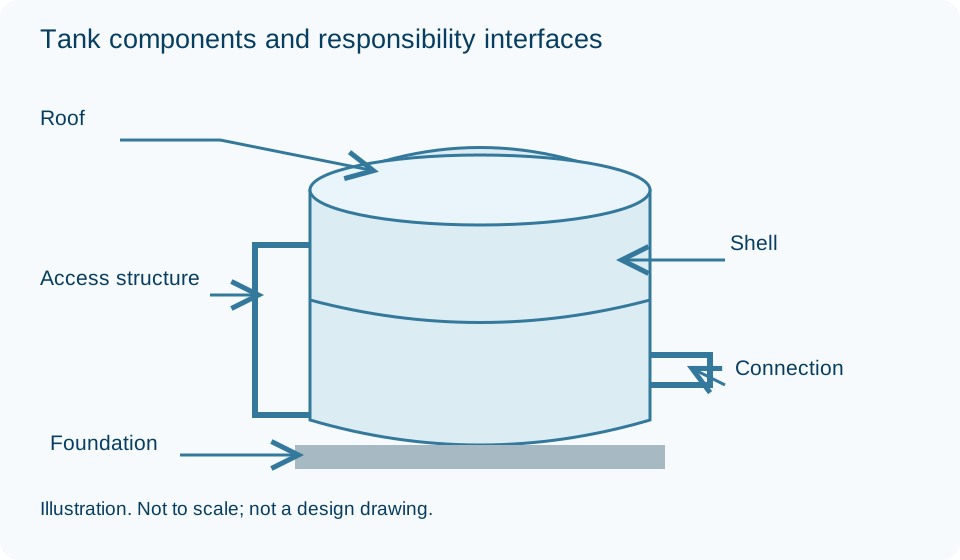
Agree the handover index before construction: material records, weld map, WPS and qualification references, dimensional checks, NDT and test records, coating records and outstanding items as specified. Construction completion and authorisation to put the tank into service are separate milestones. For later maintenance, see storage tank inspection scope and reporting.