
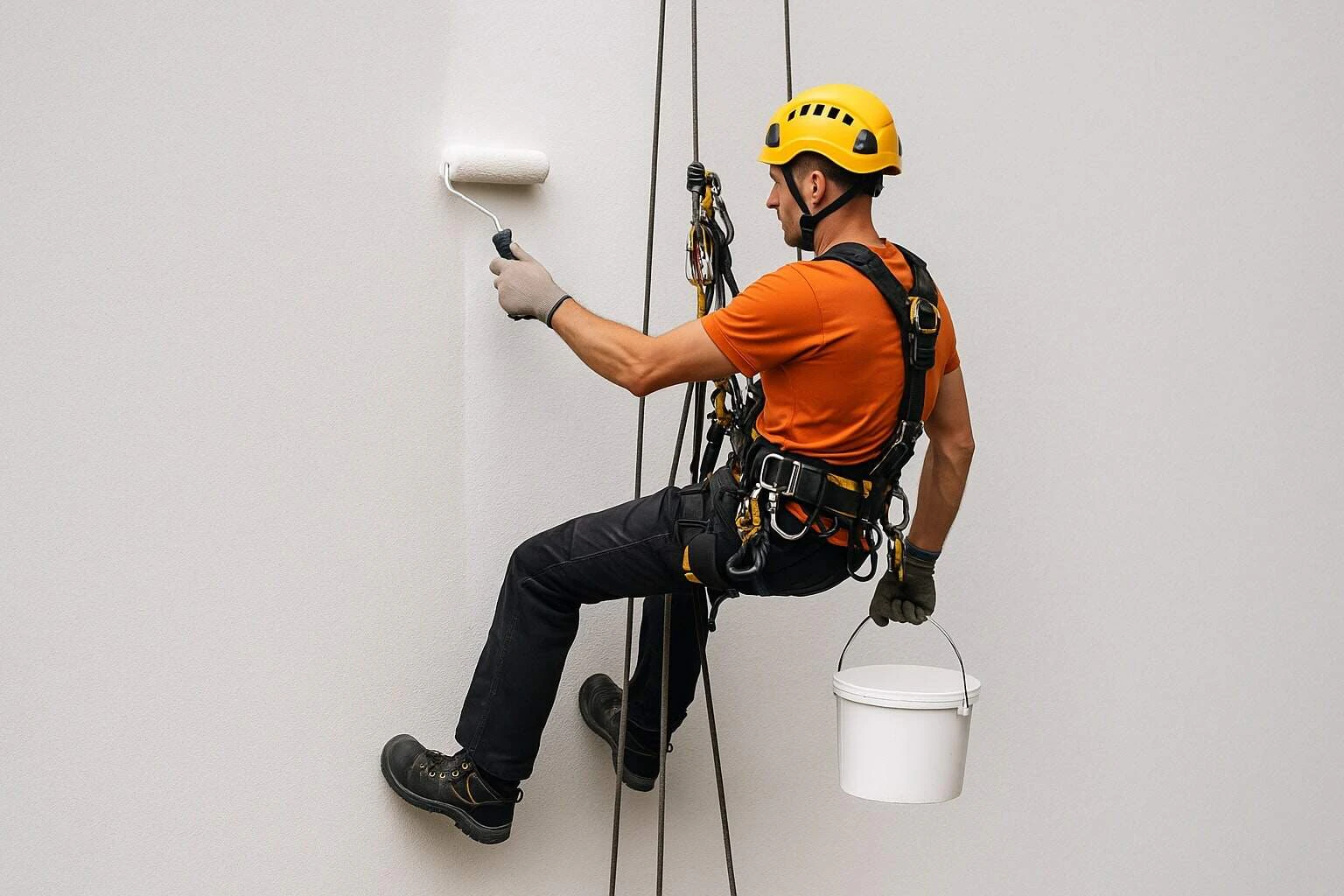
Painting Services at Height
Precision coating and painting in elevated, hard-to-reach areas—executed by certified rope access professionals.
Painting is more than appearance—it’s protection. With the right application, we help your structures resist rust, UV damage, salt exposure, and weathering. Our work not only enhances visual presentation but also reduces long-term maintenance needs.
Gridinta delivers safe, efficient, and high-quality painting services at height for industrial, energy, and offshore structures. From corrosion protection to detailed coating applications, we ensure every surface is reached and treated with expert care.
Painting Services for High-Level Installations
Tall structures and remote locations demand more than just good painters—they require teams that can safely access complex surfaces. Our IRATA-certified rope access technicians are trained to handle even the most challenging painting projects without the need for scaffolding or lifts.
Our painting work at height includes:
Corrosion-resistant coating for steel structures
Touch-up and repainting of weathered surfaces
High-performance industrial coatings
Offshore and marine environment applications
Maintenance painting for towers, turbines, chimneys, and more
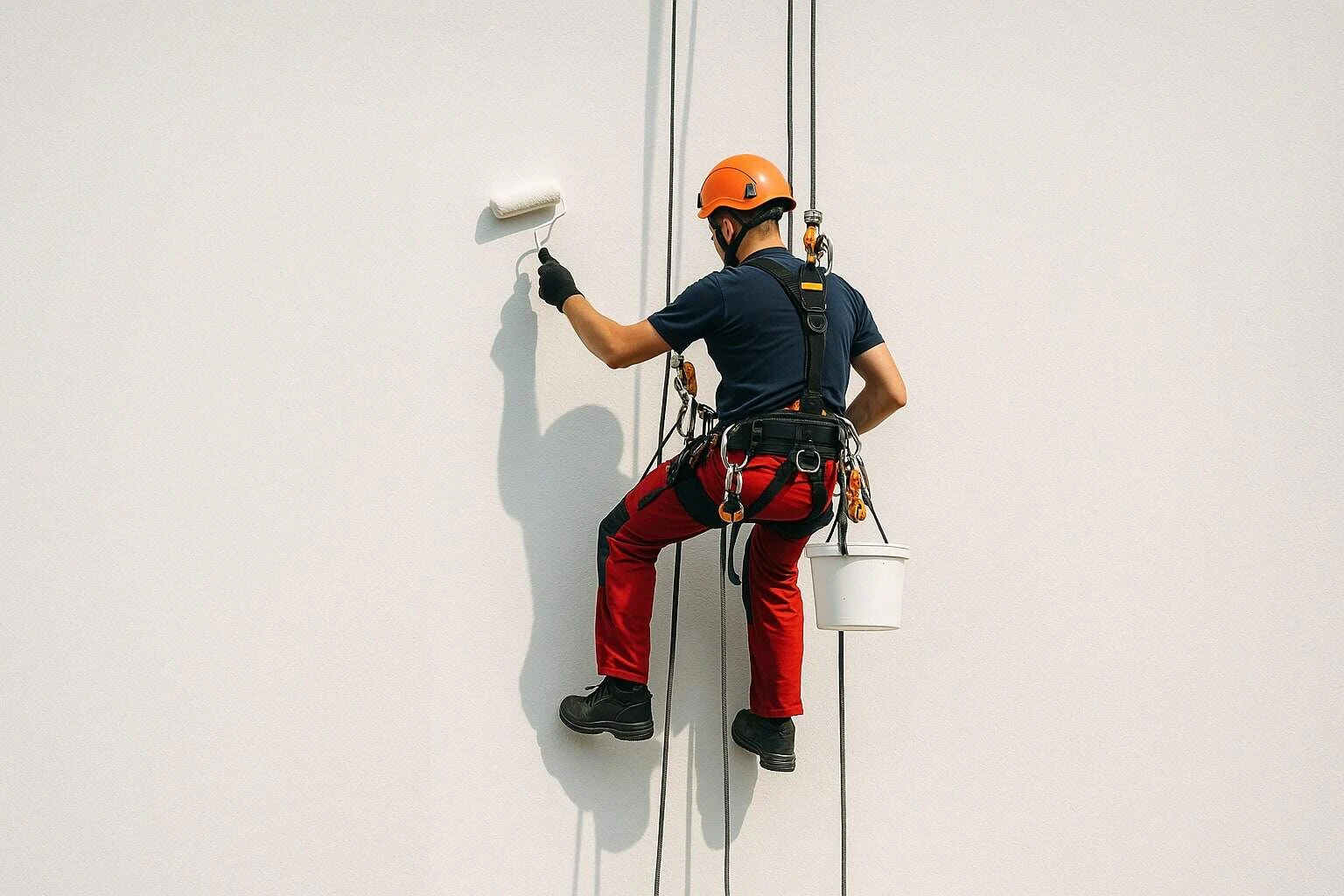
Rope Access for Industrial-Grade Painting
Every member of our rope access painting team is IRATA-certified and experienced in high-risk environments. We work quickly, safely, and without disrupting ongoing operations.
Rope access benefits for painting work:
Access to confined or elevated structures
Minimal equipment footprint
Reduced project time and cost
Certified safety procedures on every job
Whether it’s a wind turbine tower, offshore platform, or industrial stack, we deliver flawless finishes at any height.
Need Painting Services at Height?
Trust Gridinta’s experienced rope access team to get the painting job done—safely, efficiently, and with zero compromise on quality.
Defining a Painting-at-Height Scope
Coating performance depends on the substrate condition, preparation and application specification as well as access. Gridinta can support surface preparation and painting on elevated industrial structures where the work area can be accessed and controlled safely. The coating system, preparation grade and application conditions must be agreed for the asset and exposure.
Project handover may include completed areas and quantities, photographs, material or batch records supplied for the work, environmental or coating checks included in the agreed inspection plan and a list of repaired or outstanding areas. Client acceptance points should be clear before preparation begins.
For a quotation, share the structure and location, drawings or photographs, approximate surface area, substrate and existing coating condition, specified coating system, required preparation, access points, target window and operating restrictions. Contamination, corrosion, lead or other hazardous legacy coatings, weather, curing conditions, overspray controls and nearby live operations may affect method and schedule.
Related services include steel surface and coating inspection, rope access and steel repair and fitting.