
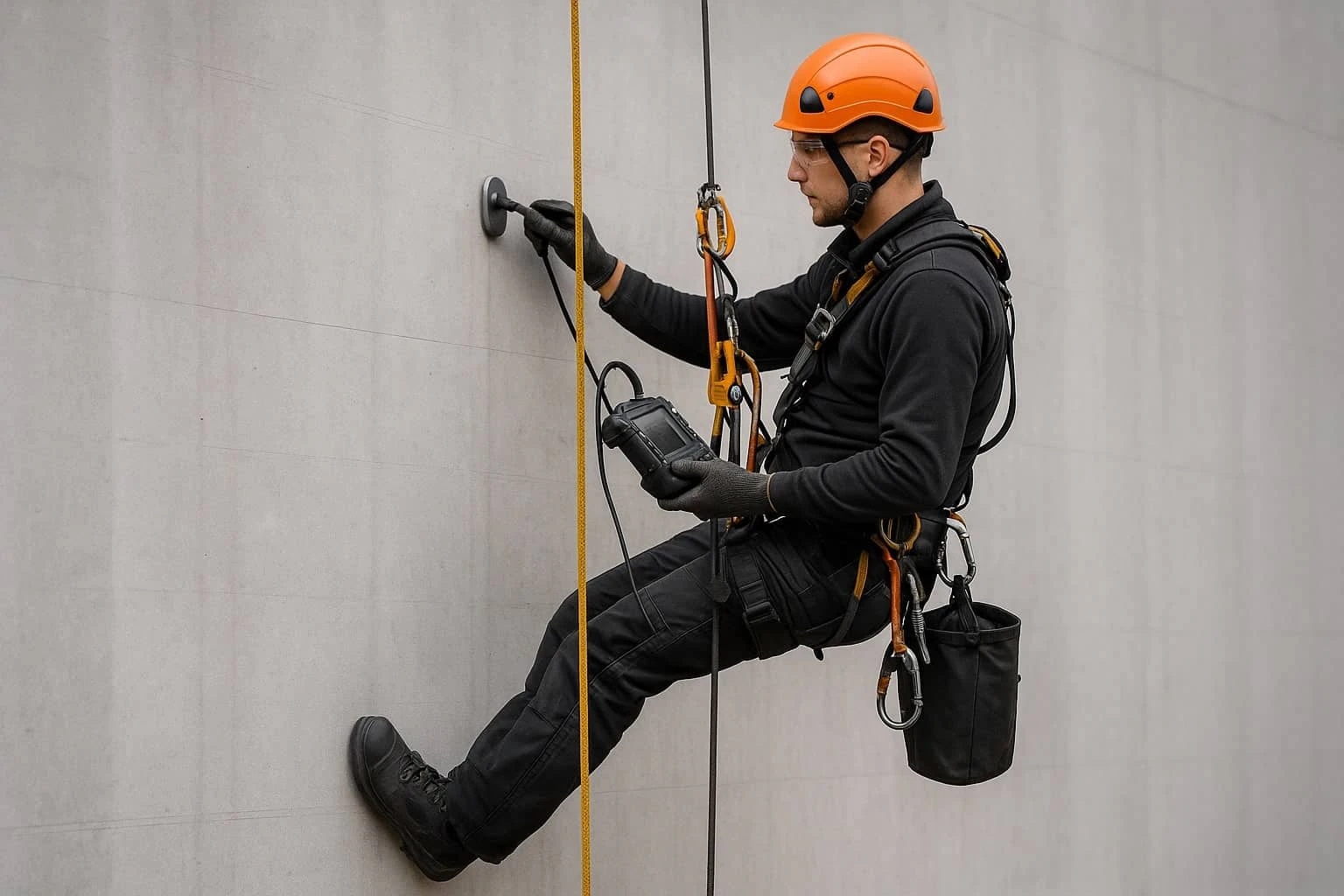
Rope Access NDT and Steel Coating Inspection
Industrial steel and weld inspection, coating checks and reporting, with rope access where suitable. Inspector qualifications and inspection scope are confirmed for each project.
Gridinta provides industrial NDT and steel coating assessments onshore and offshore. Where rope access suits the inspection area and task, it can reduce scaffolding requirements. Equipment shutdowns and isolations depend on the method, location and site permit. Inspector qualifications and their applicable scope are confirmed for each project.
NDT versus coating inspection: which evidence do you need?
Weld or parent-metal condition and protective-coating condition are separate inspection questions. A coating-thickness reading does not show the thickness of the steel below it. Specify the material, suspected damage, inspection area and acceptance criteria before selecting a method.
| Material or inspection question | Method | Main limitation | Agreed deliverable |
|---|---|---|---|
| Visible weld or surface condition | VT / visual testing | Visible, accessible surfaces only | Area IDs, photographs and visible findings |
| Surface and near-surface indications in ferromagnetic metal | MT / magnetic particle testing | Magnetisable materials; not full-volume coverage | Indication locations and evaluation against agreed criteria |
| Discontinuities open to a surface | PT / penetrant testing | Suitable clean, nonporous surface required | Locations and characteristics of indications |
| Steel thickness or internal discontinuities | UT / ultrasonic testing, separately scoped | Geometry, surface and sound path constrain coverage | Mapped thickness readings or flaw-examination findings |
| Visible surfaces inside a cavity | Borescope inspection | Camera field of view only | Located images and areas not reached |
| Protective paint thickness | Dry-film thickness measurement | Sampling plan; does not show steel thickness or adhesion | Areas, readings, instrument details and agreed evaluation |
See ASNT’s method limits for MT, PT and UT. ISO 19840 addresses dry-film thickness measurement and acceptance criteria on rough surfaces. The project specification and required personnel qualification remain separate agreements.
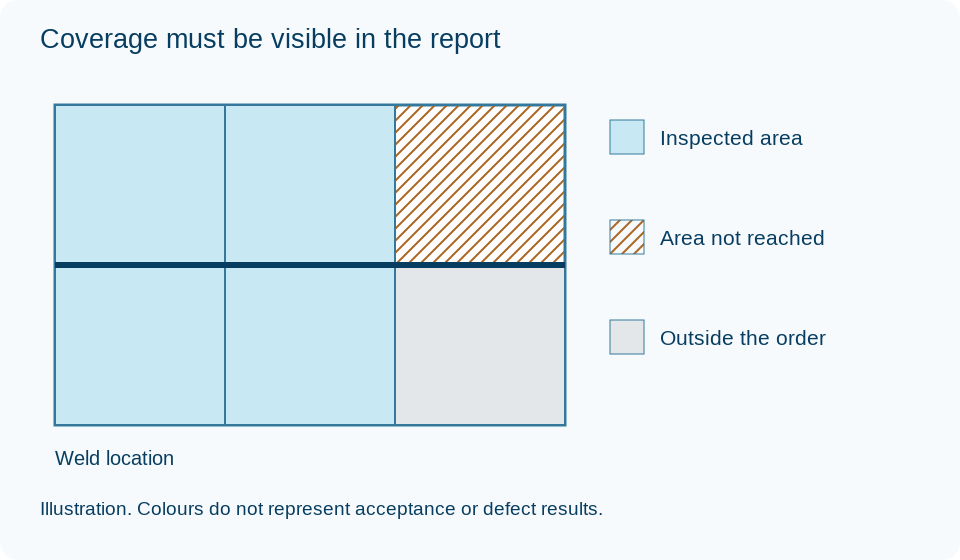
For the evidence behind a finding, see weld inspection and reporting. For paint work, use the coating inspection checklist; insulation introduces separate CUI inspection limits.
Professional Non-Destructive Testing Services
NDT is essential for detecting internal and surface-level defects in steel without damaging the structure. Our technicians use advanced tools and proven methods to identify cracks, corrosion, and weld flaws—before they become critical failures.
Our NDT techniques include:
Ultrasonic Testing (UT) for internal flaws
Magnetic Particle Testing (MT) for weld inspections
Penetrant Testing (PT) for surface cracks
Visual Testing (VT) by qualified inspectors
Borescope/endoscopic inspection in confined spaces
These inspections are critical for preventive maintenance, regulatory compliance, and asset life extension.
Our guide to rope access NDT methods and limits explains which tests suit work from ropes.
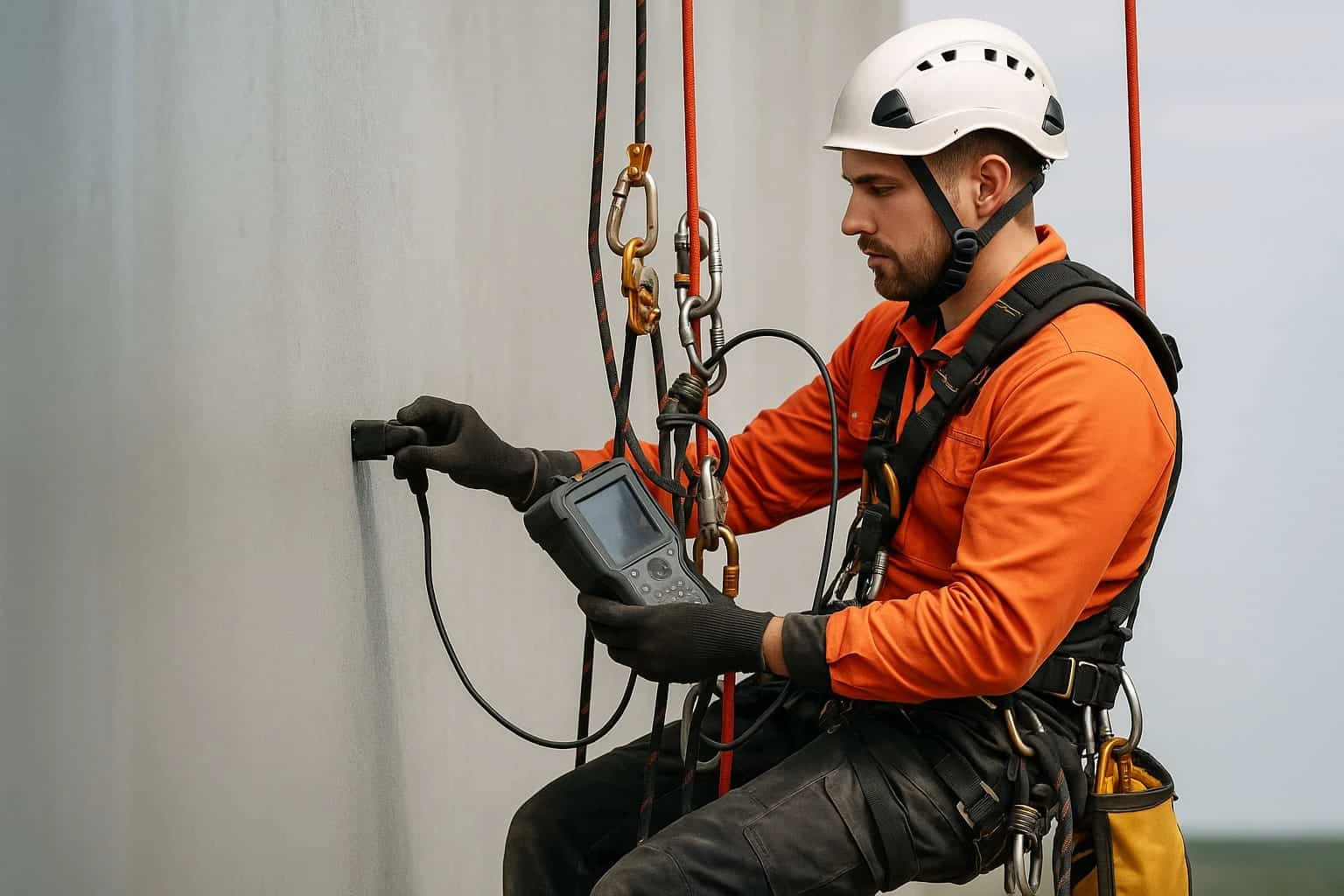
Steel Surface Coating Inspection Services
A coating is only as good as its application—and its condition over time. Gridinta performs detailed surface coating inspections to ensure your protective layers are intact, consistent, and within specification.
The specification usually starts from the site's corrosivity category under ISO 12944.
Steel surface coating inspection includes:
Coating thickness measurements
Adhesion and integrity testing
Surface preparation assessment
Corrosion mapping and analysis
Offshore and marine environment inspection
We help you verify steel coating performance and identify early signs of deterioration before damage occurs.
Where breakdown is found, rope access painting and recoating can be scoped from the same findings.
Need NDT or Steel Surface Coating Inspection?
Ensure your steel structures are sound, and your coatings are doing their job.
Contact Gridinta today to schedule professional NDT or coating inspection with rope access precision.
Choosing the Inspection Scope and Deliverables
The inspection method should follow the material, component geometry, suspected discontinuity and access available—not a generic test list. Gridinta's existing capabilities include visual testing, penetrant testing, magnetic-particle testing, ultrasonic testing and thickness measurement, together with steel-surface and coating checks. The final method or combination is agreed for the asset and inspection objective.
Reporting can be tailored to the project and may include inspected areas, method used, marked defect locations, readings, photographs and a summary of findings. The applicable procedure, acceptance criteria, reporting format and responsibility for engineering disposition should be confirmed before work starts.
For a quotation, share the asset type and location, material and dimensions, drawings or weld maps, inspection area and quantity, suspected damage, previous reports, required method, acceptance criteria, access conditions and preferred schedule. Surface condition, coating removal, temperature, geometry, isolations and safe access can limit method suitability or productivity.
For tanks, see our guide to rope access storage tank inspection.
Inspection can support wind farm maintenance onshore, offshore turbine maintenance, industrial welding and fitting and rope access projects.
For blades, towers and gearboxes, use our wind turbine component inspection scope.
Verifiable credentials: Gridinta is listed in the IRATA directory as an IRATA Full Operator member 6036/O and holds ISO 9001:2015 certificate GKLT-0480-QC for construction project implementation service, technical maintenance and consulting, valid from 28 February 2025 to 27 February 2028.