
How IRATA-Certified Technicians Work: Controls Clients Can Verify
IRATA-certified technicians differ in practice because they work inside a defined rope access system. The useful distinction is not the badge alone, but the behaviours a project team can observe: planned access, disciplined checks, clear supervision, prepared rescue arrangements and accurate records.
The separate IRATA certification guide covers the three levels, progression and validity. This article focuses on how certified technicians work and where certification stops; those boundaries matter when a client is choosing a team.
They Work Inside a Defined Safety System
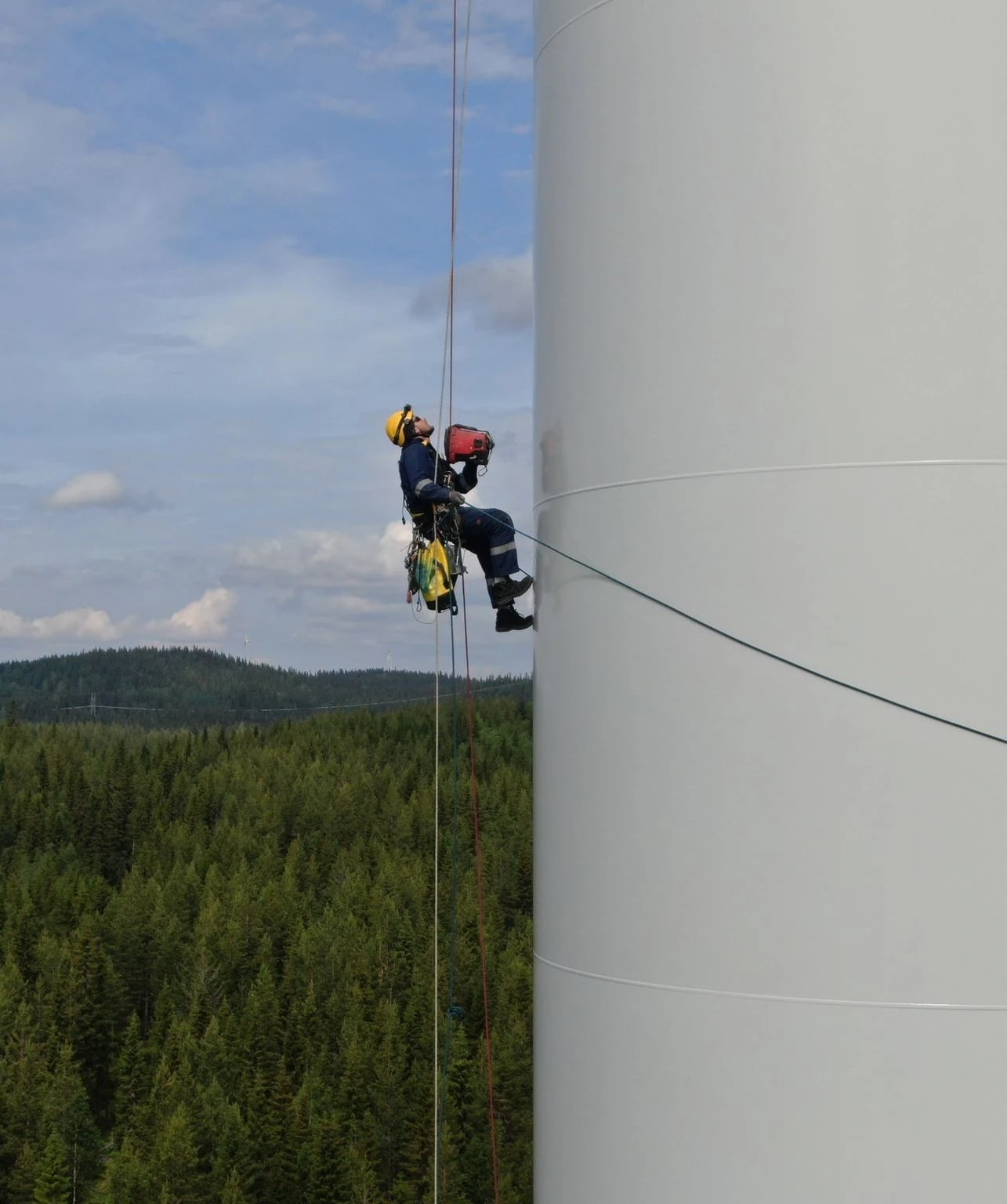
A certified technician is expected to follow the specified work plan and the company’s rope access procedures, check the system before loading it, protect ropes and equipment, and communicate when conditions no longer match the plan. These actions turn a certification framework into repeatable site behaviour.
The technician still has to use judgement within their level: inspect personal equipment, maintain the working and backup systems, keep tools controlled, and stop or escalate a concern rather than quietly improvising. The Level 3 supervisor role provides the operational oversight; it does not remove individual responsibility.
A certified team is expected to:
- Use the planned access and backup systems, including suitable edge protection.
- Complete pre-use checks and report defects, changes or access limitations.
- Keep communication, work positioning and tool control consistent with the task plan.
Supervision and Rescue Are Planned, Not Improvised
Within the IRATA system, Level 1 and Level 2 technicians work under Level 3 rope access safety supervision. Before the shift, the supervisor and crew should confirm the work method, relevant hazards, anchor and equipment arrangements, team roles and communication route. During the job, the plan is checked against the actual site conditions.
Rescue planning is part of that preparation. The team identifies credible casualty scenarios, the route and equipment needed to retrieve a person, who will lead each action, and what information must reach the site contact. A rescue plan should fit the structure and the work; it is not a generic promise that every incident can be handled the same way.
- A workmate rescue or retrieval method that matches the site and task.
- Clear equipment, roles and communications for the planned response.
- A briefing that lets the team question the controls before work starts.
Onshore and offshore work should not be treated as the same checklist. Onshore tasks are planned around a fixed structure, land access and site interfaces. Offshore tasks add marine logistics, weather and transfer constraints, plus employer and operator requirements; those arrangements must be confirmed separately for the assignment.
Traceability Makes Competence Visible
A logbook is more than an hours total. It is the technician’s record of relevant rope access experience and supervision, so entries should be complete, legible and signed by a person permitted to verify them. A project team can then compare the technician’s current level and expiry date with the role being planned.
- Current certificate, ID card and logbook details.
- Verified work hours and supervision entries relevant to progression.
- Site-specific briefings, equipment checks and work records held within the project system.
Good records support handover and verification, but they do not replace a live pre-use check or a site briefing. A current certificate proves the status of the IRATA qualification; it does not prove that the person is ready for every structure, tool, trade or environment.
For example, a technician who is competent in rope access may still need a separate trade qualification, procedure or technical supervisor for welding, NDT, electrical work, lifting or coating inspection.
This is why NDT and coating inspection work must be matched to the relevant task competence and procedure as well as to the access method.
What Project Teams Should Expect
The practical difference is visible before and during the work: the access method can be reviewed, the rescue roles can be discussed, and the technician’s records can be checked against the assignment. None of this guarantees a result or removes the client’s own duties; it creates a clearer basis for planning and control.
- Access and rescue arrangements discussed before mobilisation.
- Rope access and trade responsibilities separated in the work pack.
- Current competence, supervision and site records available for review.
Gridinta’s industrial rope access services can be considered when a project needs controlled access for inspection, maintenance or installation. The final team, method and qualifications still depend on the asset, location, trade scope and client requirements.
Certification Is a Starting Point, Not a Blanket Approval
Selecting an IRATA-certified technician should therefore be part of a wider competence check: confirm the current level, the relevant experience, the trade qualifications, the supervision arrangement and the site-specific requirements. Onshore and offshore assignments need that review separately because their access and mobilisation conditions differ.
Gridinta fields IRATA-certified specialists for suitable onshore and offshore access scopes. Contact our team with the asset, work location and technical requirements so the access method and competence needs can be discussed together.