
Rope Access vs. Scaffolding: Which Method Is Better?
Choosing between rope access and scaffolding should start with the work, not with a preference for one system. Review the task duration and repetition, number of workers and trades, material weight, containment needs, access geometry, anchor or ground conditions, live-site interfaces, weather limits and rescue arrangements before selecting the method.
Rope access provides a controlled working position through a rope system; scaffolding provides a temporary platform. Both can be safe when designed, installed, inspected and used for the actual conditions. The decision should document what each method makes easier, what it makes harder and which controls are required at the site.
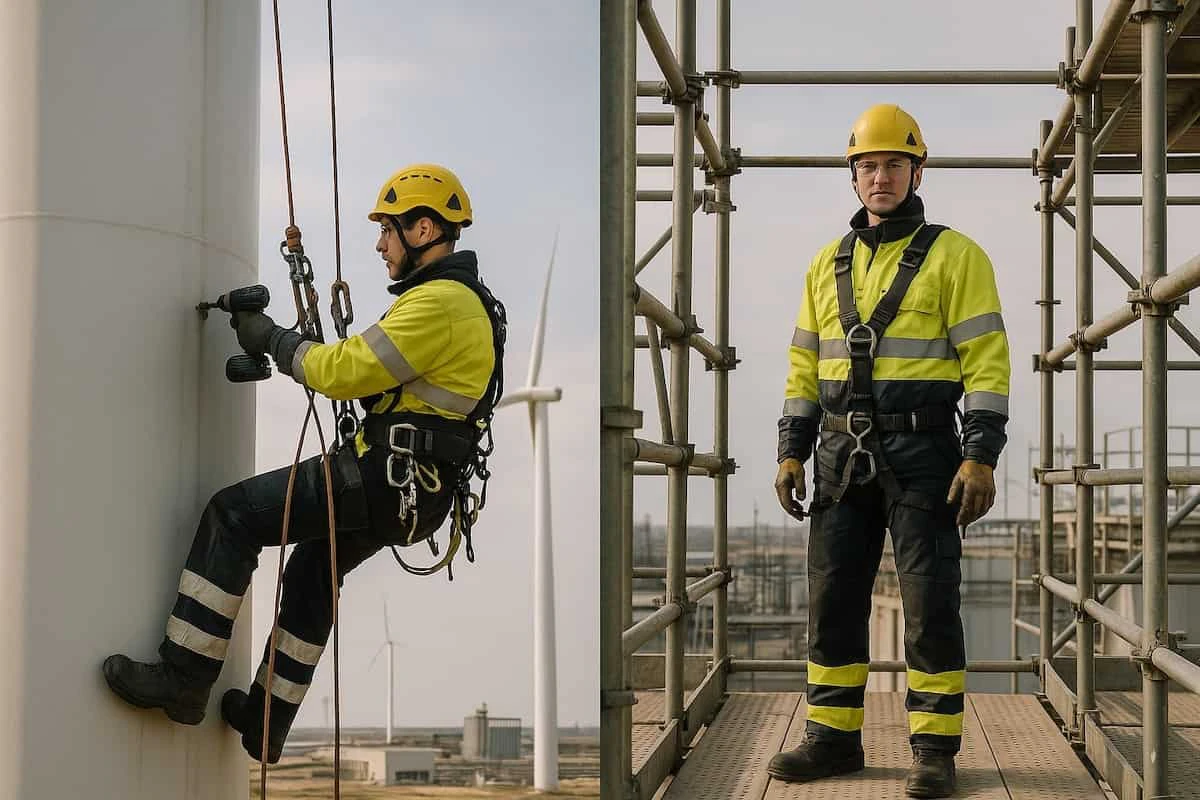
Rope Access: Efficiency and Precision at Height
Rope access is a candidate when a small team needs controlled access to a defined work position and the structure can support a compliant rope system. Gridinta’s industrial rope access services use specialised equipment and trained teams, but the work still needs verified anchors, protected rope paths, exclusion zones, material-handling controls and a workable rescue plan.
Rope access is less suitable when the scope needs a large working deck, several trades in one position, heavy or bulky materials, extensive containment, or repeated access over a long period. Those constraints do not rule it out, but they may point to scaffolding, lifting support or a hybrid plan. The structured working methods used by IRATA-certified technicians do not remove the need to assess the task.
Advantages of Rope Access:
- Less temporary structure and setup for a suitable, defined scope
- Direct access to complex or confined positions when anchors and rescue access can be controlled
- A smaller ground footprint, subject to exclusion zones and site operations
- Useful for inspections and targeted repair, painting or NDT where materials and containment are manageable
- Flexible positioning when the task does not require a full working platform
Rope access can be efficient without reducing control when the task is properly planned and supervised. That means checking the anchor system, rope paths, equipment, dropped-object controls, communication, weather limits and rescue method—not assuming that certification alone makes every location suitable.
Scaffolding: Stability for Large-Scale or Long-Term Projects
Scaffolding can be the better fit when the work needs a stable, walkable platform, repeated access, several trades or regular handling of heavy tools and materials. It also needs its own controls: design for the loads and geometry, suitable foundations or support, competent erection and alteration, inspection, edge protection, access, dropped-object controls and a plan for the surrounding operations.
Advantages of Scaffolding:
- Suitable when a large crew or several trades need the same working level
- A platform for repeated work, material staging and controlled handling within its design limits
- Useful where the scope needs containment, broad coverage or a consistent working deck
Scaffolding adds a mobilisation and inspection sequence, occupies space and may affect walkways, equipment movement or other trades. Its design must account for the site and intended loads, and alterations or incomplete sections must be controlled. These are planning considerations, not reasons to reject scaffolding when a platform is what the task needs.
Choosing the Right Method for Your Project
Use a short comparison at the planning stage. Record the work positions, access points, number of workers, material and tool requirements, containment, expected duration, surrounding operations, weather exposure and rescue or recovery arrangements:
- Rope access is a candidate for a defined, targeted scope with suitable anchors, manageable materials, a small crew and a workable rescue plan.
- Scaffolding is a candidate when the work needs a stable deck, repeated access, broad coverage, heavy materials, containment or several trades together.
Some projects benefit from a hybrid approach: rope access for a hard-to-reach inspection or elevated repair, scaffolding for ground-level support, containment or material staging. Painting at height and NDT and coating inspection can have different access, containment and duration requirements, so the task deliverable should drive the combination. The same planning inputs also explain what drives a rope access quote.
The Gridinta Approach
Gridinta can compare rope access, scaffolding and hybrid options against the actual task. The review should cover access geometry, anchor or support conditions, crew and material needs, surrounding operations, rescue, containment, schedule and reporting so the proposed method is clear before work begins.
Not sure if rope access or scaffolding suits your project better?
Contact Gridinta with the structure, task, work height, expected duration, crew, material and site constraints. Our industrial access specialists can help you compare a practical method for the scope rather than choosing from a generic rule.