
The Future of Rope Access: Trends, Training, and Technology
Rope access is now an established way to reach difficult industrial work positions in energy, oil and gas, construction and infrastructure maintenance. Its future is less about replacing technicians and more about combining disciplined rope systems with equipment and information that solve a defined access, inspection or reporting problem.
Some changes are already practical, such as powered access equipment, remote visual screening and digital inspection records. Other ideas, including connected wearables and augmented-reality displays, are still use-case and site dependent. Adoption should follow the task, manufacturer instructions, applicable standards, client rules and evidence from a controlled trial—not novelty alone.
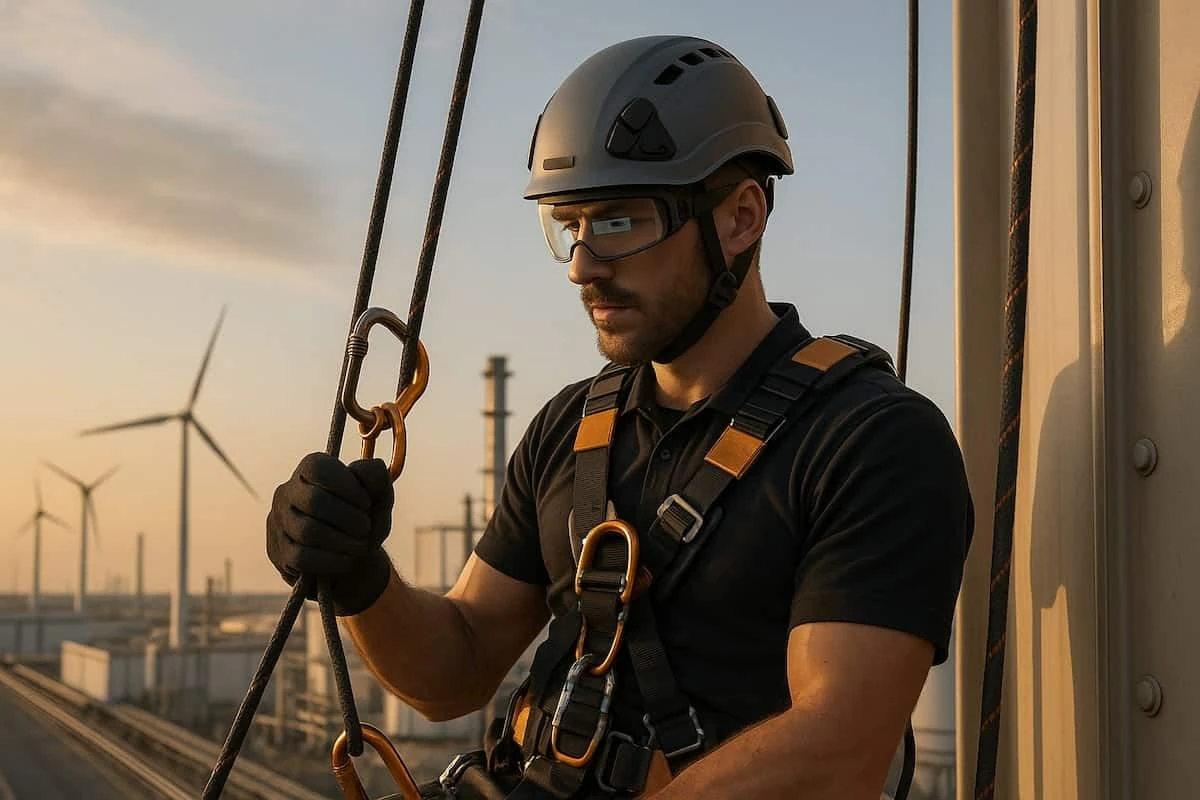
Smarter Rope Access Equipment
Equipment development is most useful when it removes a specific handling problem without weakening the rope system or rescue plan. Powered devices are one practical part of this shift; Gridinta’s Smart Spider power ascenders illustrate why teams should assess compatibility, inspection, servicing, power supply, environmental conditions, training and a safe fallback before adding equipment to a job.
Connected equipment may record movement, environmental exposure or equipment status, but a sensor is only useful if the team knows what decision it informs. A pilot should define data ownership, alarm limits, battery and connectivity needs, false-alert handling and what happens when the device fails. Telemetry can support a control; it cannot replace a competent supervisor, a pre-use check or a rescue plan.
New fibres and constructions may offer useful properties for particular heat, abrasion, weight or handling requirements, but no material is best for every rope access task. Select equipment against the manufacturer’s instructions, the hazard assessment, compatibility with the complete system and the inspection or retirement process. A material change is not a reason to relax edge protection or equipment checks.
Improved Rope Access Training
Training remains at the heart of rope access safety and professionalism. The IRATA certification guide explains the level structure and progression path; emerging tools should be added around that foundation, not used as a substitute for hands-on competence, assessment, supervision or rescue practice.
Training providers and employers may add tools or modules where they solve a real learning need. Useful examples include:
- Digital simulations for rehearsing decisions and rescue sequences before supervised practical work
- Cross-discipline modules combining rope access with the inspection, NDT, coating or repair scope a role actually requires
- Teamwork and decision-making practice for communication, workload and stop-work scenarios
Practical simulation can improve preparation, but it does not replace the applicable assessment or revalidation process. Candidates can review available IRATA training courses and confirm the current entry, assessment and renewal requirements with the training provider.
Technology: Digital Tools Transforming Rope Access
Drones, sensors and software can support rope access teams, but their value depends on the decision they improve. A drone may screen a large or exposed area; a sensor may add context to a work record; software may help organise evidence. Human technicians remain responsible for the close examination, testing, repair and judgement required by the scope.
Drones can support preliminary visual screening before technicians are deployed, but an image is not automatically a close inspection, measurement or NDT result. Where a scope requires hands-on examination or testing, the method must match the asset, defect risk and reporting requirement. That distinction is central to professional NDT and coating inspection services.
Digital reporting is useful when it preserves traceability: the asset and location, inspection method, measurement units, time, image context, defect reference, reviewer and follow-up action should remain clear. Teams should also plan for offline capture, data security, quality review and synchronisation delays. A cloud upload is a workflow tool, not proof that a finding is correct.
Augmented reality may eventually help a technician view approved schematics or maintenance data at the work position, but routine use still depends on visibility, ergonomics, connectivity, data quality and a safe fallback if the display fails. Any trial should show that the device helps the task without distracting from communication, equipment checks or the rope system.
How to Introduce New Rope Access Technology
A practical adoption sequence keeps technology subordinate to the work method:
- Define the hazard, task decision or reporting gap the tool is meant to address.
- Check compatibility, manufacturer instructions, inspection, servicing, data and training requirements.
- Trial the tool in a controlled setting, including communication loss, power failure and rescue or recovery implications.
- Review field feedback and evidence, then keep a trained fallback method when the technology is unavailable.
The Next Chapter for Rope Access
The next chapter will combine proven rope-access controls with tools that earn their place through compatibility, training and evidence. The technician’s role remains central: understand the asset, assess the output, communicate the limits and stop when the tool or the data cannot support a safe decision.
For technicians ready to build experience as methods and equipment evolve, our career opportunities provide a route into Gridinta’s onshore and offshore teams. Bring the core rope skills, task competence and careful technology judgement that the work requires.