
What Makes Industrial Coating Fail — and How to Prevent It
Protective coatings form a barrier between steel and water, oxygen, salts, chemicals and other exposure. They can slow corrosion and reduce wear on steel structures, pipelines, tanks and offshore assets, but their performance depends on the complete coating system and the conditions in which it is prepared, applied and maintained.
The Hidden Enemies of Industrial Coatings
Most failures start with a break in the protection system rather than a single bad product. Contamination, an unsuitable surface profile, trapped moisture, an under-cured layer, poor coverage or later damage can create a path to the substrate. Once moisture and oxygen reach steel, corrosion can develop beneath the film; rust expansion and loss of adhesion may then lift or crack more coating.
Common failure mechanisms include:
- Loss of adhesion. Dust, grease, soluble salts, rust, moisture or an incompatible old layer can prevent the new coat from bonding to the substrate.
- Blistering. Moisture, soluble contamination, trapped solvent or corrosion beneath the film can create pressure and lift the coating; the exact cause requires inspection.
- Pinholes, holidays and cracking. Small gaps, missed edges, shrinkage or movement can leave the substrate locally unprotected.
- Incorrect film thickness. A layer below the specified range may not provide the intended barrier, while excessive thickness can contribute to solvent entrapment, cracking or poor curing in some systems.
- Service damage. Impact, abrasion, vibration, chemicals, saltwater and UV exposure can degrade a sound system over time.
Surface Preparation Sets the Bond
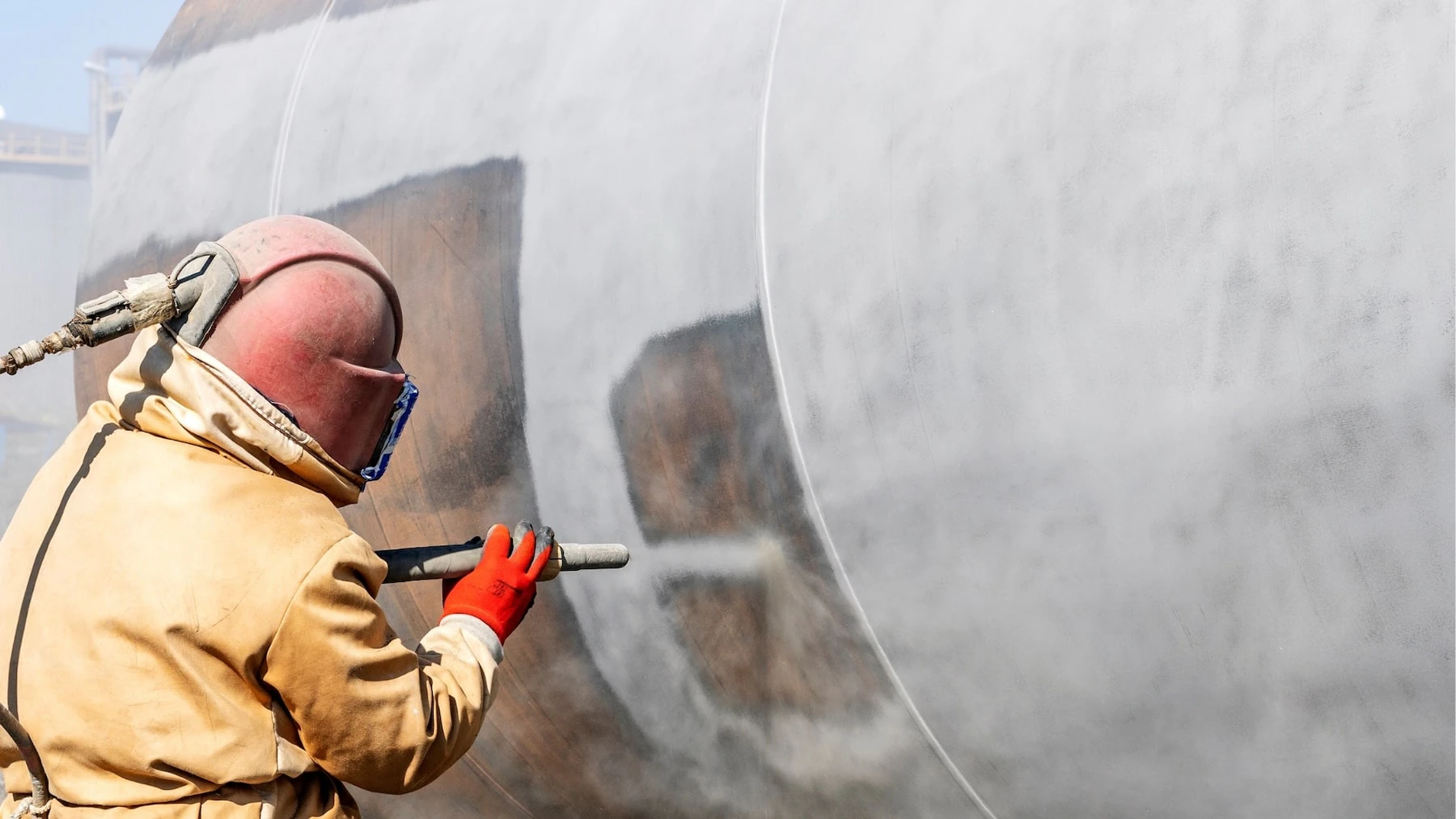
Preparation should begin with a condition assessment, not the abrasive or water-jetting step. The team needs to identify the substrate, existing coating, corrosion, welds, edges, contamination and areas that are no longer sound. Loose coating and corrosion products must be removed, and oil, grease, dust and soluble salts controlled. The target cleanliness and surface profile should come from the selected coating system, product instructions and project specification.
A controlled preparation sequence usually includes:
- Assessing existing layers. Mark defects so sound and unsound areas are not treated alike.
- Removing weak material. Remove loose coating, rust and other weak material, then clean residual dust and contamination.
- Checking geometry and moisture. Confirm that the prepared surface is dry enough for the specified system and address edges, welds, bolts and difficult geometry.
- Protecting the prepared substrate. Prevent new salt, dust, rain or condensation from reaching the surface before priming.
Preparation is complete only when the surface and the surrounding work area are suitable for the next coat. If the substrate becomes contaminated or wet again, the preparation step may need to be repeated.
Environment and Application Controls
Offshore and onshore assets present different exposure and planning problems. Offshore structures face salt spray, high humidity, condensation, UV exposure and limited weather windows. Onshore installations may face temperature swings, dust, rain, traffic, vibration and mechanical wear. For marine assets, the guide to protective coatings for offshore infrastructure describes the separate exposure context.
The coating system and work plan should be selected for the actual service environment and corrosivity category rather than treating every asset as equivalent. Application also has to be controlled from mixing through curing:
- Monitor conditions. Check air temperature, substrate temperature, relative humidity and dew-point conditions before and during application; stop if condensation or product limits make the work unsuitable.
- Follow the product sequence. Mix and apply each coat within the product’s stated mixing, pot-life, recoat and curing requirements.
- Control coverage. Use the specified application method and check film thickness so edges, welds, corners and hard-to-reach areas are not missed.
- Protect the curing film. Keep fresh coating away from rain, salt, dust, condensation and contact until it has cured sufficiently for the next step.
Inspection Before and After Application
Inspection helps connect a visible defect to a repair decision. Before work, visual checks and measurements establish the condition of the existing film and substrate. During and after application, checks can show whether coverage, thickness, adhesion and cleanliness meet the selected system’s requirements. Gridinta’s NDT and steel surface coating inspection services support condition assessments of industrial structures, wind turbines and offshore assets.
Typical checks, selected for the substrate, coating system and project scope, include:
- Visual examination for blistering, cracking, rusting, runs, sags, missed areas or delamination.
- Dry film thickness measurements at representative and vulnerable locations.
- Adhesion testing where the condition, coating system and specification make it appropriate.
- Salt, dust, pH or other contamination checks where they are relevant to the substrate and system.
- Holiday or pinhole detection when required by the coating system, asset and project specification.
Records should identify the location, extent, likely mechanism, measurements, photographs and recommended action. That evidence supports a targeted repair plan and a later comparison during maintenance.
When to Repair, Recoat or Remove
A repair decision should be based on the condition of the coating and substrate, not just the most visible symptom. The relevant questions include whether the surrounding film is sound and adhered, whether corrosion has reached the substrate, whether old and new layers are compatible, and what exposure the asset will see.
- Localised damage with sound surrounding coating may be suitable for cleaning, feathering and a compatible spot repair.
- Widespread blistering, delamination or poor adhesion usually requires removal of unsound layers before rebuilding the system; a new coat over loose material does not address the bond problem.
- Active corrosion or section loss may require separate substrate assessment and repair before recoating.
- Where the existing system or contamination is uncertain, a compatibility check or trial area can help confirm the proposed method before wider work.
Preventing Coating Failure
Prevention is a sequence: define the service environment and likely damage mechanisms, select a suitable system, prepare the substrate, control the work window, verify application, and schedule follow-up inspection. No coating removes the need to monitor the asset after it returns to service. The steel coating inspection checklist sets out the checks from surface preparation to handover.
Gridinta’s specialists combine coating inspection, preparation, application and repair support with rope access for elevated surfaces. The painting services at height page describes the service scope for hard-to-reach structures; the method remains dependent on the task, asset and site controls.
Need Professional Coating Inspection or Maintenance?
Gridinta supports coating inspection, surface preparation, application and repair planning for industrial assets in onshore and offshore settings. For work planning beyond one defect, its guide to preventive maintenance in industrial projects explains why coating work should be coordinated with wider inspection and repair schedules. Contact the team to discuss the asset, condition and required scope.