
Blade Repair Dust and Waste: Planning Containment
A blade-repair campaign should plan dust capture, debris containment, waste handling and evidence collection before access is mobilised. The useful question is not simply whether the team brings a vacuum: it is whether material remains controlled from the repair surface through collection, temporary storage and handover. The plan must fit the approved repair, access method and site conditions, with a clear response when containment stops working.
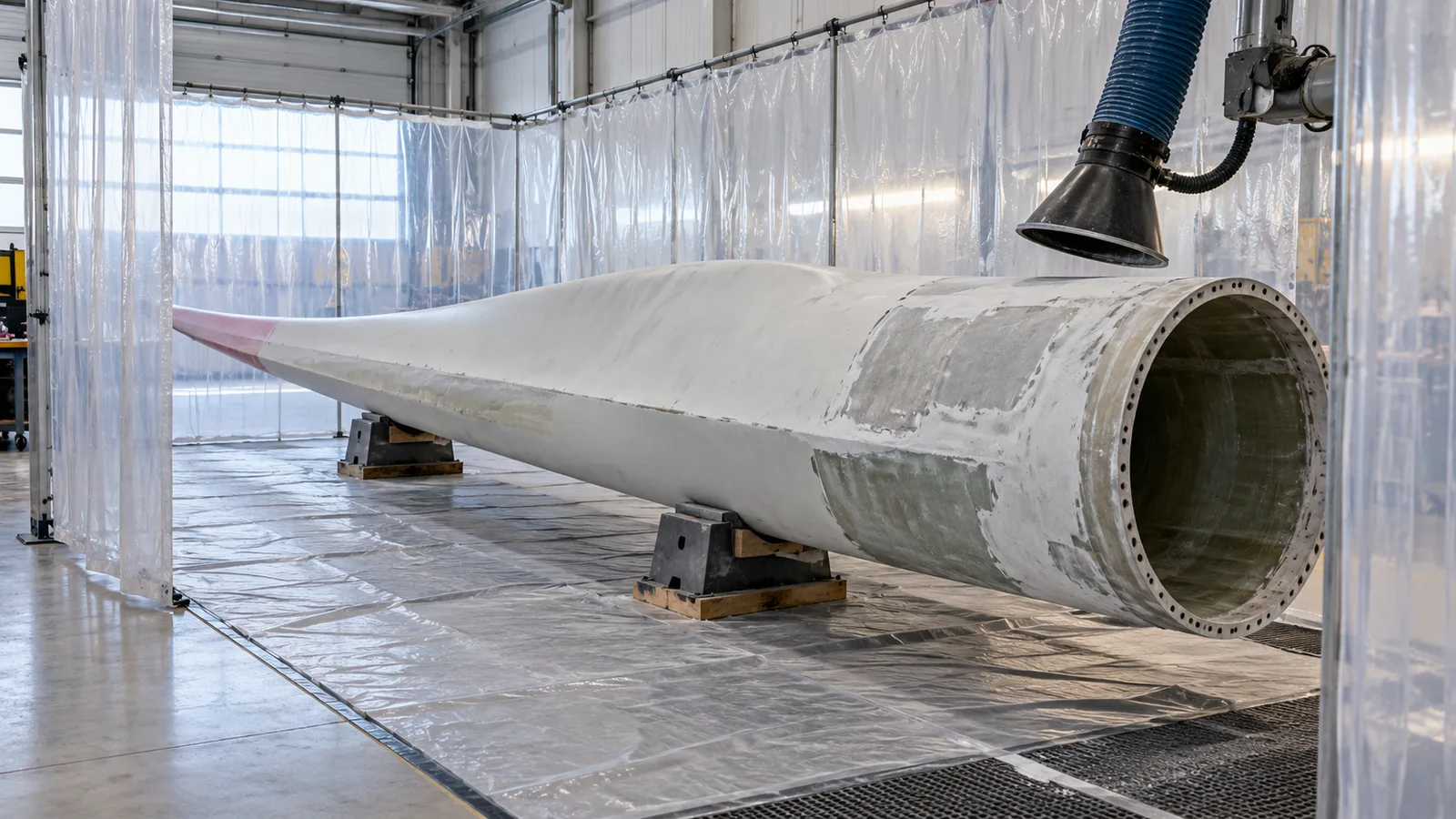
What the research establishes—and what it does not
A 2025 paper by DTU researcher Leon Mishnaevsky Jr., listed in the DTU research database, estimates material removed during blade maintenance and models particle sizes. Its published method uses repair-frequency and geometry assumptions plus a simplified grinding model. These are modelled estimates, not measurements of escaped dust from a particular campaign, and they do not establish harm at a particular site.
For procurement, this distinction matters. A literature estimate cannot become a measured environmental result merely by multiplying it by the number of blades in a contract. Equally, uncertainty is no reason to omit containment from the method statement. Ask for a workable control plan and evidence that the selected controls were used. Keep any measured results clearly separate from estimates and assumptions.
Map the material journey before choosing equipment
Start with the repair scope: locations, surface preparation, expected consumables and how the work area will move between defects. The existing leading-edge erosion guide explains why inspection and repair timing belong in the same discussion. For containment planning, the relevant output is a defined work area and sequence, not a generic promise to keep the site clean.
Scroll horizontally to see all table columns.
| Stage | Planning question | Useful evidence |
|---|---|---|
| At the repair surface | How will the selected process collect dust and retain larger debris? | Method description and equipment identification. |
| At access equipment | How will hoses, containers and barriers fit the platform or rope-access arrangement? | Reviewed layout and access-team agreement. |
| During collection | How will capacity, condition and loss of performance be recognised? | Defined checks and named responsibility. |
| During transfer | How will collected material remain contained while being moved? | Transfer route and suitable closed-container plan. |
| At site handover | Who accepts the material and accompanying records? | Agreed receiving point and handover documentation. |
Walk through ordinary interruptions as well as productive work. A shift ends, weather changes, a collection container fills, or a tool needs replacement. These transitions are easy to leave out of a tender description, yet they determine who handles material and where it goes. Identify the person responsible for each transition and allow time, equipment and storage space for it in the schedule.
Specify a functioning control system
The UK Health and Safety Executive’s local exhaust ventilation resources cover extraction, commissioning, airflow and on-tool systems. They are useful background for discussing whether equipment is suitable and functioning; they do not certify a particular blade-repair setup or establish the requirements of every country. A competent project assessment must select the controls for the actual process.
In the campaign brief, ask the contractor to explain how the chosen tool, capture arrangement, collection equipment and transfer method work together. Request the checks used to confirm acceptable performance and the response to a failure. An equipment brand or a photograph of a hose alone cannot answer these questions. Avoid promising a capture percentage unless the measurement method and conditions supporting it are also available.
Containment also has to coexist with access and rescue. A cover, barrier or enclosure can change the space around workers and equipment. The planning review should therefore consider its position, movement, attachment and effect on the agreed work arrangement. Environmental controls should be included when the access method is selected, rather than added after the equipment and crew have already been mobilised.
Keep material streams and responsibilities clear
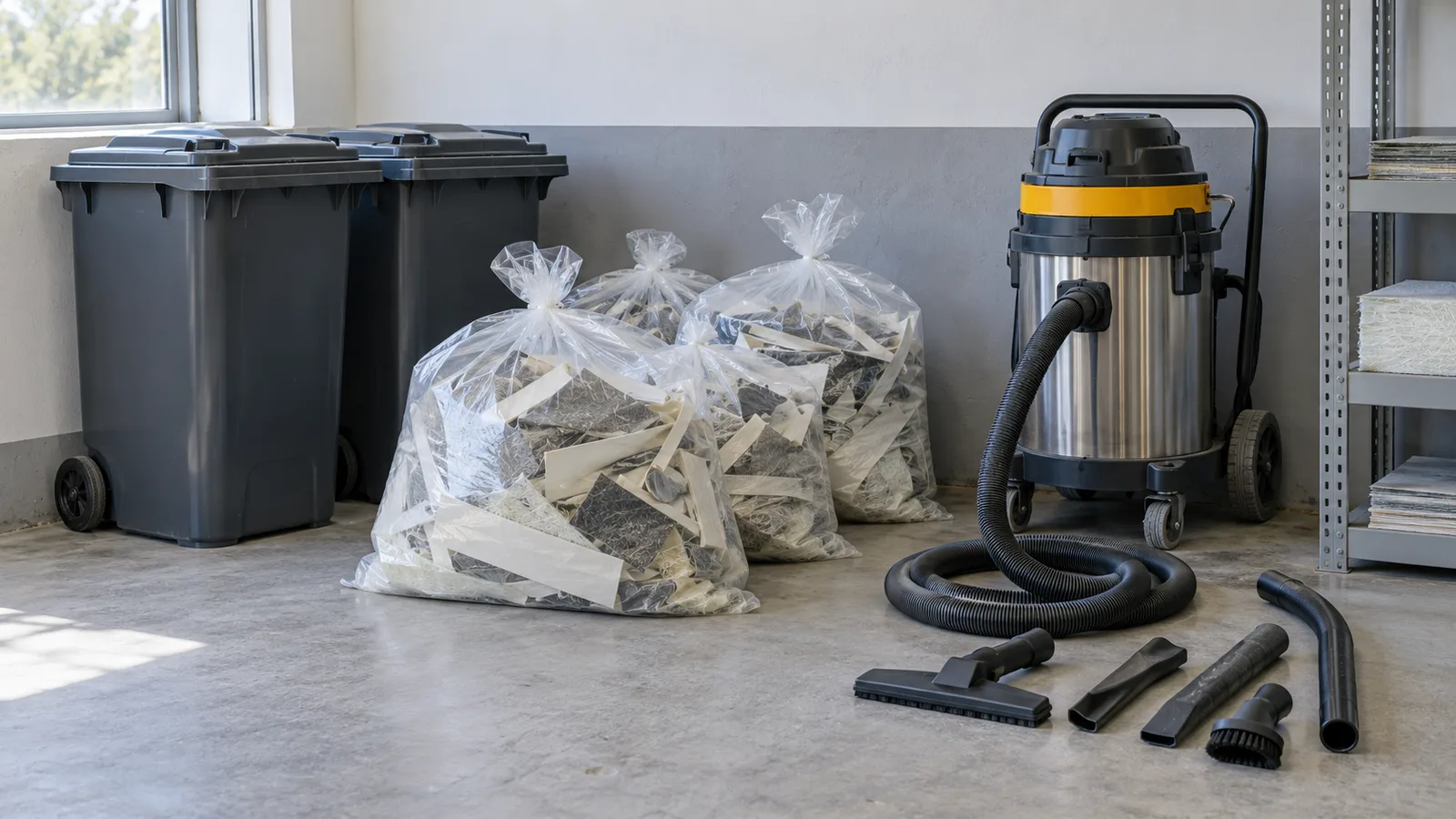
A useful waste plan describes the streams expected from this job: collected preparation dust, removed composite pieces, used abrasives, packaging and process-contaminated consumables. That description is a starting point for the responsible specialists, not a universal waste classification. Material identity, contamination and the receiving facility’s acceptance conditions need checking for the project. Do not assume that every solid item can share one container.
Decide who supplies containers, who labels and closes them, where they are stored and who arranges onward transfer. These details should agree with the site arrangements and relevant material documentation. A contractor’s scope ending at the turbine base leaves a gap if nobody has accepted responsibility beyond that point. For offshore work, include the handover between worksite, vessel and shore in the same discussion.
Link the containment scope to the repair quotation. The blade repair cost guide is useful context for discussing access, mobilisation and the defined repair scope. Here, make collection equipment, replacement consumables, transfer effort, storage and close-out records explicit so that competing proposals can be compared on the same basis.
Agree stop, review and restart conditions
- Loss of capture: define how the team responds when the agreed collection system is unavailable or no longer performs as expected.
- Changed conditions: require review if weather, access position or the work area no longer fits the containment arrangement.
- Unexpected material: escalate an unknown coating, residue or waste stream rather than assuming the existing plan covers it.
- Transfer failure: address damaged containers, unavailable receiving space or an interrupted collection route before material accumulates without control.
- Restart decision: record who confirms that the agreed conditions have been restored and whether the method needs updating.
Report what was done without claiming more than was measured
A proportionate close-out package can include the work area, dates, equipment checks, containment photographs, interruptions, container references and accepted transfer records. Where quantities are recorded, state whether they were weighed or estimated and whether the figure includes packaging or other material. This gives the client useful traceability without implying an environmental monitoring programme that did not take place.
Collected waste mass alone does not establish capture efficiency: that calculation needs a defensible basis for the total material generated and the fraction escaping collection. A tidy photograph likewise does not measure airborne particles or environmental exposure. If the contract needs emissions, exposure or capture-performance measurements, agree the objectives, method and competent assessor separately before work starts.
For a blade repair enquiry, provide the defect information, proposed access context, site restrictions and expected waste handover arrangements. Ask for the containment approach to be described alongside the repair scope. The checklist here is a campaign-planning aid; it does not select respirators, chemical controls, waste codes or legal requirements for an individual site.
Sources and scope
Primary sources reviewed 25 October 2026: DTU publication record; Mishnaevsky, Wind Energy, 2025, e70072; HSE local exhaust ventilation resources. The campaign questions and evidence checklist are editorial planning suggestions, not findings from a Gridinta project.