
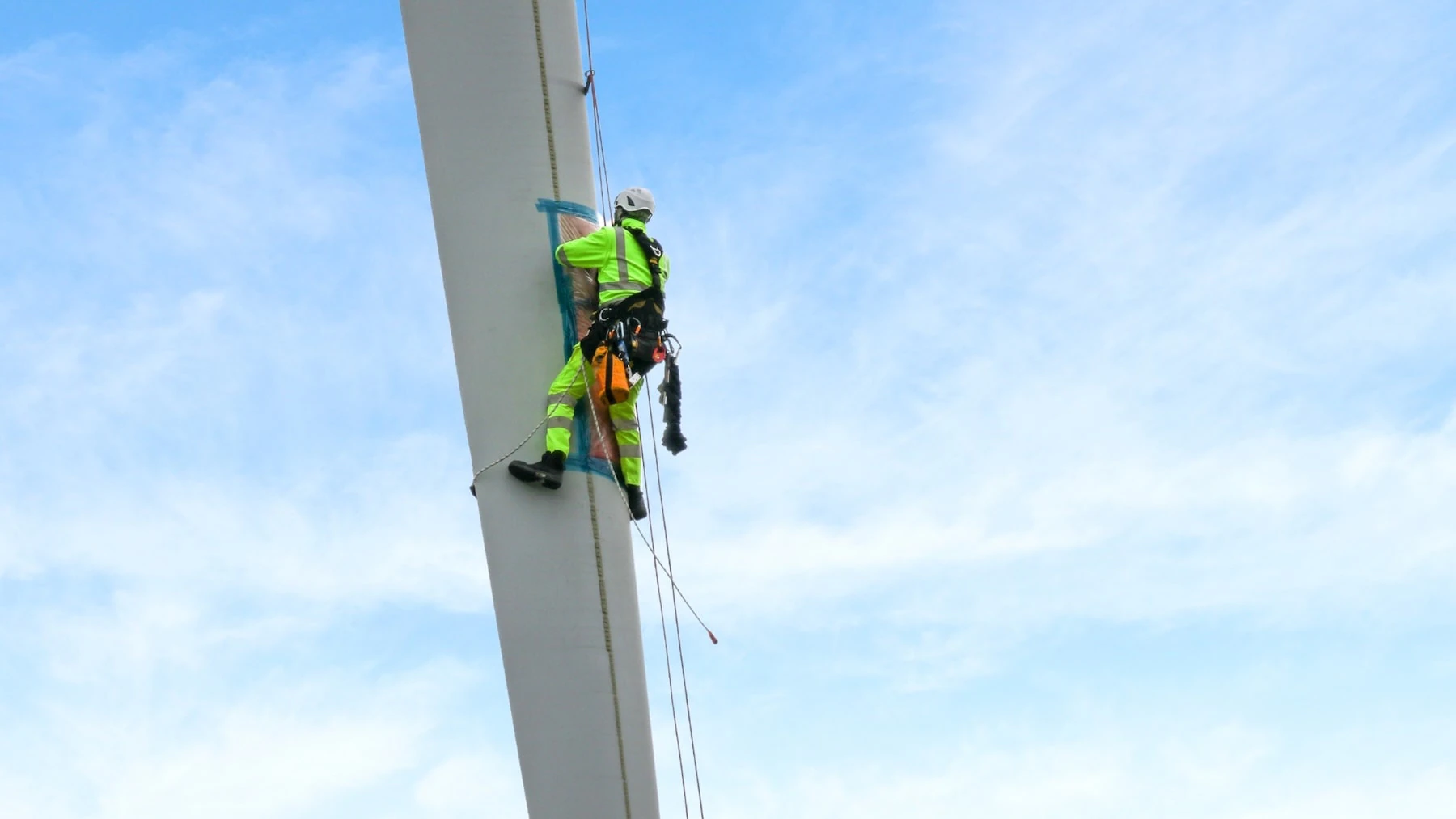
Wind Turbine Blade Repair
Inspection and repair of wind turbine rotor blades by rope access or suspended platform, from leading-edge erosion to cracks and lightning damage. Share the turbine model, blade findings and target work window so we can scope the job.
Blade Inspection and Repair at Height
Rotor blades turn wind into output, so erosion, cracks or lightning damage on the blade can affect both aerodynamic performance and structural condition. Gridinta inspects and repairs rotor blades on onshore and offshore wind turbines, working at height by rope access or from a suspended platform. UAB Gridinta is an IRATA Full Operator member, 6036/O.
Blade work usually has three parts: an inspection that locates and documents the damage, a repair carried out to an agreed method, and a handover record the owner can use for the next decision. Our blade scope includes:
- Visual and thermographic blade inspection, with borescope assessment where the scope requires it
- Lightning protection system (LPS) continuity checks as part of a wider turbine inspection
- Reworking damaged blade edges, including leading-edge erosion repair
- Composite repair with vacuum curing methods where the repair system specifies it
- Replacement of bonding rails
- Protective coatings to limit further surface damage
- Reports with photographs, video and marked defect locations
Blade work is also part of our onshore wind farm maintenance and offshore wind farm maintenance services, which cover towers, gearboxes and other turbine components.
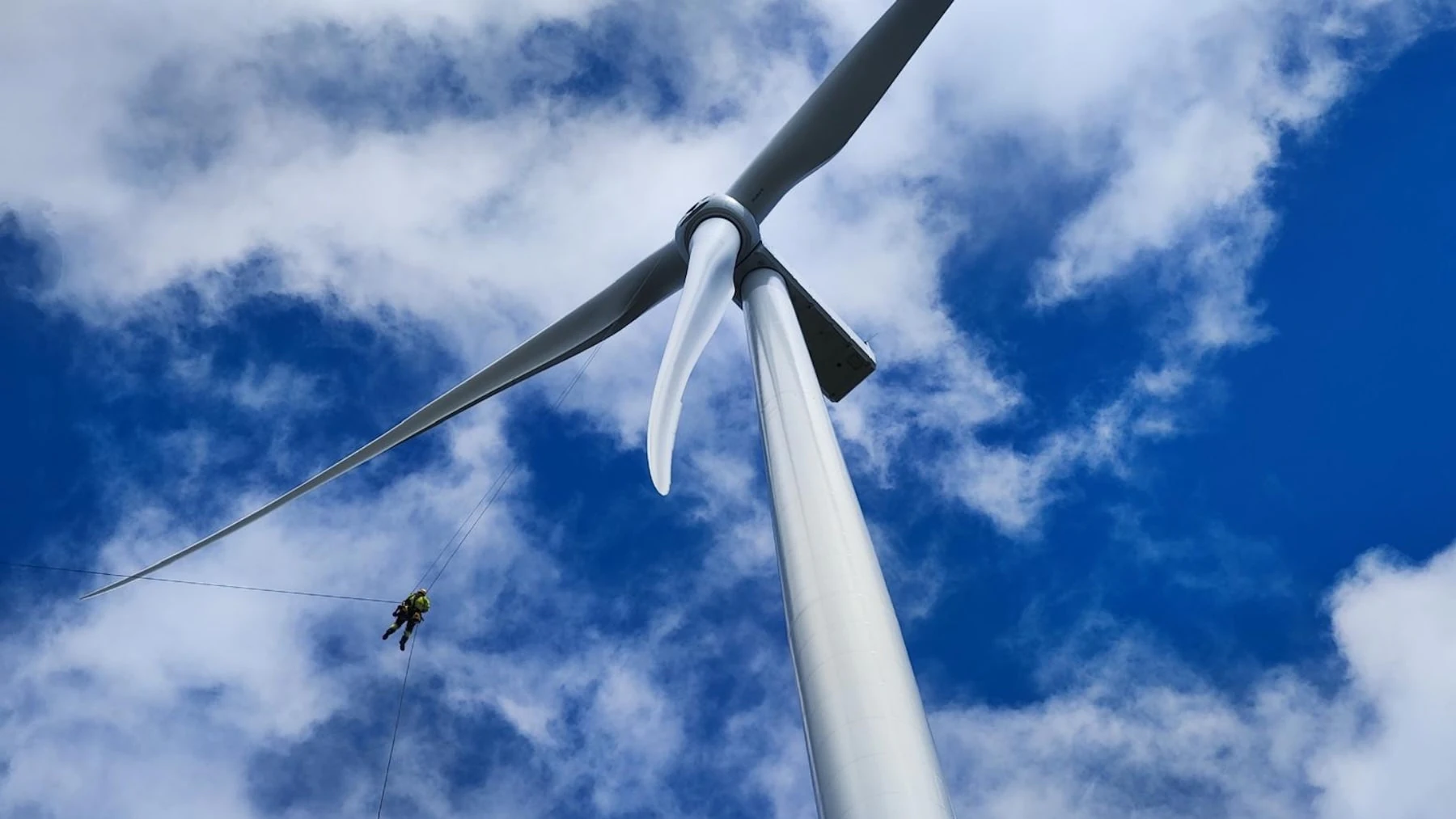
Common Blade Damage We Assess and Repair
Most blade defects fall into a few families. They often appear together, but each needs its own evidence and repair decision.
Leading-edge erosion
Rain, hail and airborne particles strike the leading edge at high speed, especially towards the tip, and gradually roughen or remove the coating or leading-edge protection (LEP). The IEA Wind Task 46 erosion classification system (Sandia National Laboratories, November 2022) describes severity by visual condition, mass loss, aerodynamic performance and structural integrity. Our guide to leading-edge erosion inspection and repair timing explains how to use it.
Cracks and delamination
Surface cracks, laminate delamination and adhesive bond-line debonding can develop under repeated loading or start from manufacturing defects. A peer-reviewed overview of blade failure mechanisms (Materials, April 2022) names the leading edge, tip, transition areas and adhesive joints among the most vulnerable regions. Whether a crack is cosmetic or structural must be settled by inspection and engineering review, not by appearance alone.
Lightning damage
A lightning strike can cause sudden, severe damage to the blade and to its lightning protection components, such as receptors and the down-conductor. IEC 61400-24:2019+AMD1:2024 sets requirements for protecting blades and other turbine components against lightning. A repair has to restore both the blade shell and the protection path; see our guide to wind turbine lightning strikes.
Coating and surface damage
Gelcoat or paint damage, peeling LEP and impact marks may need only surface restoration, or they may hide a deeper defect. Cleaning, coating and structural repair solve different problems, as explained in why blade cleaning and coating matter.
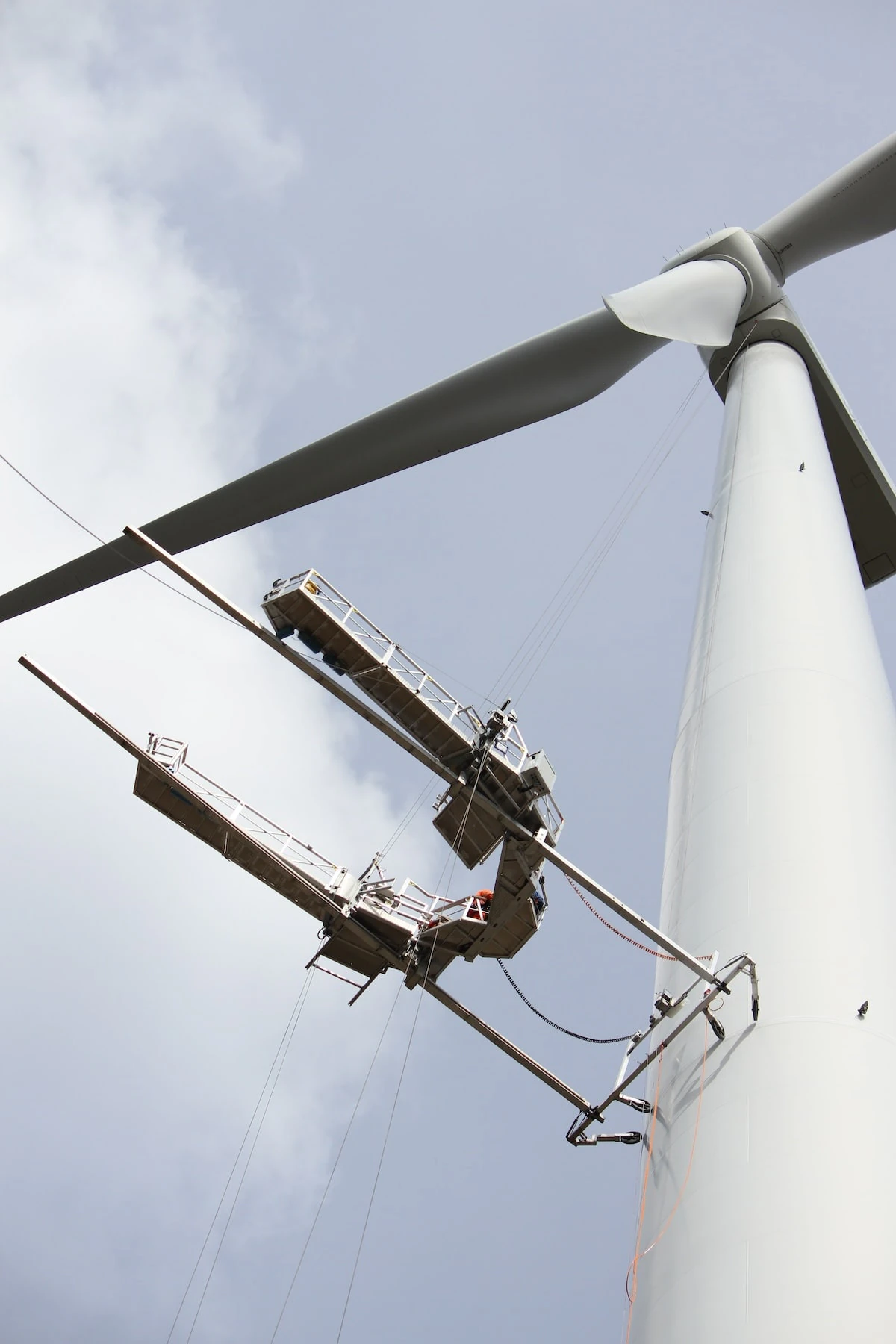
Rope Access, Platform or Crane?
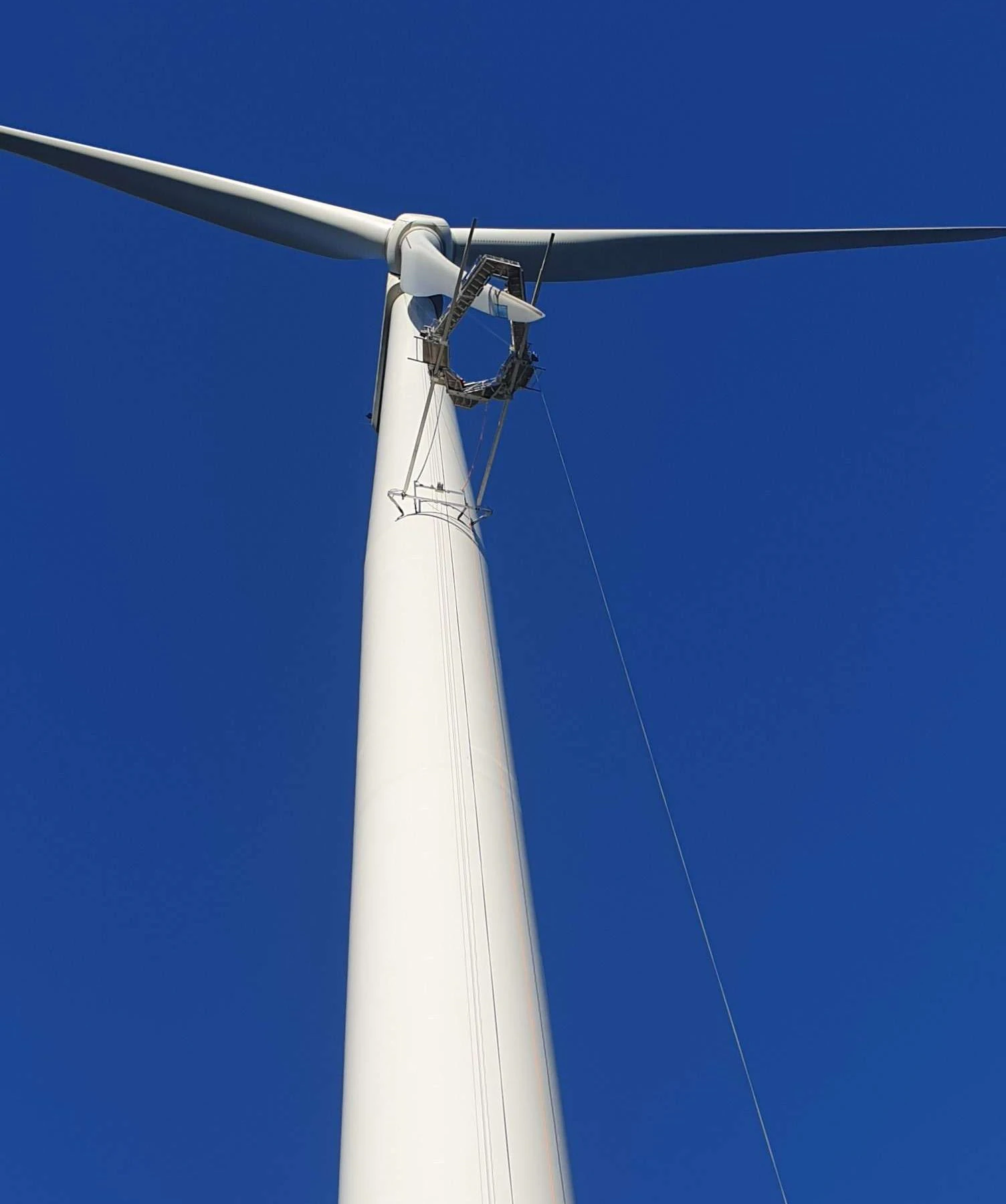
Gridinta works on blades by rope access and from suspended platforms. Before mobilisation, the access method and platform suitability are checked against the equipment documentation, turbine model, site procedures and the agreed task.
- Rope access needs little rigging and reaches individual defects quickly. It suits inspection, measurement and localised repairs, and is planned with a rescue arrangement in line with principles such as ISO 22846-1.
- A suspended platform gives a more stable working position and room for tools and materials, which can help with larger surface areas or longer preparation and cure cycles, within the weather limits set for the platform, turbine and site.
- A crane basket or blade removal may be needed for some damage. These are separate lifting operations and are not among the access methods we describe here, so mention them in your enquiry if your engineer expects one.
For inspection, drones are useful for screening, while close access is needed to measure, prepare and repair. Our comparison of drones, robots and rope access explains when each method fits.
From Damage Report to Repaired Blade
- Review the evidence. Turbine model, blade type, previous inspection images, repair history and the OEM or owner repair instructions.
- Inspect and map. Locate each defect by blade, side and distance from the root, photograph it with a scale and classify it.
- Agree the method. Defect type and depth, laminate, materials and environmental limits decide whether the work is a surface repair, a leading-edge rebuild or a composite laminate repair. Structural repairs need approval from the owner or responsible engineer.
- Prepare and repair. With the turbine stopped and the blade positioned, prepare the surface and apply the approved repair system, using vacuum curing where it is specified.
- Finish and protect. Restore the aerodynamic profile and apply the specified protective coating or LEP system.
- Check and hand over. Inspect the finished repair, record the result and recommend any follow-up.
For industry context, IEC 61400-5:2020 sets blade requirements from design and manufacture through operation and maintenance, and DNV-ST-0376 (April 2024 edition) sets principles and technical requirements for rotor blades. The GWO Blade Repair Training Standard V6 (March 2026) defines training for composite blade repairs carried out under a work instruction. These references are listed as background; they are not Gridinta certifications. Technicians can take GWO Blade Repair and other modules with our training partner; see our GWO training courses.
What You Receive After Blade Work
Each blade job should leave evidence the owner can audit and compare at the next inspection. Depending on the agreed scope, the handover can include:
- Inspection findings: a defect register with type, size, location and severity, photographs and video, coverage and any areas not inspected.
- Repair records: the affected area, pre-repair condition, preparation, materials, weather and curing conditions, method and before-and-after photographs.
- Handover: completed actions, checks carried out, limitations and recommendations for monitoring or follow-up repair.
The reporting format and acceptance criteria are agreed before mobilisation, and the owner or responsible engineer decides whether the repaired condition is acceptable for operation. Gridinta holds an ISO 9001:2015 certificate, GKLT-0480-QC, covering construction project implementation, technical maintenance and consulting.
How to Scope a Blade Repair Enquiry
A useful quotation starts with the information below. Send what you have; missing details can be agreed later.
- Site location, onshore or offshore, and number of turbines
- Turbine make and model, and the blade type if known
- Defect list or recent inspection report, with photographs and defect locations
- Type of damage: erosion, cracks, lightning, coating loss or not yet known
- Repair instructions or materials required by the OEM or owner, including the LEP system
- Preferred work window, shutdown availability and weather constraints
- Access arrangements, site inductions and required documentation
- Reporting format and acceptance criteria
For offshore turbines, add vessel or transfer arrangements and the weather window; our offshore campaign planning guide lists what to agree before mobilisation.
Blade Care Guides
Background reading from our technical articles:
- Preventing rotor blade damage: inspection and repair strategies
- Why rotor blade inspections are essential for wind farms
- Onshore blade leading-edge erosion: inspection and repair timing
- Wind turbine blade repair cost: published figures and what drives them
- Why rotor blade cleaning and coating matter
- Wind turbine lightning strikes
- The blade repair technician role: GWO, IRATA and experience
Related services: NDT and coating inspection and industrial rope access services.
Discuss Your Blade Repair Scope
Send the turbine details, defect findings and preferred work window. We will review the information and come back with questions, the proposed access method and the next steps for a quotation.