
Blade repair acceptance: what belongs in the handover pack?
Accepting a wind turbine blade repair means checking that the completed work matches the agreed repair basis and that the evidence supports the acceptance decision. A useful handover pack connects the original damage, approved repair scope, execution records, final inspection and unresolved actions to the same blade and repair location. Before work starts, agree who reviews each item and who can authorise the turbine’s return to service.
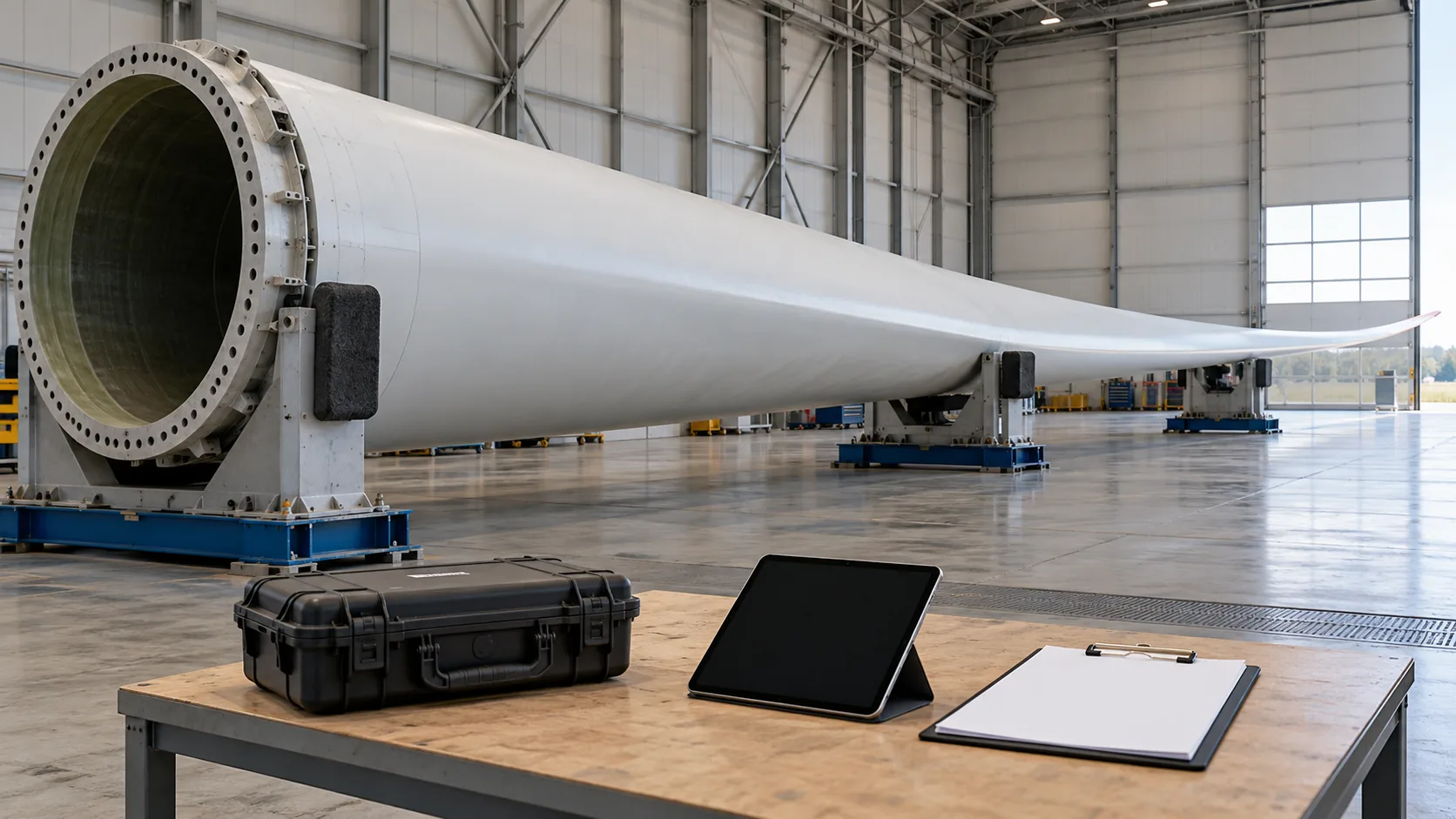
This is a planning checklist for owners and project managers. The repair design, manufacturer’s instructions and project requirements determine the actual tests and acceptance limits. A coating repair and a structural laminate repair should not automatically receive identical documentation requirements.
Agree the acceptance basis before mobilisation
DNV’s discussion of blade repair verification identifies method suitability, material application and curing, structural design, execution and traceability as relevant to repair performance. Its description of independent verification includes reviewing feasibility and materials, rather than simply stamping the finished surface as passed. That distinction matters when specifying a handover.
Put a document schedule beside the work scope. Name the repair instruction and revision, the person responsible for approving technical changes, the inspections to be witnessed, and the evidence needed before acceptance. Where the original equipment manufacturer supplies the repair basis, keep its references and correspondence with the work package. If another engineer develops the design, record that responsibility explicitly.
Clarify what a signature means. Contractor completion, technical acceptance, commercial acceptance and operational release may involve different people. A signed timesheet does not explain whether the repair met its technical requirements. Agree these decision points with the owner before a weather window makes document review urgent.
A practical handover evidence checklist
Use the following as a starting point for the project document schedule. It is an editorial checklist, not a list of clauses from a standard. Mark items that genuinely do not apply, with a reason, instead of quietly removing them.
Scroll horizontally to see all table columns.
| Record | What the reviewer should be able to establish | Question if evidence is missing |
|---|---|---|
| Asset and damage reference | Turbine, blade identifier, repair location and original finding linked together. | Can the photographs and work record be matched to one repair? |
| Approved repair basis | Instruction or drawing revision, scope boundaries and applicable acceptance criteria. | Who approved the solution and any expanded damage extent? |
| Materials | Product identification and batch references linked to the repair; relevant expiry and storage evidence. | Can the material actually used be distinguished from material merely ordered? |
| Execution and conditions | Required process records, dated stage evidence and environmental measurements specified by the instruction. | Which stages were recorded before being covered? |
| Curing evidence | Required time and temperature records, sensor identification or other specified cure checks. | Does the record describe the repair conditions or just a heater setting? |
| Inspection and deviations | Inspection scope, results, limitations and documented disposition of departures. | Is every acceptance criterion addressed and every deviation resolved? |
| Closeout and follow-up | Named technical decision, remaining actions and any specified monitoring or operating conditions. | Who owns each open action and the operational release? |
Cure records need context, not a single number
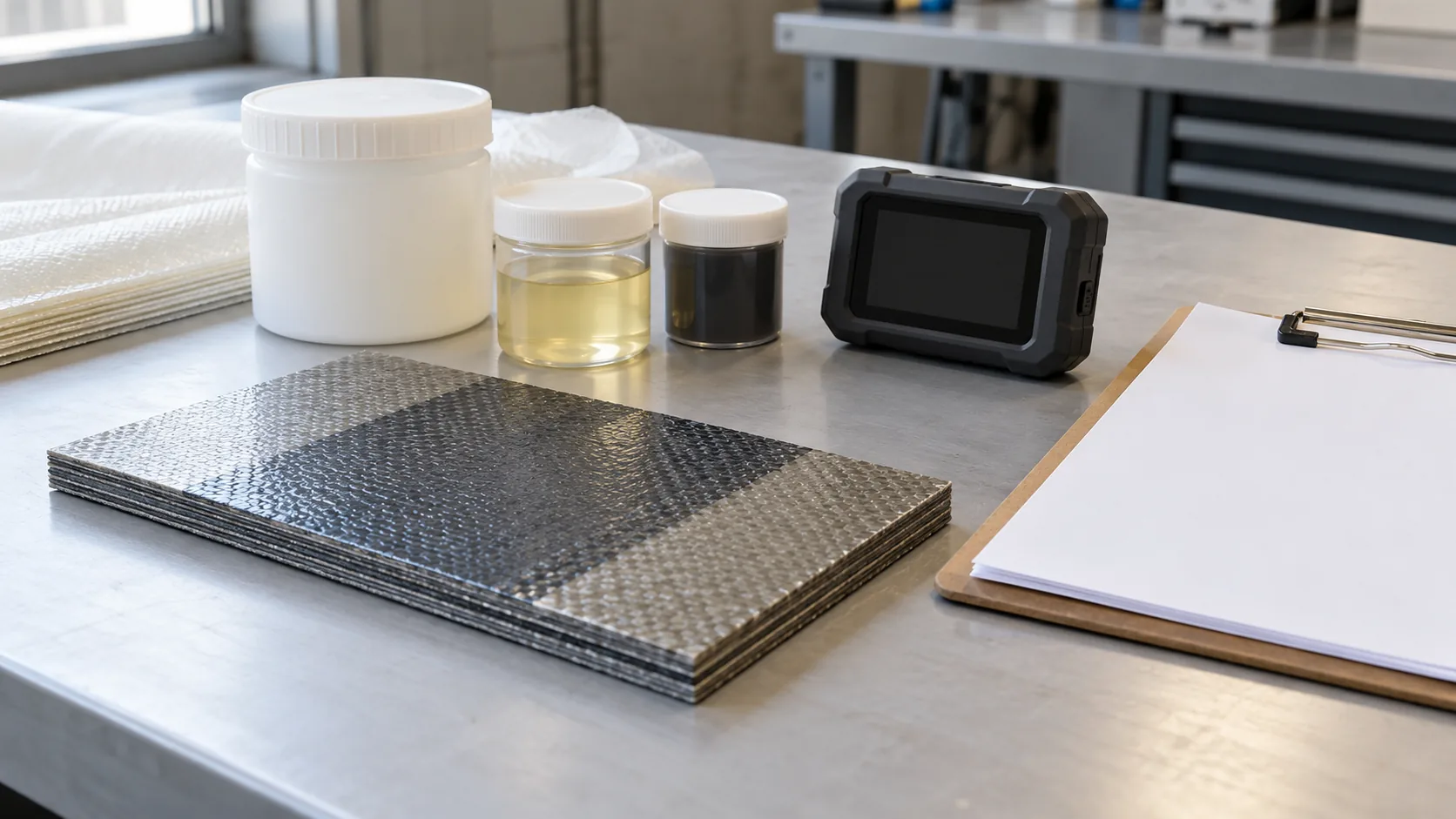
A DTU research paper on post-repair residual stresses models how the curing temperature cycle and voids affect the repaired region. It supports taking cure history seriously; it does not establish a universal field temperature, cure duration or allowable void level. Those values must come from the applicable material system and repair procedure.
Ask for enough context to interpret the specified measurements: timestamps, measurement locations, equipment references and the repair step involved. Ambient air temperature, a heating blanket setpoint and a sensor reading at the repair are different observations. If the procedure specifies particular measurements, a reviewer needs those measurements or a documented technical assessment of the missing evidence.
Do not reconstruct a missing cure record from the weather report or a technician’s estimate. Record the gap accurately and refer it to the responsible technical authority. That authority may request more evidence, a specific examination or corrective action; a generic checklist cannot decide which outcome is appropriate.
Separate inspection findings from the acceptance decision
A final inspection report should identify what was examined, how, against which criteria, and with what limitations. Pair overview photographs with clearly located detail images. Where a test method was required, retain its report and interpretation rather than replacing it with a photograph of the instrument. A clean finish answers a different question from evidence about a repaired bond or laminate.
DNV-ST-0376 sets principles and technical requirements for onshore and offshore rotor blades. A reference to this standard alone is not a repair-specific acceptance statement. Ask which applicable requirements and repair documents the reviewer used. Independent verification can add scrutiny, but its scope and exclusions also need to be recorded.
For example, imagine a repair instruction requires a recorded cure cycle, but the handover contains only before-and-after photographs. This illustrative case is an evidence gap, not proof that the repair failed. Log the missing record, obtain a technical disposition and preserve the decision trail. Avoid replacing that process with an informal “looks good” email.
Make the handover usable at the next inspection
Give each repair a stable reference and store the final document versions with the blade history. Preserve the original finding even when a new repair identifier is created. A future reviewer should be able to locate the same area and distinguish old damage, repaired material and a new observation without relying on someone’s memory.
A concise closeout register can list the evidence received, its revision, the reviewer, the decision and any remaining action. If monitoring is specified, record the location, intended observation and trigger or interval supplied by the responsible engineer. Do not invent a universal reinspection date for every repair.
Inspection planning and commercial scoping are related but separate tasks. Our blade repair cost guide explains budgeting inputs; the wind turbine inspection page sets out information to provide when discussing inspection scope. Include the proposed handover requirements in that discussion.
Blade repair handover questions
Are before-and-after photographs enough?
Does every repair need independent verification?
Who should approve a deviation?
Does handover acceptance automatically release the turbine?
Sources and scope
The technical background comes from DNV on repair verification, DTU’s 2023 computational repair study and the public scope of DNV-ST-0376, checked on 25 October 2026. The checklist is practical editorial synthesis, not a certified procedure, a quotation from the full standard or a claim about a Gridinta project.