
Wind Turbine Inspection Services
Component-specific inspection for onshore and offshore wind turbines: blades, towers, gearboxes and lightning protection continuity checks. Share the turbine details and inspection purpose to agree the methods, access and report you need.
Inspection Scope by Wind Turbine Component
Gridinta inspects wind turbine blades, towers and gearboxes on onshore and offshore assets. The work starts with the component, suspected condition and decision the operator needs to make. The methods below are part of our onshore wind farm maintenance and offshore wind farm maintenance services; the combination and coverage are agreed for each turbine.
Rotor blades
Visual and thermographic inspection, with borescope assessment where the scope requires it, to investigate erosion, cracks, lightning damage and other blade defects. Published blade reporting includes photographs, video and defect locations. A defect register can include type, size and severity, with coverage and uninspected areas recorded. If repairs are needed, see our blade repair service.
Towers and structural components
Inspection of tower welds, bolts and support structures for corrosion, cracks and other indications. The agreed work record can identify inspected areas, defect locations, photographs and recommended follow-up. Visual testing (VT), penetrant testing (PT), ultrasonic testing (UT) and ultrasonic thickness measurement (UTM) are selected for the component and inspection question; they are not interchangeable or automatically included in every visit.
Gearboxes
Endoscopic inspection to view accessible internal gearbox surfaces without disassembly. The scope addresses indications such as bearing and gear wear, pitting, scoring, corrosion or cracks. Agree the areas to be viewed and the required image and findings record before the visit; accessible views set the coverage of the inspection.
Lightning protection systems
LPS continuity checks are included in our published turbine inspection scope. Agree the test points, applicable manufacturer instructions, acceptance criteria and recording requirements before mobilisation. A continuity check and a blade damage inspection answer different questions, so define both if the enquiry follows a lightning event.
Rope Access and Suspended Platforms
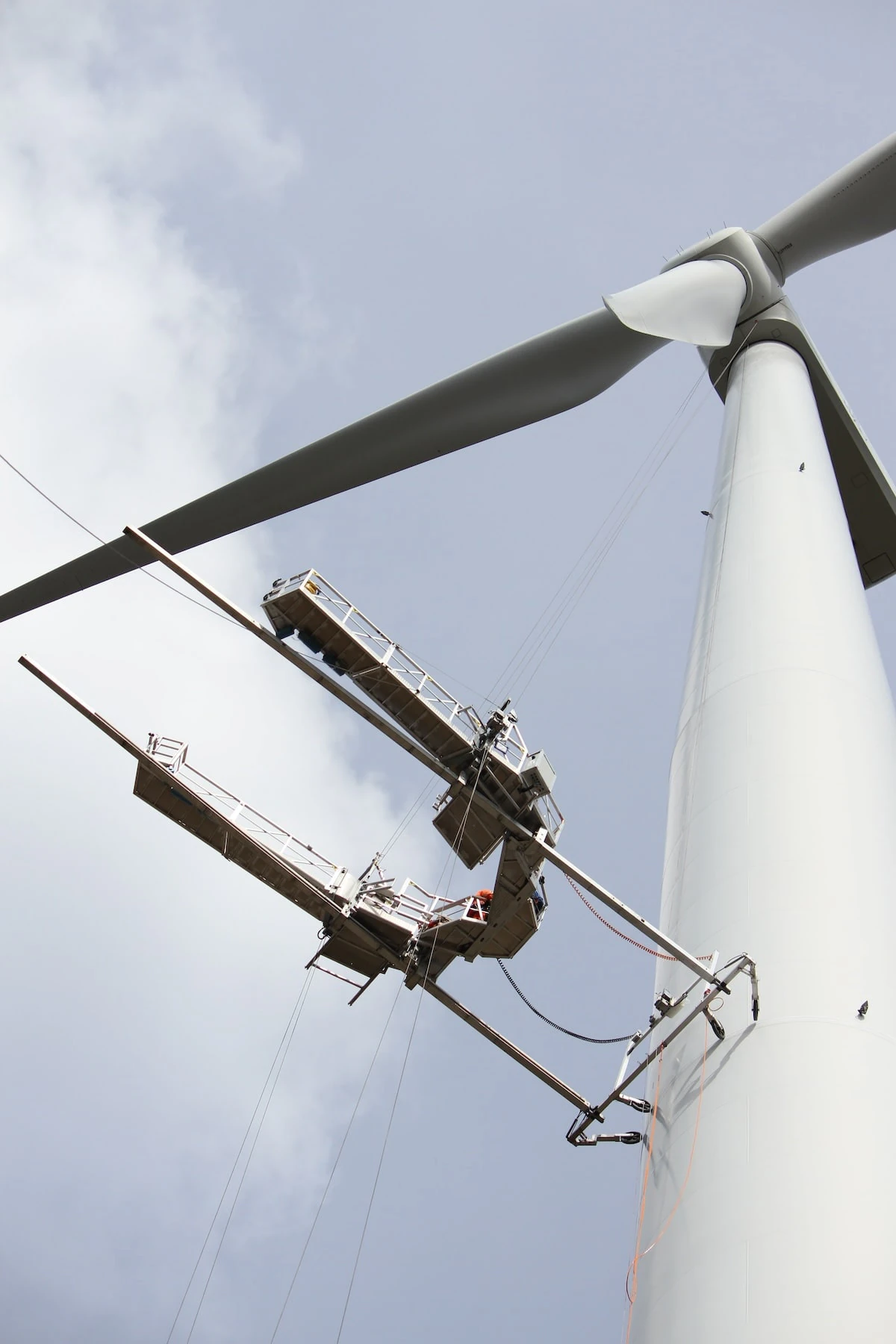
Gridinta uses rope access and suspended platforms for turbine inspection work. Selection depends on the turbine model, work position, blade position, equipment documentation, site procedures and the task. The access plan must also address turbine shutdown, isolation and rescue arrangements.
Offshore work adds transfers, vessel or platform interfaces, weather windows and permit coordination. The inspection coverage must fit the approved access method and the weather limits set for the equipment, turbine and site. Our rope access services page describes the wider access capability.
Reports, Photographs and Defect Classification
The report format, inspection criteria and deliverables are agreed before mobilisation. Blade inspection reports already described in our services include photographs, video and defect locations. Depending on the component and agreed scope, the handover can also include:
- A turbine-by-turbine work record and the components or areas inspected
- Defect locations and a register of findings, with photographs or other inspection evidence
- Measurements or test results included in the agreed inspection method
- Inspection coverage, access limitations and areas that could not be inspected
- Recommendations for monitoring, further investigation or follow-up repair
Agree the defect classification and severity criteria with the operator before work, including how findings are referred for engineering review. An observation, its interpretation and the recommended action should be distinguishable. If you use an existing report template or defect coding system, include it with the enquiry.
Inspection, Statutory Examination and Certification
This service concerns defined inspection work and reporting for maintenance decisions. Statutory examination and certification are separate requirements: the responsible party, required authorisation, evidence and acceptance process must be established for the asset and country before work is commissioned. A condition report does not by itself replace an examination or certificate that the project requires.
Gridinta is not a lift inspection body. Our service lift repair and retrofit scope includes validation checks agreed with the operator. Those checks and work records are separate from the statutory lift examination. Read our service lift inspection guide for the distinction.
For wider industrial structures, welds and protective coatings, use our separate NDT and steel surface coating inspection service. An inspection method should be specified against the material, defect and required decision.
What to Send for an Inspection Quotation
- Site location, onshore or offshore, and number of turbines
- Turbine make and model, blade or gearbox type where relevant
- Components, areas and inspection questions to address
- Previous reports, defect locations, photographs and repair history
- Manufacturer instructions, inspection criteria and required report format
- Target work window, shutdown availability and site access requirements
- For offshore work, transfer arrangements and known vessel or platform interfaces
Send the available information so we can discuss the inspection scope, access, reporting and next steps. If you need a statutory examination or certification, identify that requirement in the enquiry so the responsibilities can be established separately.