
How Safe Is Rope Access? What IRATA's Latest Incident Data Shows About Rope Access Safety
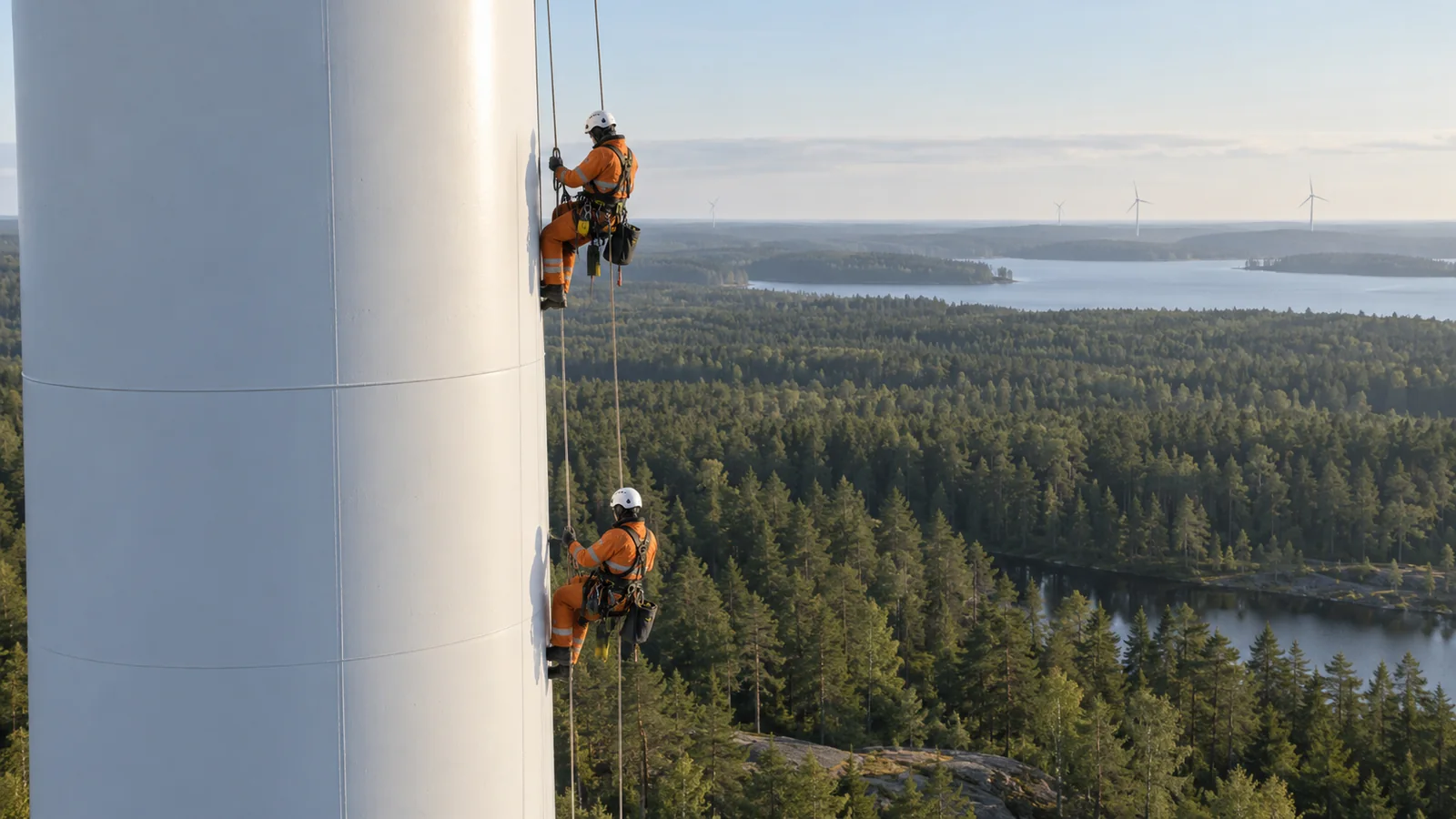
Rope access is a low-incident way to work at height when it is run by a trained, supervised team, but it is not risk-free. The most complete data on rope access safety comes from IRATA International's 2025 Work and Safety Analysis, which covers 2024: member companies logged 33,665,594 hours and reported 279 incidents, 170 of which caused no injury. The real risks sit in dropped objects, lapses of concentration, missed hazards and training, far more than in falls.
What the 2024 numbers actually say
The best public evidence on rope access safety is IRATA's own. IRATA's Work and Safety Analysis reports are built from incident and hours data that member companies must submit, regardless of severity. The 2025 edition (WASA 2025) covers January to December 2024. Reporting members grew from 277 in 2013 to 718 by the fourth quarter of 2024, and those members employed an average of 32,715 rope access personnel, up from 27,669 in 2023. Level 3 employment rose 31.3% to 10,458.
Across those 33.67 million hours, members filed 279 incident reports, or 0.4 per member, down from 0.5 in 2023. Most reports were dangerous occurrences: events that could have hurt someone but did not.
| Outcome | Reports | Share |
|---|---|---|
| Fatality | 2 | 0.5% |
| Major injury | 2 | 0.5% |
| Over 7-day injury | 16 | 6% |
| Less than 7-day injury | 89 | 32% |
| Dangerous occurrence, no injury | 170 | 61% |
| Total | 279 | 100% |
The report notes that both 2024 fatalities listed ill health or a medical condition as the underlying cause. One was recorded on rope and one in other activities. That detail matters: neither was recorded as a fall caused by rope or equipment failure.
Rates per million hours, by our calculation
IRATA states that incident and accident frequency rates are not included in its statistical summaries. Readers still want a rate, so here is a simple one. By our calculation, 279 reports over 33.67 million hours is about 8.3 reports per million hours worked. The 109 injury reports (excluding no-injury events) work out at roughly 3.2 per million hours, and the 20 fatal, major and over-7-day reports at about 0.6 per million hours.
These are not IRATA's published rates. They mix onshore, offshore and training hours, and they depend on how consistently each member reports. Treat them as an order of magnitude, not a benchmark.
Where rope access incidents happen
WASA 2025 sorts incidents by activity. In 2024, 65% occurred on rope, 18% during training and 17% in other activities such as rigging, ground work or travel on site. By location, 67% of reports came from onshore work, 15% from offshore and 18% from training.
Training stands out. IRATA's reviewer points out that training produced 18.3% of incidents while accounting for only 3.6% of hours. By our calculation, that is about 42 reports per million training hours against about 7 per million hours outside training. Trainees are learning manoeuvres and rescues under controlled conditions, so more reported strains and errors are expected, yet IRATA still flags training as an area needing continued attention.
Injuries cluster on the hands and arms. Of 114 reported injuries to body parts, 25 were to the hand, wrist or fingers, 18 to the arm and 16 each to the face or eyes and to the legs. Only 4 were head injuries.
What causes rope access incidents
Many reports cite more than one cause, so the categories overlap. For rope access safety, the pattern is consistent from year to year.
The most common immediate causes were:
- Falling or dropped objects: 59 reports, 50 of them without injury
- Operator error or omission: 49
- Contact with tools, material or equipment: 40
- Strains and sprains: 25
- Rope damage: 21, of which 20 caused no injury
- Fall from a height: 4, all dangerous occurrences with no injury
Underlying causes point at people and planning. Human factors appeared in 198 incidents (71%), led by lapse of concentration (74) and failure to follow rules (50, up from 36). Management factors appeared in 146 incidents (52%), most often failure to identify hazards (76), poor or inadequate communication (23) and lack of or poor supervision (20). The report also recorded a spike in faulty or inoperative safety devices, cited in 27 reports compared with 3 a year earlier, and more incidents in hot or humid conditions.
IRATA's reviewer concludes that dropped objects, rope damage, operator error and hazard identification have stayed unresolved for years, suggesting a gap between published guidance and what happens at the front line. His recommendations cover behavioural competence training, hazard identification standards, dropped-object and rope-damage prevention, investigation of equipment reliability, training safety oversight, fitness-to-work guidance, climate risk management and systematic learning from serious incidents.
For the practical side, see our guides to common rope access mistakes at height and safety practices in offshore rope access.
How to read rope access accident statistics honestly
Rope access accident statistics are useful for rope access safety planning, but they have limits that any HSE manager should know before quoting them.
- Members only. WASA covers employees of IRATA member companies. Non-member firms and self-employed technicians outside the scheme are not in the data.
- Self-reported. Members submit their own incidents and hours. The reviewer notes that near-miss reporting is still low relative to exposure hours and varies between members.
- Changing definitions. New reporting guidance from January 2024 changed how training incidents and training hours are recorded, which makes year-on-year trends harder to read.
- Small numbers. Two fatalities in one year against one the year before is not a trend in either direction.
Comparisons with scaffolding, MEWPs or other access methods are tempting but rarely fair. For context, HSE's work-related fatal injury statistics report 126 workers killed in Great Britain in 2025/26 (provisional), with falls from a height the most common kind, at 31 deaths. Those figures cover all workers in all industries and are counted per worker, not per hour on a given access method. No published dataset we found gives hours worked on scaffolds or platforms in a way that lines up with IRATA's denominator. Our article on rope access vs scaffolding compares the methods on planning, cost and exposure instead.
As of October 2026, IRATA's reports page also lists a WASA 2026 edition. This article uses WASA 2025, the most recent edition whose full text we were able to review.
What drives rope access safety in practice
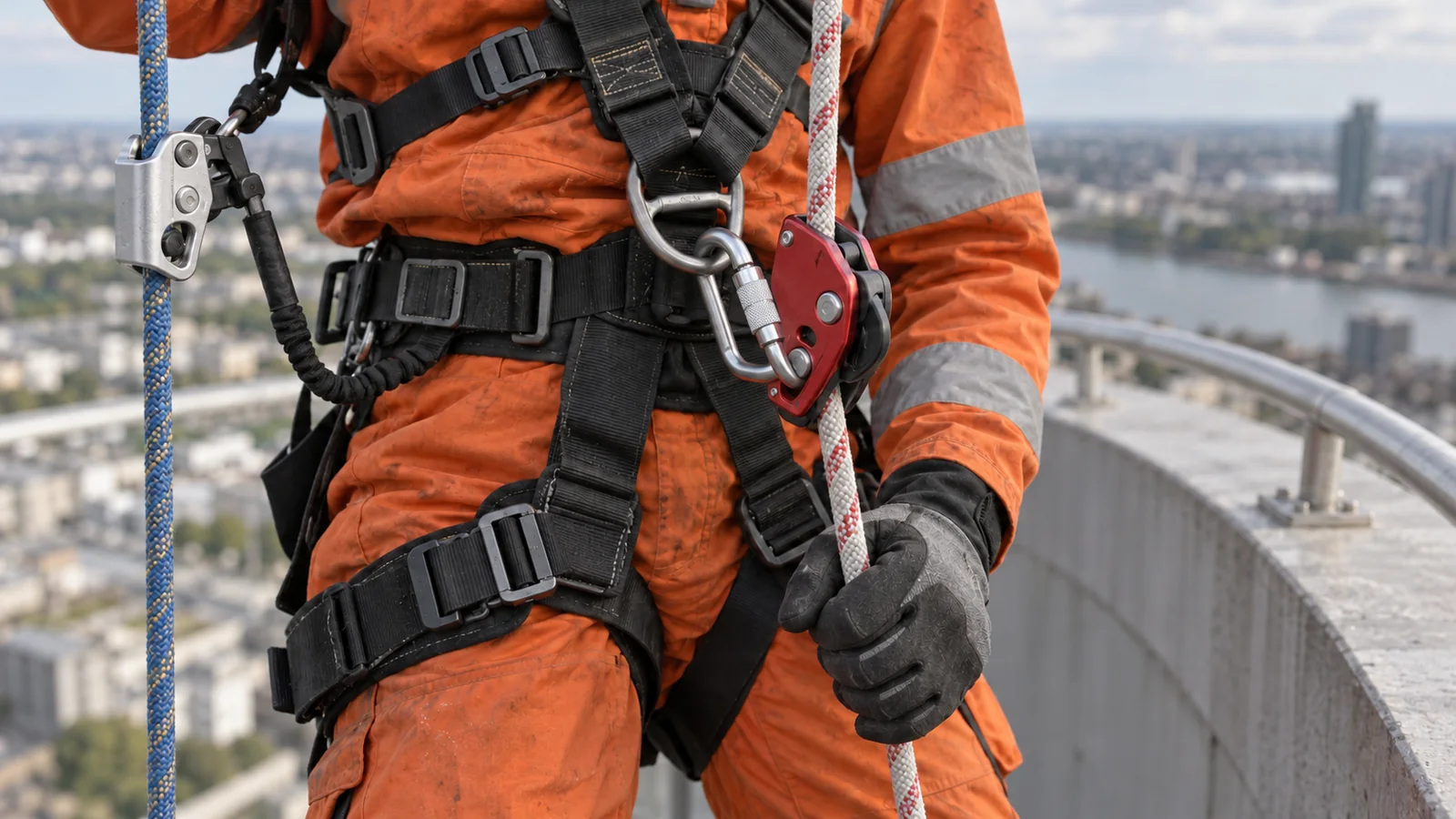
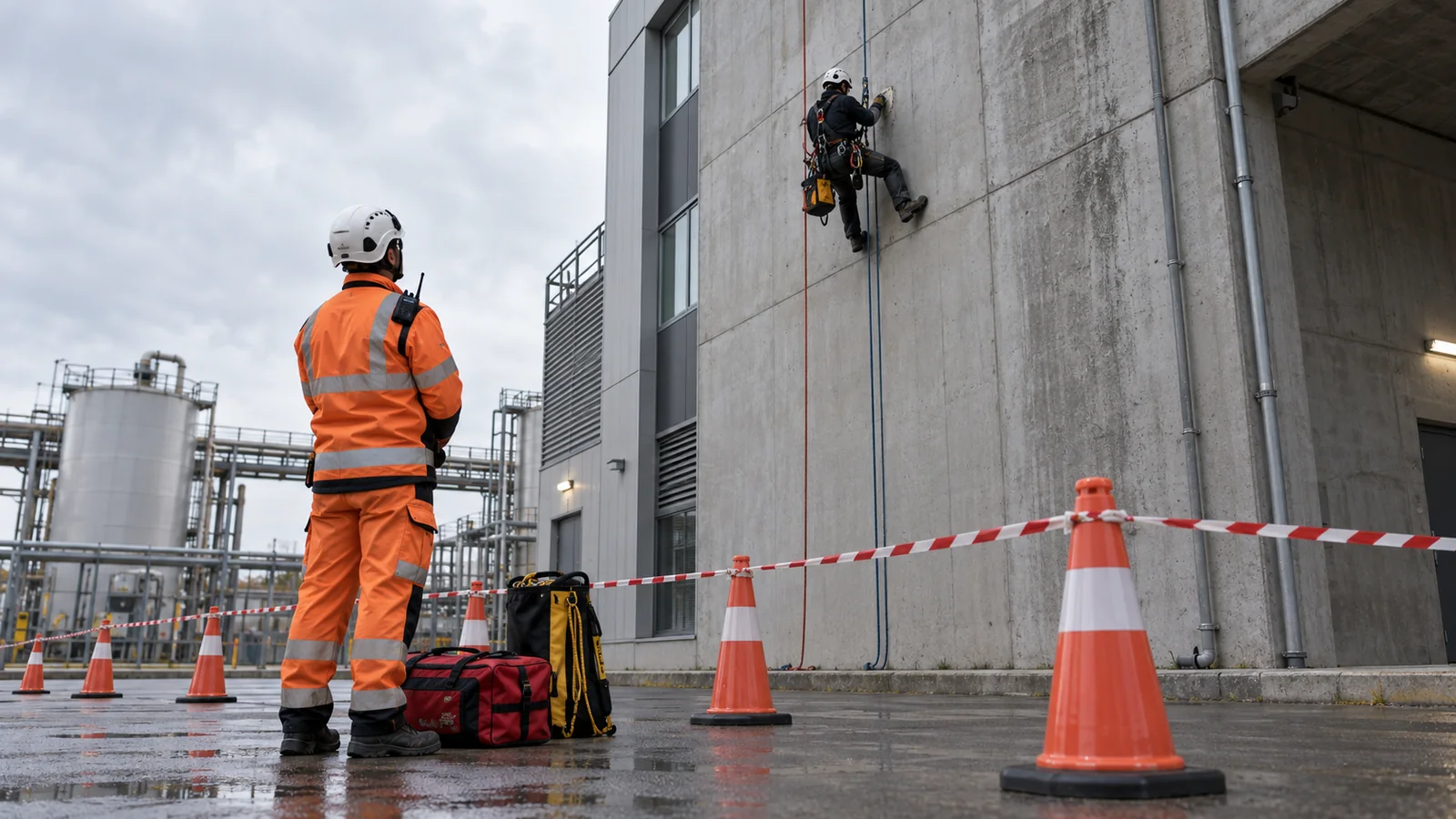
The IRATA system is built on a few controls that explain most of its record. Every technician works on two independently anchored ropes, a working line and a back-up. Teams include a Level 3 supervisor who plans the work, checks rigging and leads any rescue. Technicians are trained and assessed at three levels, with logged hours before progression, as explained in what makes IRATA certified technicians different.
Equipment is inspected before each use and formally at set intervals, a process covered in the equipment behind rope access. The data above shows where rope access safety controls need reinforcing: tools tethered against dropping, ropes protected at edges, and supervision that catches fatigue, heat stress and shortcuts.
What to check before hiring a rope access contractor
You do not need to read incident reports to judge a contractor's approach to rope access safety. Ask for evidence on these points:
- IRATA membership you can verify. Look the company up in IRATA's member directory. Gridinta, for example, is listed as a Full Operator member, 6036/O.
- Level 3 supervision on site. Ask who the named Level 3 supervisor is and whether they will be present while ropes are in use.
- A rescue plan before work starts. The plan should match the structure, with rescue kit rigged or ready and the team able to carry it out without waiting for emergency services.
- Dropped-object controls. Tool tethering, exclusion zones below the work and a method for securing loose materials.
- Equipment inspection records. Current records for ropes, harnesses, devices and anchors, with traceable serial numbers.
- Competence for the actual task. Rope access certificates show access skill; ask for the trade qualifications too, such as NDT, coating inspection, welding or electrical work.
At Gridinta we plan every industrial rope access job around these points, and we are happy to share the method statement and rescue plan with your HSE team before mobilisation.