
GWO High Voltage Training Modules, Entry Requirements and Authorisation
A useful GWO high voltage training pathway starts with the intended job, then matches training, existing electrical competence and site authorisation to that job. As checked on 4 November 2026, the published GWO High Voltage Standard is V1 with two modules: High Voltage Operations and High Voltage Cable Pulling. A training record is evidence of learning; it does not itself appoint someone to an electrical role or authorise work on a particular installation.
Which GWO high voltage modules are published?
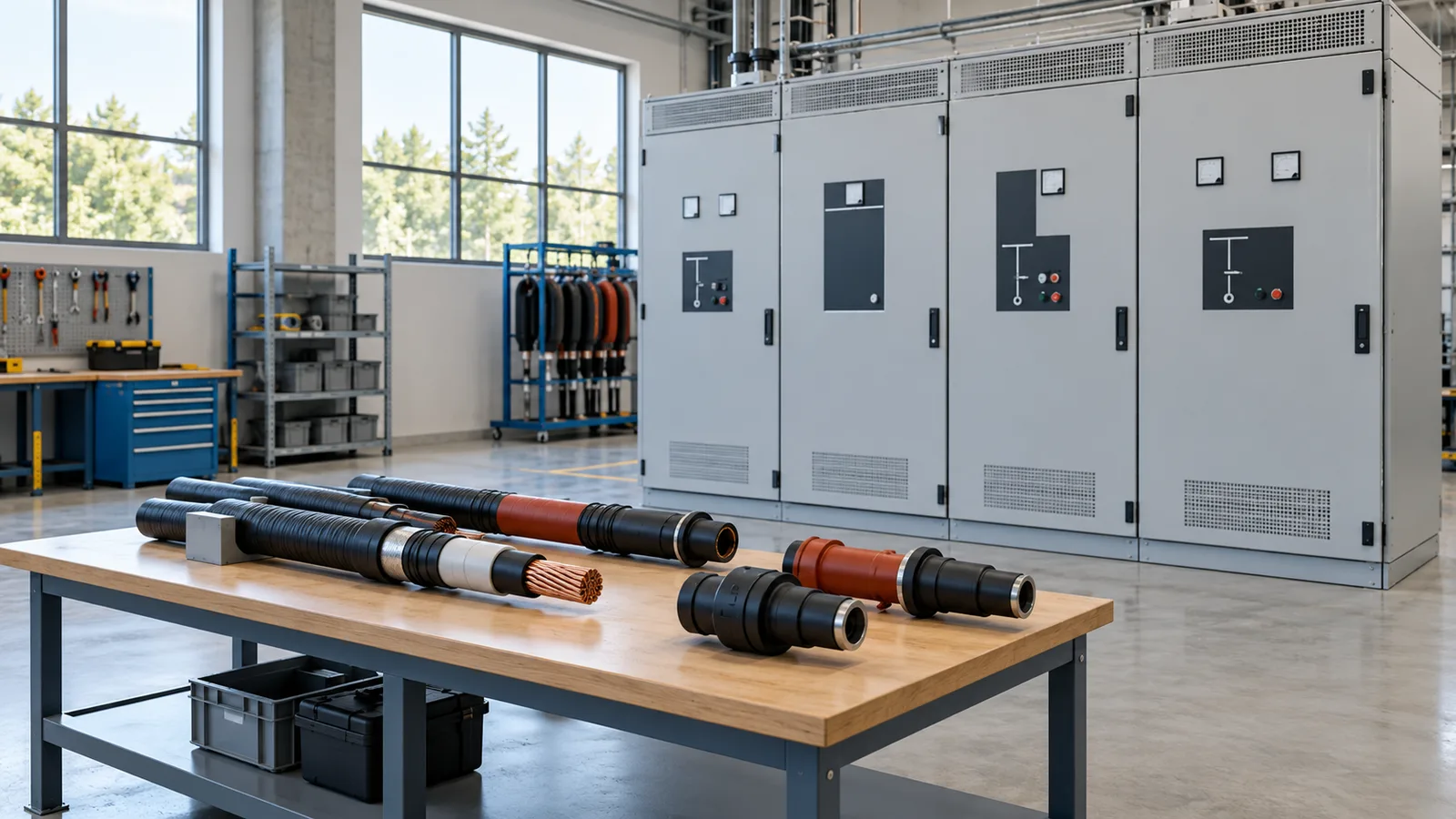
The official GWO standard page identifies V1, dated 2 July 2025. High Voltage Operations (course code HVOP) is for workers who operate and make safe high voltage equipment and systems under a documented safe system of work, including commissioning and service technicians onshore and offshore. High Voltage Cable Pulling (HVCP) is for workers who perform or supervise HV cable pulling, including offshore pre-assembly technicians and installation or service technicians replacing HV cable. These are different task scopes, so “I need HV training” is too broad a booking brief.
Scroll horizontally to see all table columns.
| Module | Public status | Training-planning implication |
|---|---|---|
| High Voltage Operations | Published in V1. | Match the course to the proposed operational role and employer requirements. |
| High Voltage Cable Pulling | Published in V1. | Confirm whether the assignment concerns performing or supervising cable pulling. |
| T-Connector Installation | Pilot completion announced; later-2026 release planned. | Request a published module and effective version before treating it as an available GWO qualification. |
| Transformer Maintenance | Pilot completion announced; later-2026 release planned. | Keep it as a future training need until publication is confirmed. |
GWO’s 27 August 2026 announcement says the final pilots for the T-Connector Installation and Transformer Maintenance modules are complete and that the final standard remains on track for release later in 2026. As of 4 November 2026, the published GWO standard page still listed only High Voltage Operations and High Voltage Cable Pulling. Recheck GWO before making a training commitment.
Entry requirements, course length and validity
Scroll horizontally to see all table columns.
| Module | Entry requirements | Contact time | Validity |
|---|---|---|---|
| High Voltage Operations | Knowledge and skills in safe low-voltage electrical work, electrical workplace experience, and training equivalent to GWO BTT Electrical and GWO CoHE Electrical | 28 hours | Enduring; progression to authorisation is expected, normally within 3 years |
| High Voltage Cable Pulling | Knowledge and skills in mechanical work, awareness of safe lifting operations, and training equivalent to GWO BTT Mechanical | 7 hours 25 minutes | Enduring, assuming active involvement in HV cable pulling |
Entry requirements come from section 5.7 of the GWO High Voltage V1 standard, and GWO’s launch announcement adds that an equivalent local training qualification can meet them. Our training partner Novikontas lists BTT Electrical among its GWO Basic Technical Training modules. Providers must also apply further prerequisites where employer policy or local regulation requires them. People leading HV cable pulling may additionally need training equivalent to GWO Slinger Signaller and/or Crane and Hoist, as decided by the employer. Contact time is capped at 8 hours per training day.
Two names changed with GWO’s 10 March 2026 standard updates. The Control of Hazardous Energies standard V5 now calls the electrical module CoHE Electrical Safety, and Hazardous Energies Basic Safety (HEBS) moved into the Basic Technical Training standard. Ask the provider which record it accepts as equivalent to CoHE Electrical before booking HV Operations.
Start with a role brief, not a bundle of certificates
Ask the employer to describe the work in a short written brief. Is the person joining a cable installation team, entering a service role, or developing towards an operational appointment? What previous electrical education and practical experience are expected? Who decides that the person is competent, and which tasks remain outside the appointment? These answers determine whether the proposed module closes a real gap.
The brief should identify the country, employer, asset context and intended responsibilities. Experience in one electrical environment may be relevant, but its transfer should be assessed against the new job. A technician can be experienced while still needing equipment familiarisation, supervised practice or a different level of responsibility. Equally, a certificate list does not explain what someone has actually done.
For the surrounding wind-industry training framework, use the GWO certification and WINDA guide. General safety or technical modules answer different training needs from a defined high voltage assignment. Do not infer electrical authority from basic wind training or from a job title.
Separate training evidence from the authority to work
WINDA lets employers review participant training history and provider certification status. Use it to check the named record against the person and the requested module. Keep employer competence assessment, equipment familiarisation, supervision and the actual appointment visible as separate evidence. An electronic training record cannot describe every limitation of a local work assignment.
The standard draws the same line. Section 2 defines an authorised person as someone with the competence to be authorised to operate HV switchgear and states that “the determination of readiness for authorisation is the responsibility of the employer”. Section 7.1 says that completing High Voltage Operations alone does not make a participant competent to perform HV operations in the workplace; participants return for local training in their employer’s safe system of work and HV rules. Under section 5.5, participants should gain supervised workplace experience and progress to authorisation, normally within 3 years; if that does not happen, retraining should be considered.
Scroll horizontally to see all table columns.
| Evidence | Question it should answer |
|---|---|
| Trade and experience record | What electrical foundation and relevant practical work does this person bring? |
| Named GWO training record | Which module was completed, and does it match the requested training requirement? |
| Equipment and site familiarisation | What is different about this installation and the employer’s system? |
| Observed work and assessment | What can the person demonstrate within the intended responsibility? |
| Written authorisation or appointment | Who permits which tasks, where, under what limits and supervision? |
The employer and asset organisation must establish the applicable appointment process. A course provider can explain course entry conditions and assessment; the organisation responsible for the installation decides how the resulting evidence fits its safe system of work. Resolve that interface before travel, not after a technician reaches the site.
Questions to settle before booking
- Exact course: confirm the full module name, published version and whether the proposed delivery matches that scope.
- Entry conditions: ask the provider to check the candidate’s background and required records against the current standard.
- Employer acceptance: obtain the employer’s written training requirement and identify any additional assessment or supervised period.
- Delivery details: confirm language, practical assessment arrangements, documentation and how completion is recorded.
- Next step: identify who owns the move from course completion to familiarisation, assessment and appointment.
Avoid buying a course simply because a future module appears in a news headline. If an employer needs a forthcoming skill urgently, ask it to define the accepted interim competence route. Do not rename other training as the unpublished GWO module or assume that pilot participation creates the final qualification. Likewise, published status does not establish availability at a particular provider, date or location.
A practical handover from candidate to employer
Prepare a one-page summary containing the target role, relevant trade experience, verified training, unresolved gaps and the person responsible for each next step. Mark planned courses as planned and completed records as completed. For experience, describe the task context and supervision accurately instead of using an unrestricted “HV qualified” label. This makes an interview or mobilisation review more useful and reduces assumptions between the training team and operational management.
Gridinta refers training enquiries to its partner Novikontas. Bring the role brief and the employer’s requirements so that module scope and entry evidence can be checked for the individual enquiry.
GWO High Voltage Training Questions
Are all four GWO high voltage modules published?
What do I need before GWO High Voltage Operations training?
Does GWO HV training make me an authorised person?
How long are the GWO high voltage courses?
Should every wind technician take both published HV modules?
Sources
Sources checked on 4 November 2026: GWO High Voltage standard page; GWO High Voltage V1 full standard; GWO High Voltage standard launch announcement; GWO pilot update of 27 August 2026; GWO standard updates of 10 March 2026; GWO Control of Hazardous Energies standard page; WINDA purpose and records.
For the wider trade and safety requirements, compare the wind turbine technician pathway.