
Oil and gas to wind technician: a skills-transfer evidence plan
An experienced oil and gas technician can build a route into wind maintenance by proving current trade competence, identifying the wind-specific gaps and agreeing a supervised development plan with the employer. Electrical, mechanical and instrumentation experience can be relevant, but it does not automatically grant turbine access, safety-rule authorisation or permission to work independently. Start with evidence against a particular role, rather than buying every course that mentions wind.

This guide is for technicians who already have a trade and want to show how it transfers. Our general guide to becoming a wind turbine technician covers the broader entry route. Here the focus is an employer-reviewable skills matrix: what you have performed, how recently, under whose supervision and what evidence remains missing for the proposed turbine work.
What changed with the 2026 Cross Skill Programme
On 21 July 2026, GWO announced the Wind Cross Skill Programme with ECITB and ORE Catapult. It links existing technical competence with additional wind training and recognises prior learning to reduce unnecessary duplication. The intended experienced trades are electrical, mechanical and instrumentation/control. This is a structured cross-sector pathway; it is not a statement that an offshore oil and gas certificate automatically becomes a wind qualification.
ECITB’s current programme page describes a six-week UK-focused programme, relevant trade qualifications or apprenticeship, and evidence of current competence. It also describes funding arrangements whose individual eligibility must be confirmed with training providers. These arrangements are not a universal entitlement across Europe or Lithuania. Candidates outside the UK should ask about admission, recognition of their qualification and funding separately before committing to travel or course fees.
Build a trade-specific evidence matrix
Begin with one target vacancy or scope: routine turbine servicing, electrical maintenance, mechanical troubleshooting or controls diagnostics. Copy its actual requirements into your matrix. For each requirement, add a dated example, a supporting record and a gap to close. The table below is an editorial preparation tool, not an official ECITB admissions checklist or a statement of Gridinta hiring requirements. The employer or provider must judge the evidence against its own criteria.
Scroll horizontally to see all table columns.
| Primary trade | Existing experience to evidence | Wind-specific gap to discuss |
|---|---|---|
| Electrical | Interpreting drawings, measurements, fault finding, isolation procedures and documented maintenance. | Turbine electrical architecture, converters, local safety rules and the exact limits of authorisation. |
| Mechanical | Rotating equipment, hydraulic systems, controlled bolting, lubrication and defect reporting. | Turbine drivetrain, yaw/pitch systems, OEM procedures and component-specific acceptance records. |
| Instrumentation and control | Sensor checks, loop testing, calibration, structured diagnosis and change records. | Turbine control interfaces, SCADA interpretation and boundaries around software or protection changes. |
| All trades | Permits, toolbox briefings, handovers, stop-work decisions and evidence of recent practical work. | Turbine rescue arrangements, access, site induction, technical language and emergency responsibilities. |
A good entry describes your own contribution precisely. “Supported a pump overhaul and completed the alignment record under supervision” is more useful than “experienced in all mechanical maintenance”. Separate performed work from observed work. Record the equipment type and complexity, whether you followed a prepared task pack or diagnosed the problem, and who verified completion. This helps the assessor recognise the skill without assuming the industrial component and turbine component are identical.
Connected Competence uses practical trade tests to demonstrate current base technical competence and provides shareable records. Its purpose highlights an important distinction: a qualification earned years ago and evidence of present capability answer different questions. If you use another competence system, ask the receiving organisation how it evaluates that evidence; do not self-declare it equivalent to a named technical test.
Keep safety training, technical training and authorisation separate
The GWO Basic Technical Training standard prepares participants for further company-specific training and states that the course does not by itself authorise unsupervised technical work. Use that boundary when planning your transition. A training record can show that an assessed course was completed; the employer still needs to decide what work you may perform on a particular turbine and with what supervision.
For example, previous electrical isolation experience is valuable evidence, but it is not permission to operate a wind farm’s high-voltage equipment. Likewise, a mechanical technician’s bolting experience does not settle which procedure, tooling, sequence or verification applies to a particular turbine joint. Put those questions into the development plan with a named assessor and a sign-off stage. Avoid describing awareness training as operational authority on your CV.
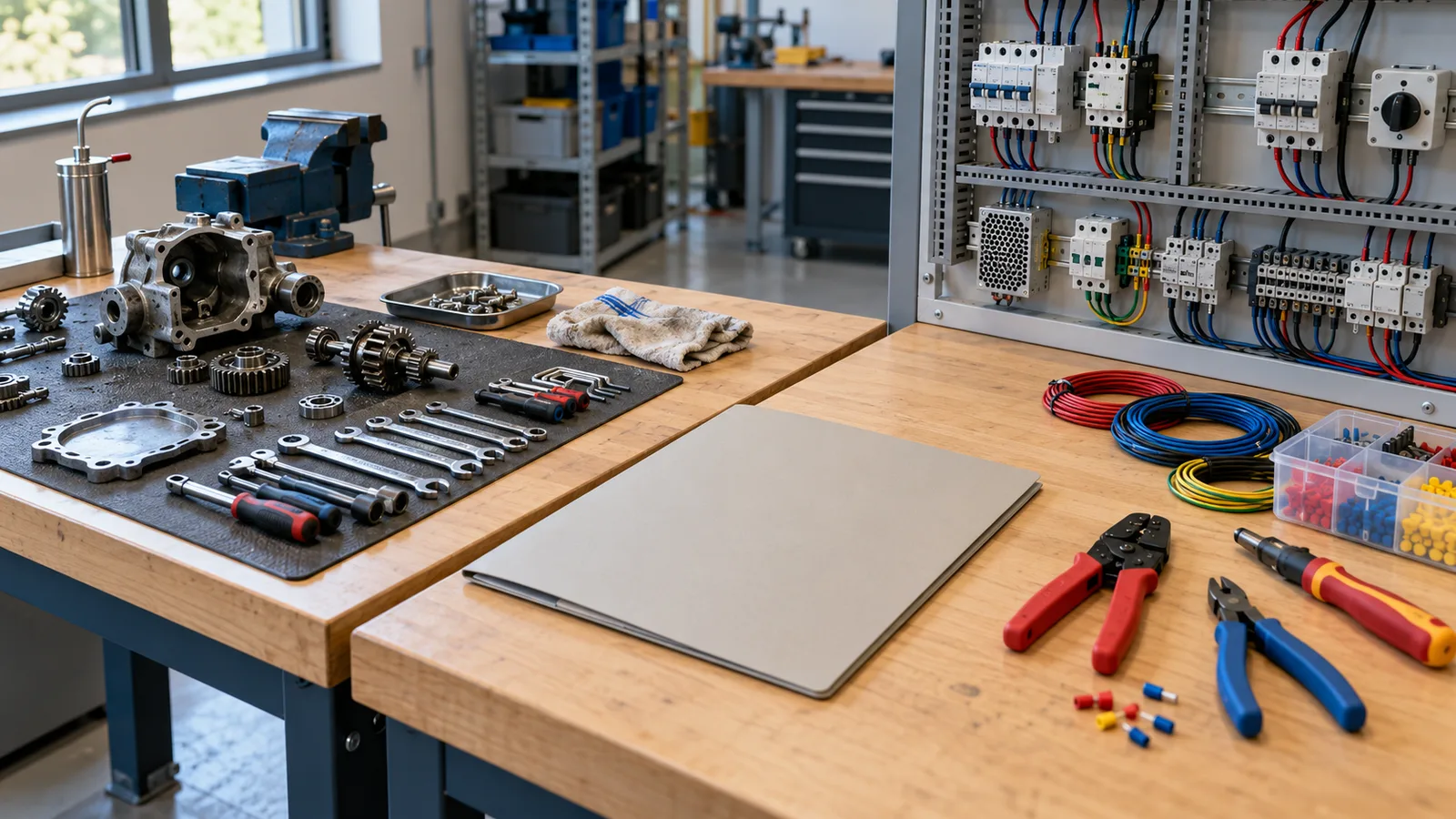
Use a portfolio that an assessor can actually review
Prepare a short index rather than an unstructured folder of certificates. Link the trade qualification, competence assessments and selected work examples to the matrix rows. Use an employer-approved summary or a reference where original records contain confidential plant information. Remove client names, drawings, process values and personal information unless you have permission to share them. Evidence of the task and your role is the purpose; exposing an old employer’s documentation is not necessary.
- State the target role and distinguish onshore work, offshore work and the proposed tasks.
- List the issuing body, date and relevant scope of each qualification or assessment.
- Provide recent examples showing the work performed, supervision level, outcome and verifier.
- Record the actual status of safety and technical training, including any refresh or employer review needed.
- List unresolved gaps in turbine knowledge, access, rescue, language and site procedures.
- Agree which gaps need training, practical assessment, supervised experience or a combination.
- Assign an assessor, evidence requirement and review point for each proposed increase in responsibility.
Check the practical transition before paying for training
A viable route has to fit the work pattern as well as the qualification list. Clarify the employer’s expected rotation, travel arrangements, medical or fitness process, working language and available supervision. Ask which costs are covered and which records must be accepted before mobilisation. Course dates, admission and funding can change; obtain a written answer from the responsible provider rather than relying on another candidate’s experience.
There is also a difference between admission to a programme and selection for a job. Completing training does not guarantee an offer, salary or deployment date. When comparing roles, distinguish basic pay from allowances and contracted hours from possible overtime. Our wind technician salary guide explains the factors to ask about; an individual offer still needs to be read on its own terms.
What a realistic first assignment should clarify
Before starting, request a task list, a supervisor, the applicable work instructions and the limits of your authority. Agree what happens if the turbine differs from the training equipment or the work pack no longer matches the condition found. A first assignment can generate strong evidence when observations, completed tasks and feedback are recorded consistently. The aim is an assessed progression in responsibility, with previous trade expertise recognised and the turbine-specific gaps closed deliberately.