
How to become a wind turbine technician in Europe
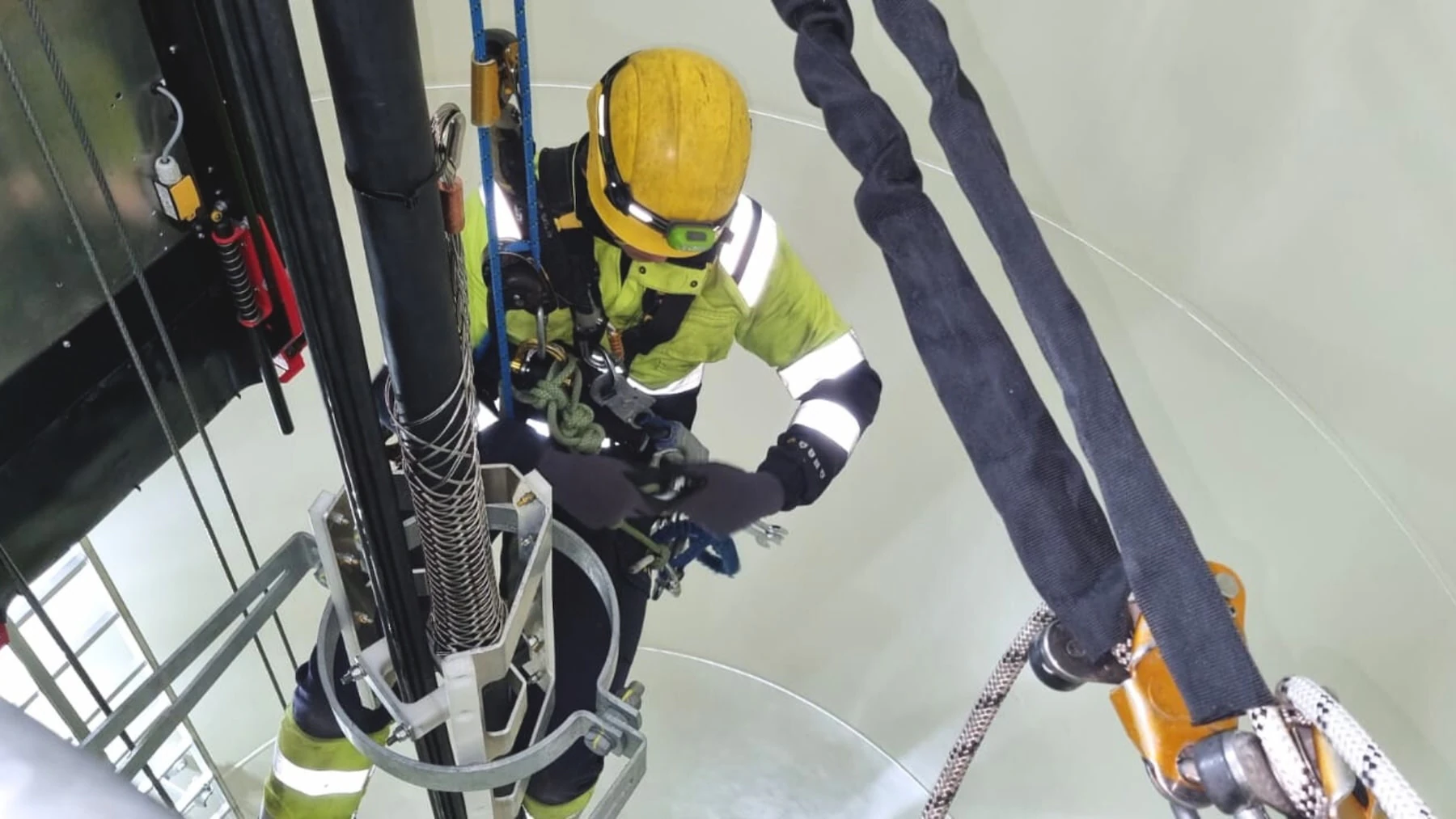
To become a wind turbine technician, build a practical electrical or mechanical foundation, identify an entry route, and complete the safety and technical training required for that role. An apprenticeship, a technical college or university course, or a move from another maintenance trade can all be starting points. GWO training supports that route; company training and supervised experience are still needed before independent work.
What a wind turbine technician does
The National Careers Service profile describes installation, maintenance, fault finding and recording work on turbines on land and at sea. Tasks can involve electrical, mechanical and hydraulic systems. Working at height and in remote locations is part of the environment. A service technician, installation technician and blade repair technician can have different task scopes, even when their job titles overlap.
If you want composite repair rather than general turbine maintenance, read our blade repair technician career guide. Rope access is an access specialism with its own competence requirements; it is not a substitute for electrical, mechanical or composite repair skills.
Three routes into the industry in Europe
- Start with an apprenticeship. A structured programme can combine engineering study and work at wind sites. For example, RWE’s UK offshore wind turbine technician apprenticeship is a three-year programme. Applications for its 2026 intake were closed when checked on 21 October 2026. This is an example of a route, rather than a current application invitation.
- Develop a technical qualification. Electrical, mechanical, mechatronics or renewable energy study can provide a base. Compare workshop practice, placements and maintenance content. In Lithuania, VILNIUS TECH’s Lithuanian Maritime Academy publishes an Offshore Wind Energy Engineering programme. A study qualification and an employer’s permission to perform particular turbine tasks are separate things.
- Transfer from another trade. Demonstrate maintenance experience with examples of diagnostics, tools, drawings and completed work records. In a public installation careers overview dated 6 May 2025, Muehlhan Wind Service identifies mechanical backgrounds and qualified electricians as entry-level profiles for its onshore installation department. That example does not establish the requirements for every employer or for Gridinta.
Before paying for courses, choose a target role and location. Ask whether the employer recruits trainees, provides manufacturer training or expects prior turbine experience. A programme in one country does not automatically settle language, qualification recognition or work eligibility for another.
GWO BST: safety training matched to the work
GWO Basic Safety Training V20, dated 10 March 2026, covers first aid, manual handling, fire awareness, working at height and sea survival. Sea Survival addresses offshore transfers and emergency situations. Confirm the modules the intended role needs instead of assuming that every onshore role requires the whole offshore package.
Safety training prepares you for defined hazards and responses. It does not establish that you can diagnose an electrical fault, carry out a composite repair or operate every item of turbine equipment. Employers may require additional task, rescue or equipment training for the project.
GWO BTT: technical foundations and supervision
GWO Basic Technical Training V11, also dated 10 March 2026, covers mechanical, electrical, hydraulic, bolt tightening and installation topics, with Hazardous Energies Basic Safety. GWO explicitly says that these courses do not qualify participants to perform the listed technical work without supervision. They prepare participants for further company training.
Match the modules to the work you intend to do. Installation, planned servicing and fault finding are different assignments. Ask the recruiter which modules are required at application, which can be completed after selection, and who provides manufacturer or site-specific training. Keep a record of supervised tasks and feedback as you develop competence.
Gridinta’s GWO training information explains the route to courses through training partner Novikontas. Confirm current course availability, language, price and the accepted module package with the provider before booking. Gridinta and the training provider have different roles.
Onshore and offshore: decide before booking extra training
An onshore role can involve daily travel between a service base and turbines, while an offshore assignment adds marine travel and site-specific arrangements. Do not assume that a rotation pattern, medical certificate or offshore safety course is the same for all projects. Obtain the employer’s requirements for the actual country, operator, access method and task.
For offshore preparation, see our offshore courses guide. Where an employer asks for an OEUK medical, verify the required assessment and issuing doctor through OEUK’s official guidance; acceptance outside the UK depends on the country, employer or operator. A training centre’s entry screening and a project’s fitness-to-work requirement should be checked separately.
Prepare an application that shows what you can do
- Trade foundation: state qualifications and relevant maintenance or installation experience, with examples of the equipment and systems you have worked on.
- Training record: list GWO modules, completion and expiry dates where applicable, and your WINDA ID. Distinguish completed training from courses you plan to take.
- Task evidence: describe fault finding, use of drawings, inspection or maintenance records, tools and supervised responsibilities. Do not imply authorisation for tasks you have only observed.
- Practical fit: state languages, driving licence, availability and willingness to travel. Ask which conditions are essential for the specific project.
Review Gridinta’s wind turbine technician role and confirm the current project requirements, work location and recruitment status with the team. The role page is the place to discuss an application; this guide does not promise a trainee place or a particular assignment.
What to ask about pay and progression
Before accepting an offer, clarify the pay period, gross or net basis, contracted hours, overtime, travel, accommodation and any rotation arrangements. Our European technician salary guide separates public salary evidence from an individual employer’s offer. Additional certificates should follow the next job’s tasks and responsibilities, with supervised experience and employer assessment supporting progression.