
Rope Access Welding Needs One Plan for Hot Work, Rescue and Inspection
Rope access welding needs one coordinated plan covering the joint, the access method, hot-work controls, rescue and inspection. Decide whether welding can be moved to a safer location or another access system gives a better working position before selecting ropes. A small weld can still require substantial preparation when heat, falling material or restricted movement affects people and equipment.
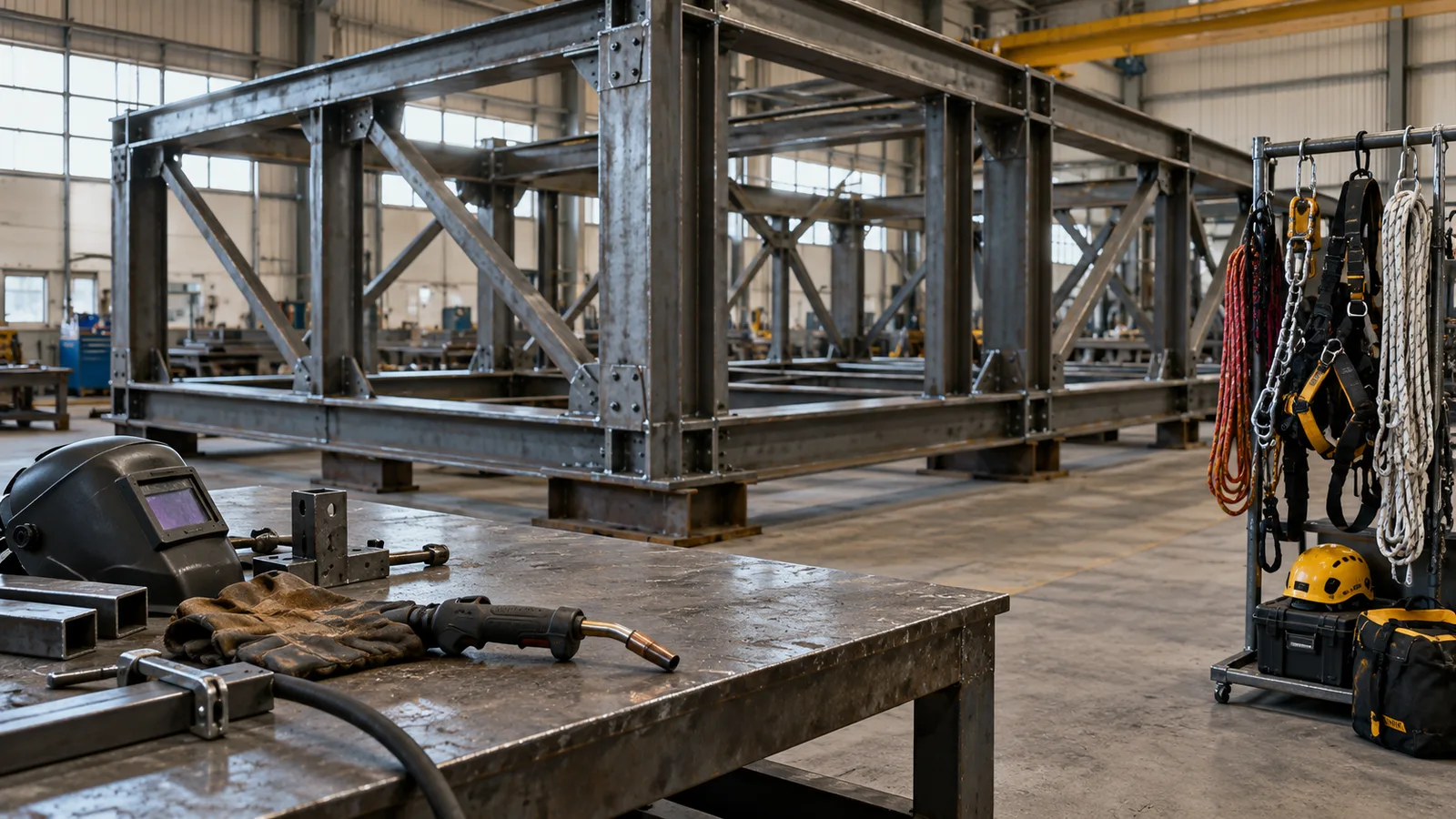
This guide covers project scoping and coordination; the responsible specialists turn the actual asset information into a site-specific method and approval package. Read it alongside the industrial welding and fitting service scope when preparing a project enquiry.
Begin with the engineering decision and access assessment
Establish why the joint is required and who approves the repair or alteration. Supply the drawing, material information, weld location, relevant operating history and design requirements. An access contractor cannot resolve an unknown material or an undefined repair simply by reaching it. Where the structure remains in service, the owner and responsible engineer must define the operating condition in which the work may be considered.
HSE’s work-at-height guidance prioritises avoiding height work where possible, preventing falls and then reducing the consequences of residual falls. It also requires planning for emergencies and rescue without relying on the fire service. These are UK guidance principles; the project must establish the law and requirements applicable at its own location.
Compare access options against the complete task: preparation, fit-up, welding, inspection and any rework. Ask whether the proposed position allows the required reach and steadiness, and how the welder will manage fatigue. A method suitable for a brief visual survey may not suit a longer welding task. Include setup, recovery and inspection access when comparing programmes, rather than only the estimated arc time.
Assign owners to each interface
A practical scope review should identify who supplies the missing information and who authorises each stage.
- Asset and engineering: name the person who approves the joint or repair design, operating restrictions and any change to the proposed scope.
- Welding quality: identify the responsible welding coordinator or technical authority, applicable procedure, personnel qualifications and records needed for the joint.
- Access and rescue: identify the access supervisor, task-specific rescue arrangements and the equipment or location constraints that affect them.
- Site control: agree responsibility for permits, isolations, adjacent activities, exclusion areas and communication with the operating team.
- Fire and exposure controls: allocate the assessment, equipment, monitoring and close-out responsibilities, including any post-work fire watch.
- Inspection and handover: agree who checks readiness, attends hold and witness points, evaluates results and releases the completed work.
Integrate hot-work protection with the rope system
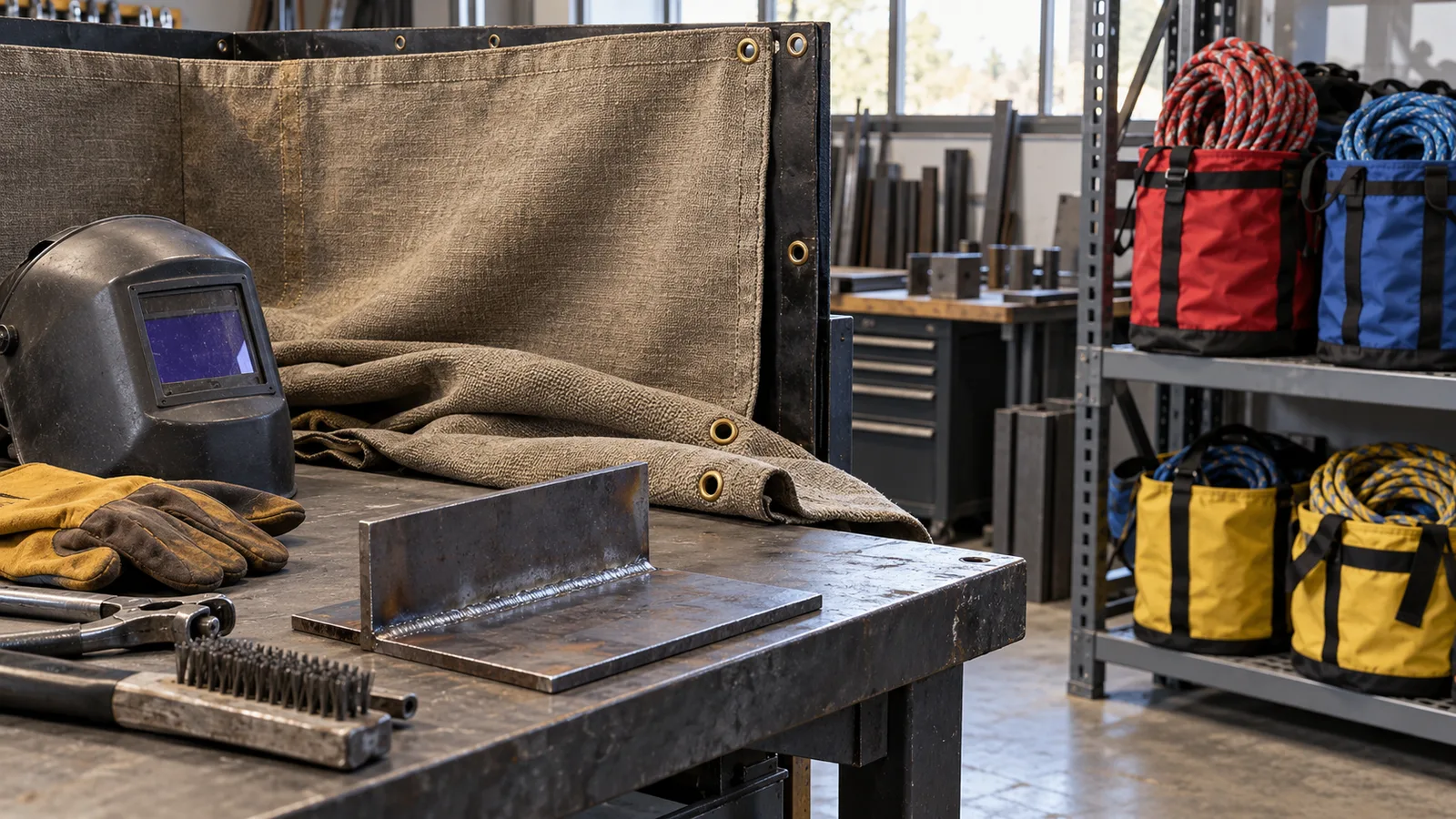
IRATA’s International Code of Practice (ICOP, TC-102ENG) covers this in Annex M, “Use of tools and other work equipment”. Its hot-work section, M.5, advises sealing the gaps between overalls and boots and between sleeves and gloves so that hot material cannot enter, and notes that anchor lines and harnesses may need special protection, for example heat-resistant anchor-line protectors in the immediate hot-work area. Where a welding mask restricts vision or hearing, M.1.6 recommends considering a second rope access technician as a watchman, positioned close by, to guard against problems such as fire or equipment damage. The annex also covers heavy equipment and interfaces with lifting systems. Heat protection and the watchman therefore belong in the access assessment, not as items added after the ropes have been installed.
Ask the access and welding specialists to review the same work position and equipment layout. The planning review should resolve whether welding equipment, cables, hoses, protective arrangements or material handling could obstruct movement or rescue. Any selected protection must suit the exposure and equipment manufacturer’s instructions. A generic reference to a fire-resistant cover does not establish that a particular system is suitable.
Plan the welding return path in the same review. HSE’s guidance on other welding risks warns that stray welding currents may be substantial and comparable to the welding current, and advises against clamping the welding return to handrails, pipes or the frame of a structure unless they form part of the workpiece. For rope access, plan the return lead on the workpiece close to the joint, so that the intended current path avoids anchors, connectors and wire-rope slings.
Make the permit reflect the surroundings
HSE’s welding safety guidance highlights fire, explosion and electrical risks, including hot material travelling beyond the immediate work area. It advises that a fire watch should be maintained for at least 30 minutes after the hot work is completed, and that this may need to be extended to 60 minutes where an unintended ignition may be difficult to detect or slow to develop. The site permit may require a longer watch.
Give the permit issuer information about the area above, below and behind the joint, plus neighbouring operations. Check who owns the space affected by falling material and who can stop conflicting work. If a tank or process system is involved, its contents and history are engineering and process-safety inputs. Do not treat a vessel described as empty as an established safe condition: HSE’s tanks and drums guidance explains the danger of flammable residues.
Include exposure control and rescue in the work position review
HSE’s welding-fume control guidance sets out avoidance or reduction, local exhaust ventilation (LEV) and suitable respiratory protection. For welding outdoors, HSE notes that LEV will not work, so workers should use suitable respiratory protective equipment. At the planning stage, the specialist assessment must consider the process, surrounding workers and compatibility of respiratory, eye, head and fall-protection equipment.
Review the emergency arrangement with the equipment actually intended for the task. Ask whether a person could be rescued from the work position when movement is restricted or a hot-work incident has changed the surroundings. Identify who can suspend the operation and how the team communicates that decision. Agree restart authority after a change in weather, access, permit conditions or plant status; restarting is a fresh coordination decision, not an assumption.
Connect the welding procedure to inspection access
ISO 15609-1:2019 specifies the content of arc-welding procedure specifications. The project’s welding authority should confirm the applicable WPS, supporting qualification basis and personnel qualification scope. Our guide to WPS and welder qualification documents explains how to review them. Reaching the joint does not show that the intended position or working conditions fit those documents.
Before mobilisation, agree which stages need inspection access, which are hold or witness points and what evidence is needed before an area is concealed or the access system removed. Separate completion of the weld from acceptance of the weld. Our weld defects and reporting guide explains why findings need traceable locations and agreed acceptance criteria. Budget for the possibility of further examination or approved rework without promising that it will be required.
The handover should connect each weld identifier to the agreed quality records, inspection results, limitations and unresolved items. Close the relevant permits and confirm who accepts the package. If inspection coverage could not be achieved, record that limitation and obtain the responsible authority’s decision instead of presenting the whole scope as accepted. For an enquiry, send drawings and access photographs alongside the technical requirements to discuss rope access for welding at height.
Rope access welding questions
Is rope access always the best choice for a small weld?
Does a hot-work permit replace the work method?
Can a rope-access certificate stand in for a welding qualification?
When should inspection be planned?
How long should a fire watch continue after hot work?
Should a welder working on ropes have a second technician nearby?
Sources
Sources checked on 25 October 2026: HSE work at height FAQ, HSE other welding risks, HSE welding fume control, HSE INDG314 hot work on small tanks and drums, IRATA International Code of Practice and ISO 15609-1:2019.