
Rope Access Rates, Day Rates and the Cost Drivers Behind Every Quote
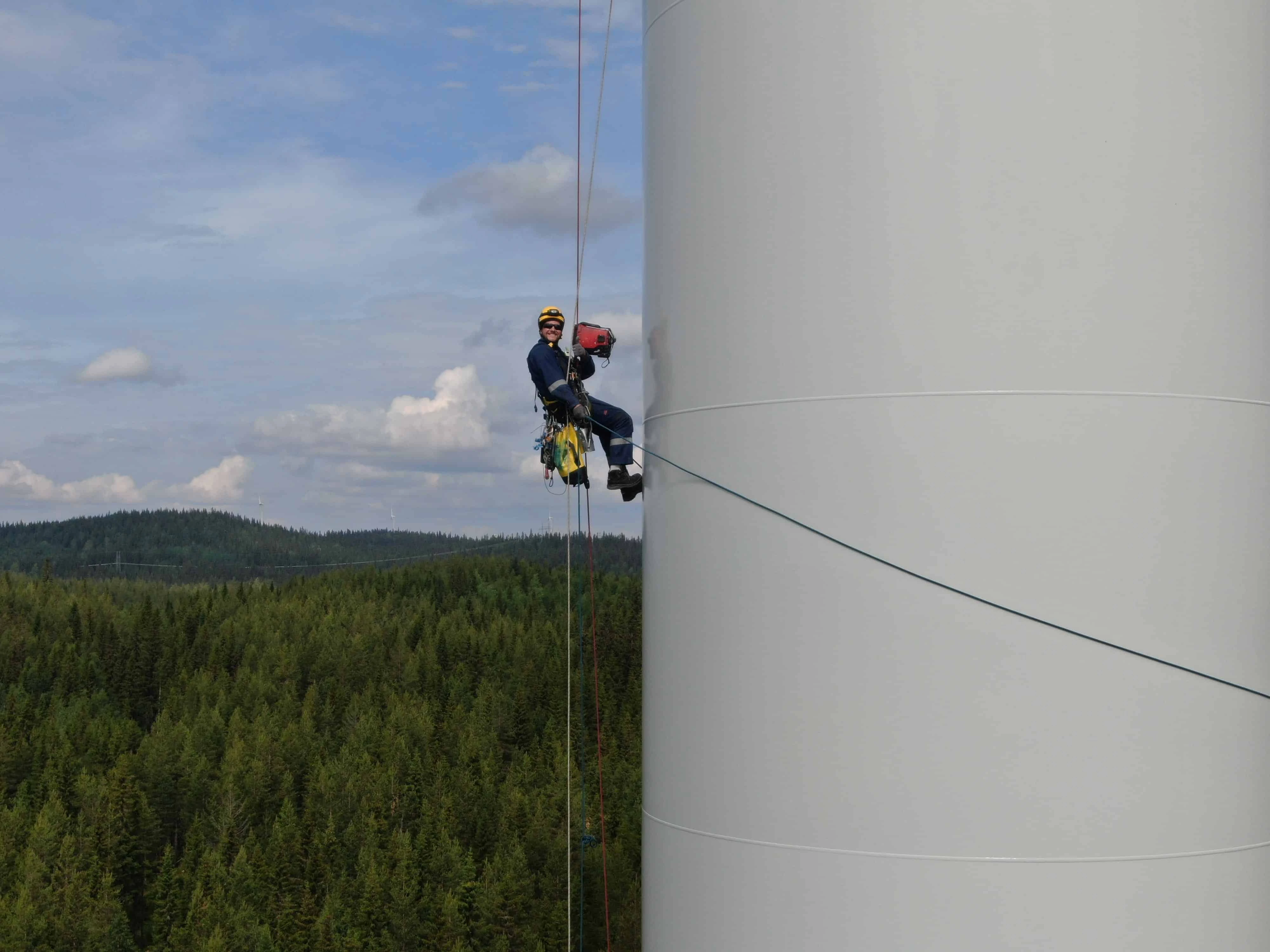
There is no standard rope access price list. A quote is built from a team day, the cost of getting that team and its equipment to site, and the extras the job needs: rescue cover, anchors, permits, weather allowance, offshore logistics, trade skills and reporting. The few public figures that exist come mostly from UK building maintenance. A London firm reported in September 2026 that a two-technician team day cost £850 to £1,100 before VAT, with rigging and mobilisation charged separately. This guide explains each cost driver so you can compare quotes on the same basis. Figures are as of October 2026.
For what technicians themselves are paid, see our separate guide to rope access technician salary in Europe. This article covers the other side: what clients pay and why.
Why there is no rope access price list
Rope access is an access method, not a product. The same team can spend a day inspecting welds, replacing a sealant joint or repairing the leading edge of a turbine blade, and each task needs different people, tools and time. A fair rope access cost depends on four things you can describe before asking for a price:
- The structure: height, shape, anchor options and what is below the work area.
- The task: inspection, repair, painting, installation or a mix, and whether a trade qualification is needed.
- The site: onshore or offshore, distance from the team's base, permit system and working hours.
- The deliverable: a photo record, a formal inspection report, test certificates or a finished repair.
Contractors usually turn that into a price per team day, a price per visit or a fixed price for the defined scope. All three are built from the same cost drivers below.
Published rope access rates, and how thin the data is
Public rope access rates are scarce. Most contractors quote privately, and the few published figures come from firms that market building maintenance in British cities. We found no published day rates for wind turbine, industrial or offshore rope access in the Baltic or Nordic countries. Treat the table as an indication of how quotes are structured, not as a benchmark for industrial work.
| Source | Region and year | Figure (ex VAT) | What it covers |
|---|---|---|---|
| iRopeAccess cost guide | London, published 16 September 2026, based on 46 quotes | £850–£1,100 per two-technician team day | Technicians, supervisor time, rope and personal kit, risk assessment and method statement, insurance and a photo record |
| iRopeAccess cost guide | London, 2026 | £450–£850 per visit | Rigging and mobilisation: getting the team and kit to site, finding or installing anchors, rigging and de-rigging |
| iRopeAccess cost guide | London, 2026 | £1,300–£6,000 per job; half of quotes under £2,500 | Whole building maintenance jobs, excluding VAT |
| Forth Rope Access | Scotland, 2024 prices | £350–£550 per technician per day | Day rate by IRATA level and specialism; two-person team standard |
| Our salary guide, citing a January 2026 UK guide | UK, 2026 | £150–£500+ per day by IRATA level | What technicians are paid, not what clients are charged |
The gap between the last row and the first is normal. A charge-out rate also covers the supervisor, equipment, insurance, travel, planning time, paperwork and days when the team is booked but cannot work. Comparing a quote with a technician's wage will always make the quote look high.
Team composition sets the minimum cost
The smallest unit you can buy is a team, not a person. The IRATA International Code of Practice (ICOP) requires that an IRATA rope access team consists of at least two technicians, one of whom is a Level 3 rope access safety supervisor. Lone working is not allowed (ICOP Part 1, 1.4.3.7, and Part 2, 2.11.6).
Two is a floor, not a default. Clause 2.11.6.3 says a two-person team should only be considered where either technician could rescue the other rapidly and unaided, for example by a direct lower to a safe place. Where the rescue would be anything else, a team of three should be regarded as the normal minimum unless other tested arrangements are in place. Clause 2.11.6.5 adds that more than one Level 3 may be needed for large teams, complex work, arduous conditions or several separate work areas.
| Situation | Typical minimum team | Effect on the quote |
|---|---|---|
| Short drop where a casualty can be lowered straight to the ground | Two technicians, one of them Level 3 | Lowest team cost |
| Rescue would need hauling, a traverse or a complex lower, such as from a turbine blade or under a nacelle | Three technicians as the normal minimum | One extra person per day |
| Several separate work areas on one site | Additional Level 3 supervision as needed | Supervisor cost per area |
| Work over water | Team plus suitable water rescue arrangements | Rescue boat or other standby cost |
A quote that prices one technician, or two people for a job where a direct lower is impossible, is either leaving out the rescue or not planning to follow the ICOP. Ask which.
Mobilisation, travel and accommodation
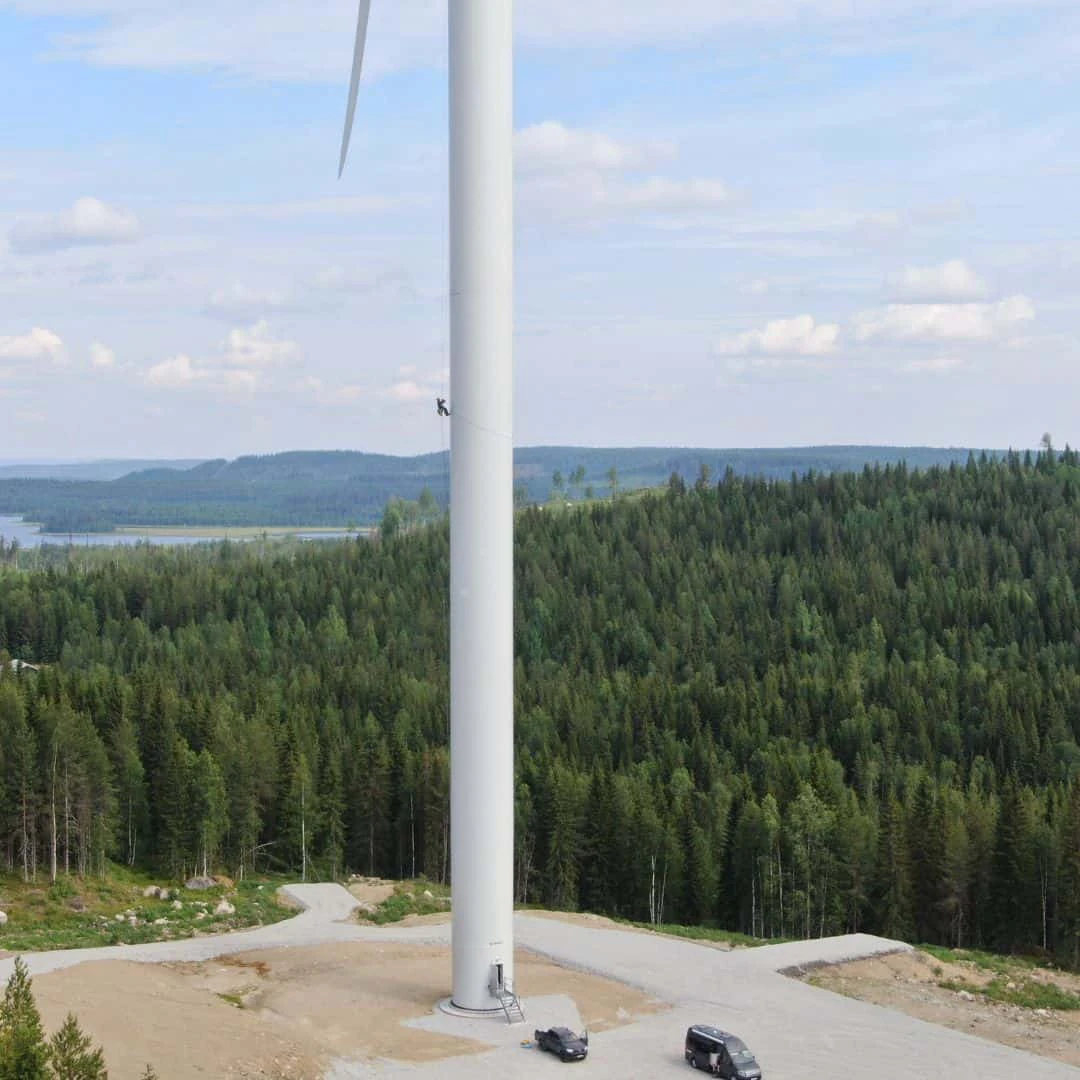
Mobilisation covers getting the team and its kit to site and back. For a city building it may be a van and parking. For a wind farm or an industrial plant abroad it includes flights or long drives, freight for ropes and tools, hotels, daily allowances and the travel days themselves.
The London data above shows how much this matters even locally: rigging and mobilisation added £450 to £850 per visit on top of the team day. On a one-day job that can be almost half the bill. On a three-week campaign it shrinks to a small share, which is why grouping tasks into one visit is the most reliable way to lower the rope access cost per task.
Ask each bidder to show mobilisation separately, state how many travel days are charged and whether accommodation is included or billed at cost. Otherwise two quotes with the same day rate can differ by thousands.
Rescue planning and standby
The ICOP requires every safety method statement to include a rescue plan (Part 1, 1.4.3.11), and the Level 3 and the company must confirm before work starts that the rescue procedures are adequate and that enough people and equipment are available (Part 2, 2.11.6.6). IRATA added ICOP Annex R on rescue and evacuation planning in October 2024.
In a quote, rescue shows up in three ways: the extra team member described above, rescue kit that stays rigged or ready during work, and planning time to write and brief the plan. Over water, the ICOP calls for suitable rescue equipment and prompt rescue of anyone at risk of drowning (2.11.6.8), and IRATA published Annex S on working over water in November 2024. That can mean a rescue boat, a vessel crew or a site rescue team on standby, which is often the client's cost. Be clear about who provides it. Our article on how safe rope access is explains why rescue and supervision drive the safety record.
Anchors and rigging
Every rope access job needs two independently anchored lines per technician. Where certified anchor points already exist and are in date, rigging is quick. Where they do not, the team has to rig from structural members, install temporary anchors or have permanent anchors installed and tested. The ICOP has a separate informative annex, Annex F, on safety when installing anchor devices.
Anchor work is often priced as its own item. The London guide lists annual anchor point load testing for one building at £1,300 to £2,700. On a wind turbine the nacelle anchor points are defined by the turbine manufacturer, so the cost lies in access to the nacelle, rotor locking and rigging time rather than in new anchors. Each re-rig to reach a new drop costs time, so a structure with many short drops can cost more than one tall, straight face.
Access, permits and site rules
Industrial sites run permit-to-work systems, and the ICOP expects the permit to be obtained and checked before work starts (2.11.7.1). Permits, isolations, site inductions, gas testing and daily sign-on can take hours of a team's day. A quote should say whether waiting for permits is charged.
In cities, the same applies to public space. The London guide says a pavement licence adds about £1,800 and several weeks of lead time to a scaffold, and lists parking at usually under £100 a visit. Rope access avoids most of the licence cost, but an exclusion zone below the work is still needed and may need a permit of its own.
Wind and energy sites often require specific training before entry, such as GWO modules. If a contractor has to train people for your site, that cost will be in the price somewhere.
Weather downtime
Weather is the cost driver most likely to cause a dispute. ICOP Annex O states there is no definitive maximum wind speed for rope access work and suggests that a limit for direct exposure in the range of Beaufort force 4 to 5, or 8.0 to 10.8 m/s, could be appropriate. Rain, cold and lightning can also stop work. Our guide to when wind stops rope access work on turbines explains how those limits are set.
There is no public data on how much weather downtime to expect for a given site. What matters in the contract is who carries it. The common approaches are:
- Day rate with standby: the client pays a reduced or full rate for days lost to weather. Cheap if the weather is good, expensive if not.
- Fixed price with weather risk on the contractor: the contractor adds a contingency, so you pay for bad weather whether it comes or not.
- Fixed price with an agreed allowance: a set number of weather days is included, and extra days are charged at a stated rate.
Whichever model you choose, write down the stop limits and how they are measured. A contractor who stops at a lower wind speed than another is not overcharging. They may be the one following the method statement.
Onshore versus offshore logistics
Offshore rope access costs more per productive hour, for reasons that have little to do with rope work. IRATA's 2025 Work and Safety Analysis shows that 35% of member hours in 2024 were offshore and 65% onshore, so most rates you see are onshore rates.
Offshore, each technician needs extra certificates and medicals before mobilising. As examples of what those cost, a UK centre lists a 3-day OPITO combined BOSIET course at £1,070.40 including VAT and a 5-day GWO Basic Safety Training package at £1,198.80 including VAT (both checked October 2026). The client may also pay for vessel or helicopter seats, offshore accommodation and time lost when transfers are cancelled by sea state. Our guides to CTV, SOV and walk-to-work access and offshore wind maintenance campaign planning cover those logistics.
| Cost item | Onshore | Offshore |
|---|---|---|
| Travel to the work | Road or flight to site, daily commute | Vessel or helicopter transfer, port days, rotation travel |
| Certificates | IRATA plus site induction and trade tickets | Adds survival training, offshore medical and often GWO modules |
| Weather | Wind, rain, ice and daylight | All of those plus sea state for transfers |
| Rescue | Team rescue, local emergency services as back-up | Self-reliant rescue, water rescue and evacuation plans |
| Productive hours | Most of the shift | Reduced by transfers and weather windows |
Inspection, NDT and trade add-ons
Rope access certification covers getting to the work safely. It does not qualify anyone to inspect a weld, test coating thickness or repair a composite blade. Those tasks need a person with the relevant trade qualification on the ropes, or a trade specialist working with the rope access team.
Trade skills raise the day rate, and specialist equipment such as ultrasonic thickness gauges, coating instruments or blade repair materials is charged on top. Our article on rope access NDT methods and their limits explains which inspections work well from ropes. Check that the quote names the qualification behind each trade task, not just the IRATA level.
Reporting and deliverables
Reporting is real work. A photo record may be included in the day rate, as in the London guide. A formal inspection report with defect locations, measurements, photos and recommendations takes office time after the site work, and that time is billed. The same guide prices a leak investigation with a photo report at £1,700 to £5,800, depending on whether first-fix repairs are included.
Agree the report format before work starts. A short checklist report and a fully referenced inspection report can differ by days of engineering time, and a report that is not usable for your maintenance plan is money wasted.
Rope access vs scaffolding and MEWP costs
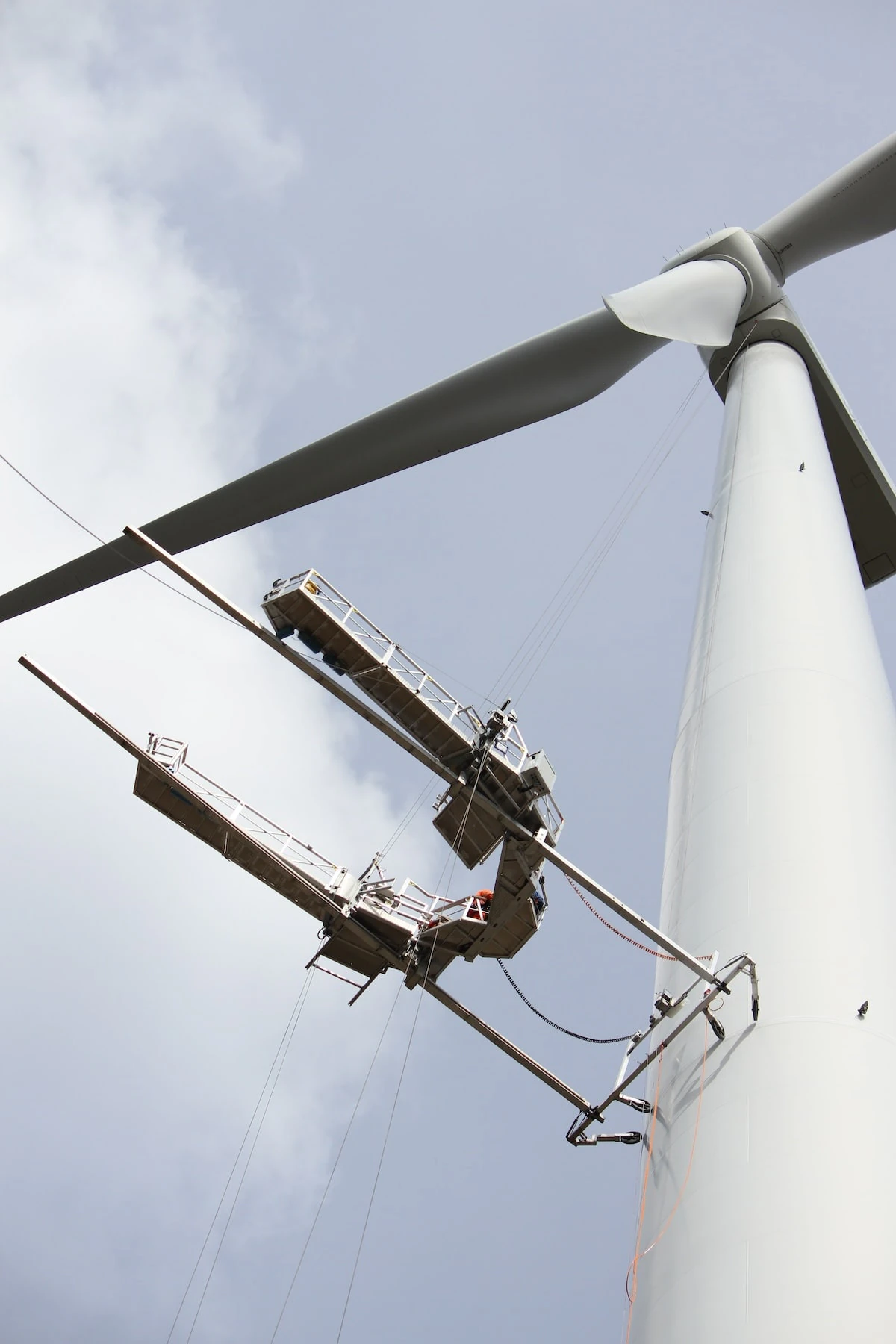
Rope access often wins on cost because it needs little temporary structure, but not always. The cost comparison depends on how long the access is needed, how many trades use it and how much material must be moved.
| Method | Main cost elements | Usually cheapest when |
|---|---|---|
| Rope access | Team days, rigging and mobilisation, rescue cover | Short, targeted tasks at height with suitable anchors |
| Scaffolding | Design, erection and dismantling, weekly hire, licences, inspection | Long jobs, several trades, heavy materials or containment |
| MEWP (boom lift or truck-mounted platform) | Machine hire, delivery, trained operator, ground preparation | Low or medium heights with firm, open ground below |
| Suspended platform | Platform hire, rigging, operators | Repeated work along one face, such as a tower or blade |
The only dated, like-for-like comparison we found is from the same London guide. For a 12 m building with a 200 m² elevation and five days of repairs, it estimated rope access at £3,700 to £5,200 and scaffolding at £12,600 to £18,500 before VAT, with a pavement licence adding about £1,800. Forth Rope Access quoted basic Edinburgh scaffold hire from £1,200 to £2,500 at 2024 prices for a townhouse frontage. Both are rope access firms, so read their comparisons with that in mind.
We found no reliable dated public hire rates for large MEWPs. They also have hard limits: IPAF's wind rating guidance says an outdoor-rated MEWP typically has a maximum wind rating of 12.5 m/s, and the machine must stand on ground that can carry it. On a modern wind turbine the blades are far above the reach of most hired MEWPs, so the realistic choice is between rope access, suspended blade platforms and crane-supported methods. For the wider decision, see our guide to rope access vs scaffolding.
What to send for an accurate rope access quote
The more of this you share, the less contingency a contractor has to add:
- The structure, location and drawings or photos of the work areas.
- The task list, with quantities where possible, such as square metres, number of welds or number of blades.
- Known anchor points and their inspection status.
- Site rules: permit system, required inductions and certificates, working hours and exclusion zone limits.
- Who provides rescue support, cranes, power, welfare and storage.
- The weather model you want: day rate with standby, fixed price, or an agreed weather allowance.
- The report or certificate you need at the end, and in what format.
- Your preferred dates and whether other work could be grouped into the same visit.
How Gridinta approaches rope access quotes
We do not publish a rate card, because the cost drivers above change from job to job. Gridinta is listed in the IRATA member directory as a Full Operator member, 6036/O, so our teams work to the ICOP team, supervision and rescue rules described here. Send us the scope and site details through our rope access services page and we will price the job you actually have.