
How Often Are Wind Turbines Inspected? Intervals for Every Major Component
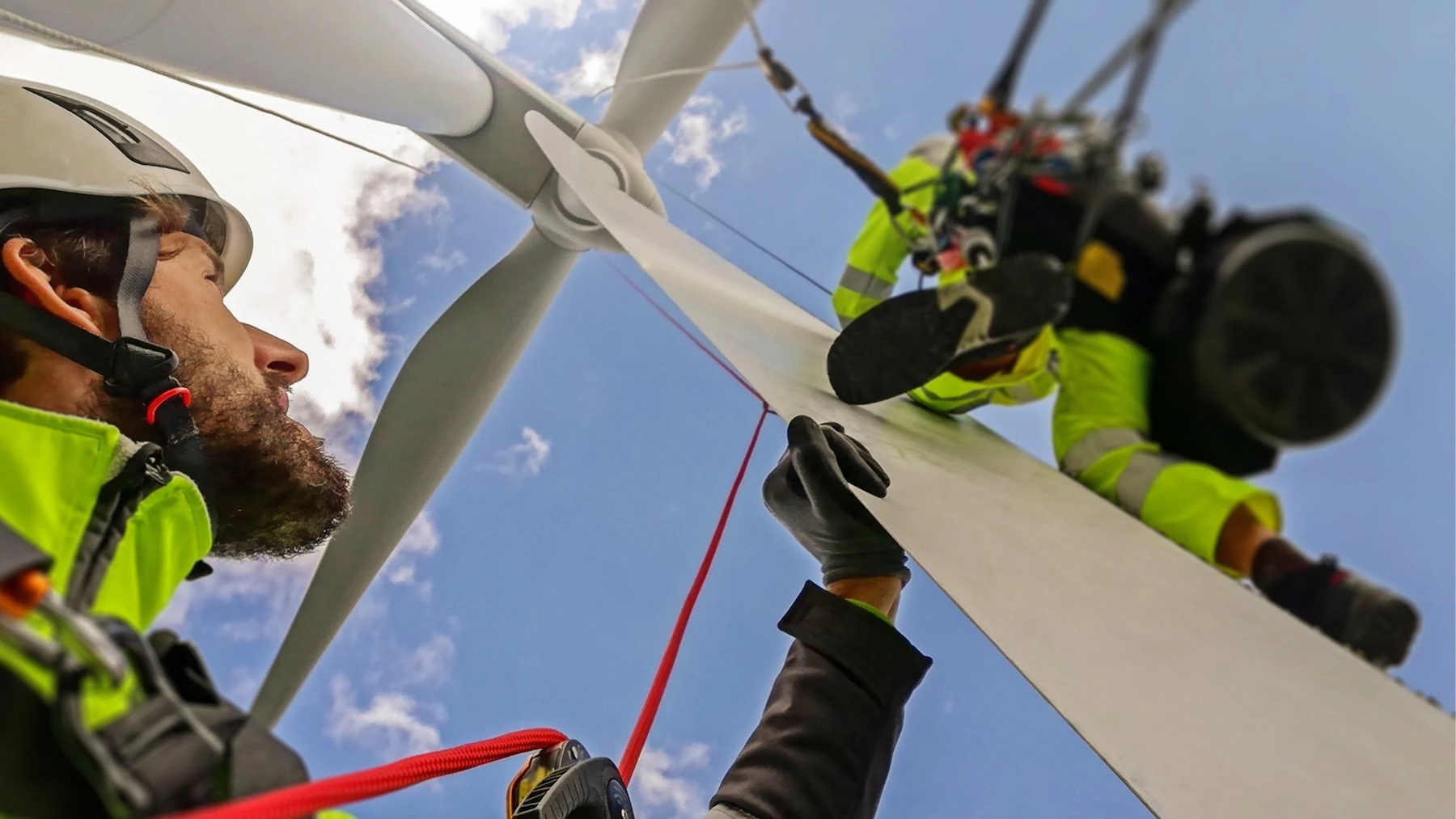
Most onshore wind turbines get a scheduled service once a year. The first one comes a few hundred operating hours after commissioning. Statutory and certification inspections then sit on top, each on its own interval. In Germany the recurring structural inspection is due every 2 years, or every 4 with continuous manufacturer-authorised maintenance. Service lifts, fall-arrest gear, cranes and electrical systems have their own clocks, from 6 months to 10 years.
As of October 2026. Intervals below come from the rules and documents linked in each row. They are not a substitute for your permit, type certificate, service manual or national law.
How often are wind turbines inspected? Three layers of intervals
Owners often ask for one inspection interval for a wind turbine. In practice there are three overlapping calendars, and they come from different places.
- Statutory and permit intervals. These are set by law, building approval or the operating permit. Examples are Germany's recurring inspection under the DIBt guideline, lift and pressure-equipment rules, and Denmark's servicing order. Missing them is a compliance problem, not just a reliability risk.
- OEM service intervals. The manufacturer's maintenance manual sets the service visits, the tasks in each and the tooling. Warranty and full-service contracts usually depend on keeping to it.
- Operator practice. Many owners add checks on top of the minimum, such as shorter blade intervals for older turbines, post-storm inspections or annual drone surveys. These are policy choices and should be written down as such.
The table below puts those layers side by side for the main components. Where a source is a single operator's or OEM's document rather than a rule, the table says so.
Wind turbine inspection intervals by component
| Component or check | Typical interval | Basis | Source |
|---|---|---|---|
| Scheduled OEM service | First service 500 to 1,500 operating hours after commissioning, then an annual main service; a 5-yearly service replaces every fifth annual one | OEM manual (one platform) | Nordex Delta4000 maintenance instructions, 2017 |
| Service visit where the manual sets no interval | No more than 1 year after the last visit | Law, Denmark | Danish order no. 648 of 30 May 2023, section 17(4) |
| Recurring inspection (machine, blades, tower, accessible foundation) | At most every 2 years; up to 4 years if manufacturer-authorised experts monitor and maintain the turbine at least annually | Building guideline, Germany | DIBt wind turbine guideline, section 15.1 |
| Rotor blades | Every 4 years, every 2 years from turbine age 12 (one operator); extended blade maintenance every 2 years (one OEM) | Operator and OEM practice | ENERTRAG recommendations, April 2026; Nordex manual |
| Tower and foundation | At least a visual check at each recurring inspection | Building guideline, Germany | DIBt section 15.2 |
| Preloaded bolts | Visual and looseness check at each recurring inspection; OEM plans add retightening at first service and annual sampling | Guideline plus OEM practice | DIBt section 15.2; Baie-des-Sables O&M plan |
| Service lift | Main inspection at most every 2 years with an intermediate inspection in between (Germany); every 6 months for lifting persons (UK) | Law | BetrSichV Annex 2; LOLER 1998 reg. 9 |
| Fall-arrest PPE, fixed ladder fall protection and anchors | At least every 12 months by a competent person | Accident-insurance rule, Germany | DGUV Regel 112-198, 2019 |
| Lightning protection system | Visual check every year; full inspection every 2 years for protection level I | Industry guideline, Germany | BWE LPS test guideline, March 2021 |
| On-board crane and chain hoists | Annually; 12 months for most lifting equipment and 6 months for lifting accessories (UK) | OEM practice and law | Nordex manual; LOLER reg. 9 |
| Pressure equipment such as hydraulic accumulators | Depending on category: external 2 years, internal 5 years, strength test 10 years (maximums, Germany) | Law | BetrSichV Annex 2, section 4 |
| Fixed electrical installation | At least every 4 years by a qualified electrician | Accident-insurance rule, Germany | DGUV Regel 109-009, Annex 1 |
| Rescue equipment and fire extinguishers | Annually | Operator practice | ENERTRAG recommendations |
Read the table as a map, not a rulebook. The German rows are the most detailed public set we found, so they dominate. Danish, Swedish and UK rows show how other jurisdictions handle the same equipment. If your turbines are in Lithuania, Latvia, Finland or Poland, check the national rules for lifts, pressure equipment and work equipment with your safety adviser. We did not find a public, turbine-specific interval table from a Baltic regulator.
Statutory intervals versus OEM and operator practice
Germany: the DIBt recurring inspection
The DIBt Guideline for Wind Turbines (October 2012 version, corrected March 2015) requires recurring inspections by independent experts in section 15. They cover the machine, rotor blades, tower and accessible foundation. The interval is at most 2 years. It may be extended to 4 years when manufacturer-authorised experts carry out continuous, at least annual, monitoring and maintenance. The guideline does not mention condition-monitoring systems as the condition for the longer interval. It is the documented maintenance regime that counts.
Section 15.2 sets a minimum scope. Inspectors work to the turbine's maintenance requirements, carry out at least a visual inspection of tower and foundation, and make at least a visual and looseness check of planned preloaded bolts. The German wind association's principles for recurring inspections (April 2025) add that binding intervals usually follow from the permit, the type test documents and the turbine's condition. They also state that the recurring inspection is the operator's duty.
EU and national work-equipment rules
Above the wind-specific rules sits general workplace law. Directive 2009/104/EC (Article 5) requires periodic inspection, and testing where appropriate, of work equipment exposed to deterioration. It also requires special inspections after exceptional events such as modification work, accidents, natural phenomena or long periods of inactivity. It sets no fixed interval; member states and employers fill that in.
National rules then get specific. Germany's Industrial Safety Regulation (BetrSichV) caps lift main inspections at 2 years with an intermediate inspection halfway. In 2025 a new annex to TRBS 1201 Part 4 addressed lifts and access systems in wind turbines specifically. In the UK, LOLER regulation 9 requires a thorough examination at least every 6 months for equipment lifting people and for lifting accessories, and every 12 months for other lifting equipment, unless an examination scheme says otherwise. PUWER regulation 6 asks for inspection at suitable intervals, and the Pressure Systems Safety Regulations require a written scheme of examination. Sweden's AFS 2023:11 lists 12-month recurring inspections for lifts, cranes over 500 kg and powered devices for lifting workers.
Denmark: a servicing law with a one-year ceiling
Denmark regulates turbine servicing directly. Executive Order no. 648 of 30 May 2023 requires service in line with the service manual for as long as the turbine is grid-connected. Where the manual gives no fixed interval, the next service visit can be at most one year after the last one. Turbines with a rotor area above 40 m² must be serviced by a certified or approved company, as the Danish Energy Agency's certification unit explains. Once a turbine passes its design life, or 20 years if none is stated, an extended inspection programme applies. Blades are then checked every 3 years, by close visual inspection or by camera or drone.
OEM service intervals
Public OEM manuals are rare, but one approval file shows the pattern. A Nordex maintenance instruction for the Delta4000 platform (revision dated November 2017) sets a first service at 500 to 1,500 operating hours, then an annual main service, with a five-yearly service replacing every fifth annual one. Its list of equipment needing inspection includes, for Germany, annual checks of ladders and fall arrest, on-board crane, chain hoist, anchor points and rescue device. It adds a full lightning protection test and extended blade maintenance every 2 years. Older fleets often ran on a 6-month cycle. An O&M plan filed for the Baie-des-Sables wind farm in Quebec lists a first service after 100 to 500 hours, six-monthly services, and an annual service with full system tests and 10% bolt torquing. How long a visit takes is covered in how long it takes to service a wind turbine.
Rotor blades: how the interval tightens with age
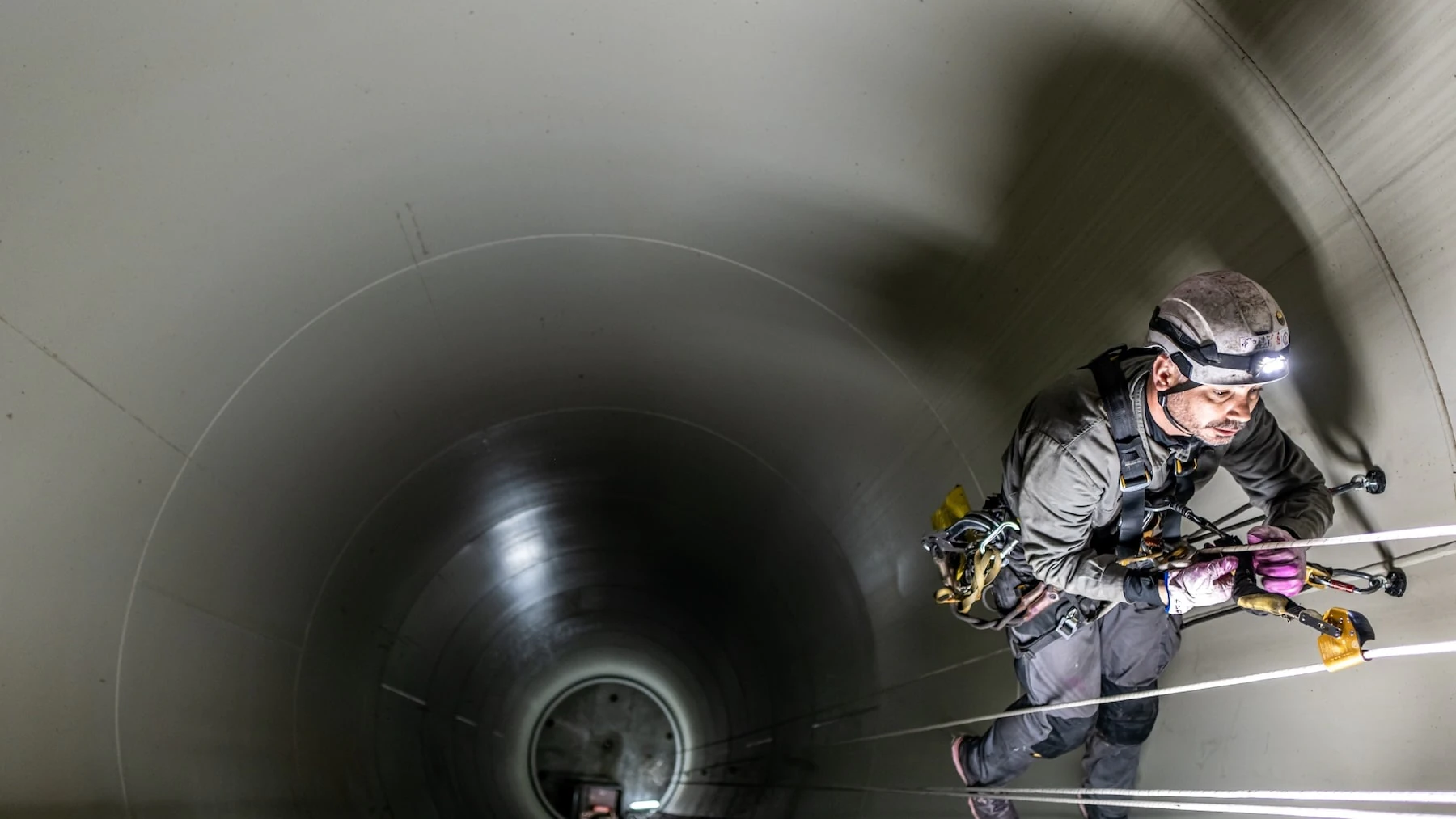
Blades are where operator practice differs most. The DIBt recurring inspection covers them every 2 or 4 years. ENERTRAG's operations unit publishes a one-page overview of inspection intervals (created April 2026). It recommends a blade inspection by drone or rope access, including lightning protection testing, every 4 years, and every 2 years once the turbine is 12 years old. Denmark's after-design-life programme uses 3 years. Owners on erosion-prone or lightning-exposed sites often inspect more often than any of these.
Drones have changed how the inspection is done, not whether someone needs to reach the blade. The BWE's March 2025 recommendation on drones in recurring blade inspections allows a remote drone survey to replace the close external check after a risk assessment. The next recurring inspection must then be close-up again, and the inside of the blade still has to be inspected. Our comparison of drones, robots and rope access for onshore inspection covers what each method can and cannot see. For erosion grading, see the guide to leading-edge erosion inspection and repair. When a finding turns into a repair, what blade repair really costs explains the price drivers.
Tower, foundation and bolted joints
For towers and foundations, the DIBt minimum is a visual inspection at each recurring inspection. Preloaded bolts get at least a visual and looseness check. OEM maintenance goes further: retightening after the first operating hours, then periodic sampling. Denmark's extended programme for older turbines asks for yearly visual checks of tower welds, bolts, foundation and anchor bolts, with bolts retightened per the manual. Our guide to bolt tensioning and torque checks explains which joints matter and how sampling works.
Service lifts, ladders and fall protection
Access equipment carries the most legal weight, because people ride and climb on it every visit. Service lifts made under the Machinery Directive are covered by German lift rules. Main inspections are capped at 2 years, with intermediate inspections in between, carried out by an approved inspection body. The Nordex manual applies this as an intermediate inspection every year and a main inspection every 2 years. ENERTRAG lists the lift as an annual item from the second year. The current product standard for new turbine lifts is EN 81-44:2024.
For fall-arrest PPE, Germany's DGUV Regel 112-198 requires a competent person to check the equipment as needed and at least every 12 months. Before use, workers must check that fixed climb protection and anchor devices had a competent-person check within the last year. Lift problems are often the first sign that a whole fleet needs attention. Our JASO elevator repair and retrofit case study covers 41 turbines: 25 in Finland and 16 in Latvia, and our service lift repair and retrofit page describes that work. If a retrofit changes the lift, our note on the EU Machinery Regulation explains when the modifier becomes the manufacturer.
Lightning protection, cranes, pressure and electrical systems
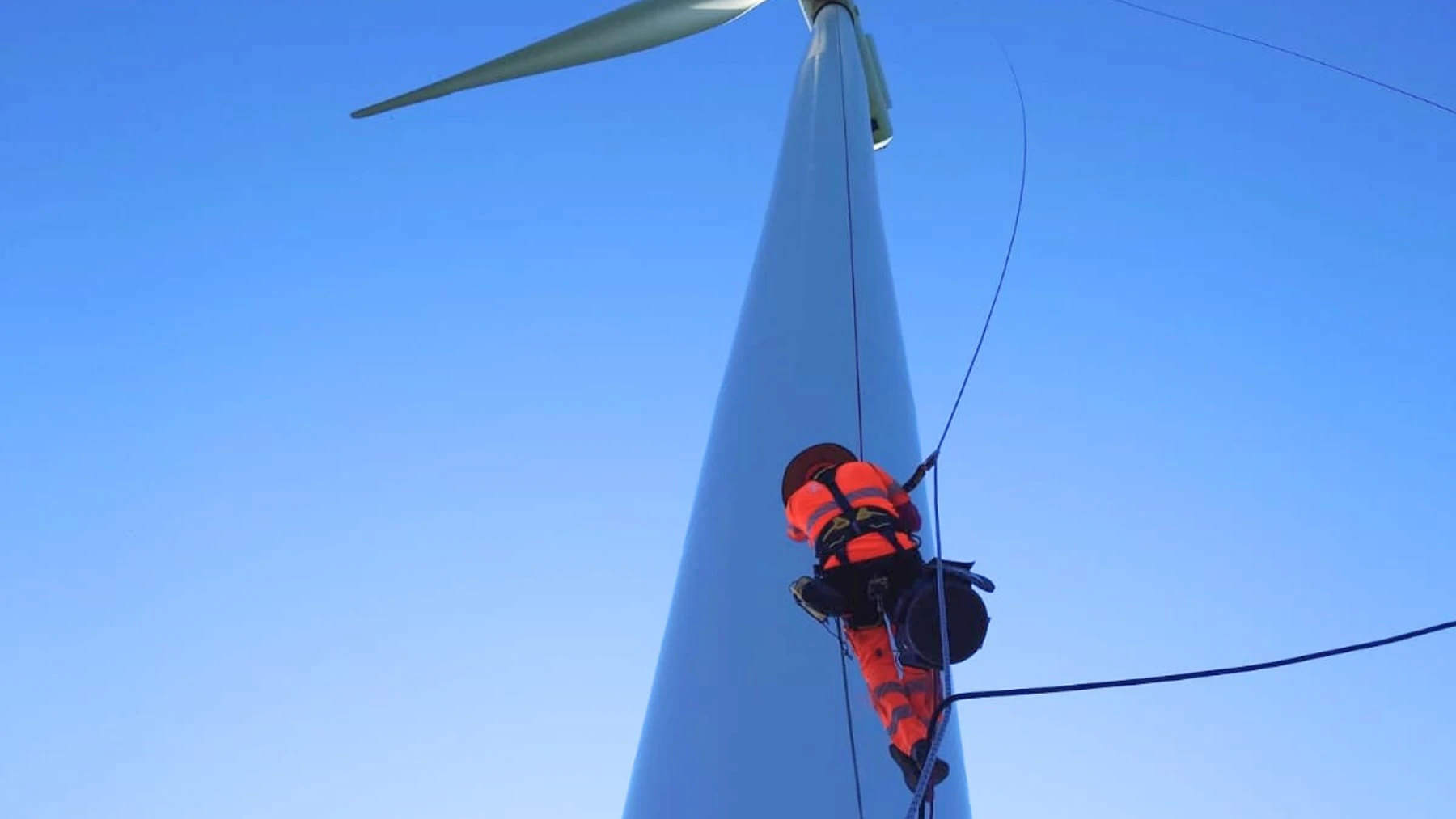
- Lightning protection. The BWE's technical guideline on LPS testing (March 2021) refers to the turbine's certified concept or IEC 61400-24, clause 12. Turbines are normally designed to protection level I, which means a yearly visual check and a full inspection every 2 years. Contact resistances should be below 1 ohm. The current IEC 61400-24 edition 2.1 contains a table of general inspection intervals in clause 12. After a confirmed strike, inspect regardless of the calendar; see what happens when lightning strikes a turbine.
- Cranes and hoists. Nacelle cranes and chain hoists are lifting equipment. Expect an annual examination, and 6 months for lifting accessories under UK rules.
- Pressure equipment. Hydraulic accumulators in pitch, brake and yaw systems fall under pressure-equipment rules. BetrSichV maximum intervals for pressure vessels are 2 years external, 5 years internal and 10 years for a strength test, depending on the category. ENERTRAG lists pressure vessels at 10 years.
- Electrical installation. German accident-insurance rules ask for fixed installations to be tested at least every 4 years by a qualified electrician. ENERTRAG schedules its electrical and safety inspection on the same 4-year cycle.
Event-driven inspections do not wait for the calendar
Fixed intervals are the floor. Directive 2009/104/EC and LOLER both require extra inspections after exceptional circumstances. For turbines, plan an unscheduled check after:
- a confirmed lightning strike with an alarm, blade imbalance or receptor damage;
- ice throw, heavy icing or an icing-related stop (see wind turbine icing problems);
- an overspeed event, emergency stop at high load or storm damage;
- a long standstill, a component exchange or any modification to lifts, anchors or ladders;
- a fleet-wide alert from the OEM, the certification body or another owner of the same model.
Older turbines and the end of warranty
Intervals shorten as turbines age. ENERTRAG halves its blade interval from year 12 and schedules a continued-operation assessment at year 20. Denmark adds an extended programme after design life. Germany's DIBt guideline deals with continued operation in a separate section, and the BWE drone recommendation notes that a continued-operation assessment needs a close-up blade inspection. Our guide to life extension inspections and IEC 61400-28 covers that step.
The end of the warranty is the other point where the calendar changes hands. If an independent provider takes over, the inspection plan has to be rebuilt from the manual, permits and records. See end-of-warranty inspections for what to check before you sign off.
How to build an inspection calendar for your fleet
- List every item that needs inspection for each turbine type, using the service manual, type certificate, permit conditions and national rules.
- For each item, record the interval, the legal basis, who may carry it out (approved body, independent expert, competent person or OEM-authorised technician) and the last completed date.
- Group items so one access mobilisation covers several checks. A blade inspection on ropes can include LPS continuity and receptor checks, and an annual service can include fall-arrest and lift checks.
- Set triggers for event-driven inspections and age-related changes, such as year 12 for blades, so they do not depend on memory.
- Keep the reports in one place per turbine. Inspectors, insurers and buyers will ask for the history, not just the latest certificate.
Our onshore inspection and maintenance checklist gives a task-level view. To budget for the calendar, see wind turbine maintenance cost per year.
Where Gridinta fits
Gridinta is an IRATA member company (6036/O) based in Klaipeda. Our onshore wind services cover blade and tower inspection, lightning protection continuity checks, repairs and bolt work. They use rope access or suspended platforms, depending on the task and site. We do not replace an approved inspection body or independent expert where the law requires one. We can carry out the access-heavy parts of the calendar and hand you reports in the format your inspector needs.